Guide
Crochet braids: how to install crochet hair on a cornrow base
A flat cornrow base, a latch hook and a few packs of crochet hair: the install, step by step, plus how long it lasts and how to take it out.
Published
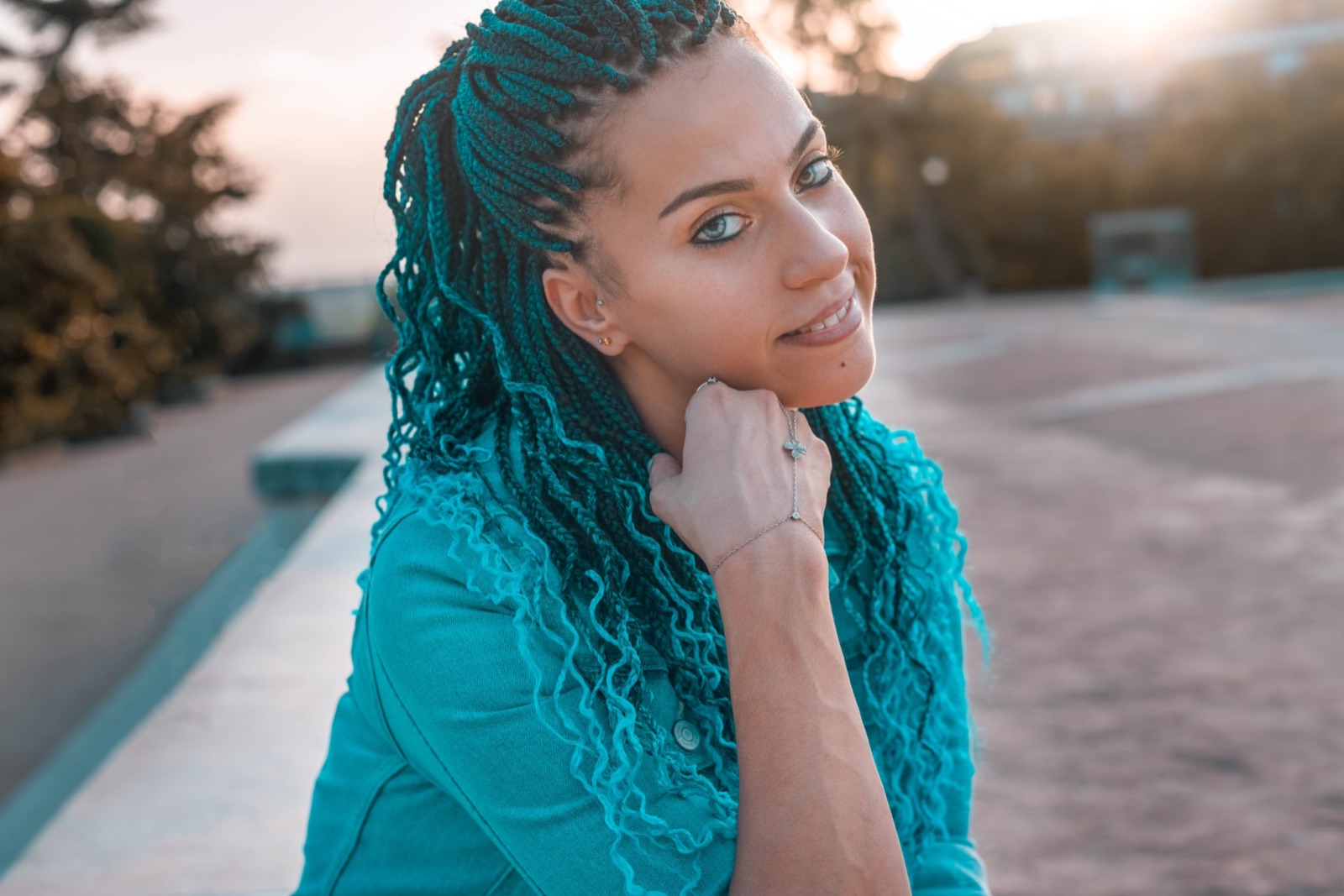
Crochet braids are a way of adding extension hair, not a single hairstyle: your own hair is braided into flat cornrows, and loops of crochet hair are pulled under each cornrow with a latch hook and knotted in place. The same method gives curly crochet hair, straight hair, twists or crochet locs. This guide takes you through the cornrow base, the install, how many packs to buy, care while you wear it and a takedown that leaves your own hair intact.
What you'll need
Essentials
-
Crochet hair, 3 to 8 packs
: pre-looped curls, twists or locs, or loose braiding hair; the amount depends on length and fullness. -
Latch hook
: its hinged latch closes over the hair so the loop slides under a cornrow without snagging. -
Rat-tail comb and sectioning clips
: clean parts for the cornrow base and for keeping finished rows out of the way. -
Small sharp scissors
: shape the ends after the install and cut the extension hair at removal.
Optional
-
Light scalp oil and leave-in conditioner
: moisture for your own hair and scalp, which stay under the style for weeks. -
Mousse or styling foam
: smooths flyaways and separates curls once the hair is in. -
Satin scarf or bonnet
: ties the style down after the install and protects it at night.
Crochet braids vs individual braids
With box braids or twists, extension hair is braided or twisted into every section of your own hair, one by one, from root to tip. With crochet braids, your hair stays hidden in a cornrow base and the extension hair is only attached to it. Wikipedia describes the hook grabbing the extension and pulling it through the underside of each cornrow. IPSY notes the extensions are not sewn in like a weave; they are looped under the cornrows and tied with a knot.
That is why crochet installs are usually faster than braiding every strand, and why one base can carry very different looks. The trade-off: the hair is attached at points along the cornrows, so parts and updos are more limited than with individual braids or twists. Some crochet hair is pre-twisted or pre-locked, which gives the look of passion twists or faux locs in a fraction of the time.
Choose your crochet hair
Types of crochet hair
- Pre-looped curls and waves: synthetic curls, water wave or deep wave pieces with a loop at one end. Curly crochet hair is the most common choice.
- Pre-twisted and pre-locked hair: ready-made twists or locs with a loop, used for crochet twists and crochet locs.
- Loose braiding hair: bulk synthetic hair you fold and knot yourself. Curl Centric recommends synthetic Kanekalon-type braiding hair in the curl pattern you want.
- Human crochet hair: costs more; Curl Centric's comparison says it lasts about twice as long as synthetic.
For what the fiber names on the pack mean, see our braiding hair guide.
How many packs
Luvme Hair suggests 3 to 4 packs for a light or short look, 4 to 6 packs for medium fullness, and 6 to 8 packs for a fuller or longer install; Prose gives about four to eight packs. Pieces per pack differ between brands, so count pieces as well as packs, and buy the whole amount in one go so the color matches.
Prepare your hair
Start with clean, conditioned, fully dry hair. Prose recommends shampooing and conditioning, letting the hair dry or blow-drying it, then oiling the scalp. Your own hair stays under the style for weeks, so detangle and moisturize it well now.
Braid the cornrow base
The base decides how flat and natural the style looks. If you are new to the technique, our cornrows guide covers the braid itself. Luvme Hair says straight-back rows work for most crochet styles and that the cornrows should be secure but comfortable.

A simple straight-back pattern
Curl Centric's pattern, in short:
- Part your hair into four equal sections and start at the front.
- Braid small straight-back cornrows, about an inch wide, on each side of the middle part.
- Add cornrows along the hairline and down the sides, curving around the ears.
- Braid the back horizontally, from just behind one ear across the nape.
- Tuck the braid ends under neighboring cornrows with the hook, then oil the scalp.
The cornrows do not need to be perfect, since the hair will cover them. They do need to be flat and not tight. For more cornrow layouts, see our braid pattern guide.
Keep the tension low
Luvme Hair warns that if the cornrows hurt before you add any hair, the style will likely feel worse afterward. Curl Centric lists bumps along the part, tenderness and popped hairs as signs the base is too tight, and says to speak up during the install. The American Academy of Dermatology says cornrows should not be tight and that a style that hurts is too tight.
How to install crochet braids
Step by step with a latch hook
- Map the placement. Plan more volume through the crown and back, and leave more space between pieces for large curls, as Luvme Hair suggests.
- Start at the nape. Slide the latch hook under the bottom cornrow, with the latch open.
- Hook the hair. Place the loop of a pre-looped piece on the hook, or fold a piece of loose hair in half to make one.
- Pull it through. Close the latch over the hair and pull the hook back out, bringing the loop under the braid.
- Knot it. Pull the ends of the hair through the loop and tighten. Luvme Hair says the knot should feel snug, not painful.
- Work upward row by row. Use similar-sized pieces and check both sides every few rows so the volume stays even.
If you are new to the tool, our guide to crochet hooks for hair explains how the latch works and which size to use.
Spacing and the hairline
Curl Centric suggests leaving about a fingertip of space between pieces at the back so the style does not weigh on your neck, and placing them closer at the front. Along the hairline, Luvme Hair recommends smaller pieces and wider spacing, and not stacking many pieces directly on the part. Small, light pieces at the front also put less pull on your edges.
Finish and shape
Separate curls with your fingers, trim stray ends lightly, and smooth flyaways with a little mousse. Luvme Hair then ties the hair down with a satin scarf for 10 to 15 minutes so the top and hairline lie smooth.
How long the install takes
Luvme Hair puts most crochet installs at about 1.5 to 3 hours, depending on the cornrow pattern, hair texture, fullness and experience. Curl Centric adds about an hour for the cornrow base and says knotting loose hair yourself can take four to six hours.
Crochet braids hairstyles
Because the base is hidden, the hair you hook in sets the look:
- Curly crochet hair: loose curls, water wave or deep wave for a full, rounded shape.
- Crochet twists: pre-twisted hair gives a twist look without twisting each section.
- Crochet locs: pre-made locs give the look of faux locs; Curl Centric puts a crochet loc install at about 3 to 4 hours, against 4 to 9 hours for wrapping each loc by hand.
- Straight or wavy hair: looped in the same way for a sleeker finish.
IPSY suggests mixing two shades, placing the second color between every other piece, for dimension.

Care while you wear them
Daily and weekly care
- At night: a satin bonnet or scarf, or a loose "pineapple" on top. Curl Centric and Prose both recommend one; see silk vs satin bonnets.
- Moisture: a light mist of water with a little leave-in conditioner on the cornrows and scalp, as Curl Centric suggests.
- Refresh: a light mist or mousse in the morning, not heavy gels. Separate curls with your fingers rather than brushing.
- Scalp: oil through the parts when it feels dry, and clean lightly between the cornrows without soaking the style.
Washing
Curl Centric warns that standard shampooing can loosen the knots. It notes that many people avoid washing while wearing crochet styles, but does not recommend skipping it. Wash gently instead: work diluted shampoo along the parts with your fingertips, rinse well and let the hair dry completely.
How long to keep them in
Curl Centric advises taking crochet braids out before eight weeks, when matting starts at the roots, and calls four to five weeks a realistic wear time. Prose says up to six weeks and no longer. The American Academy of Dermatology advises wearing braids for no longer than 6 to 8 weeks.
How to remove crochet braids
- Cut only the extension hair, close to the knot. Keep the scissors well away from your cornrows.
- Slide the knots off, or undo the cornrows and let the knots fall away as you go.
- Detangle each section gently with conditioner before moving to the next.
- Wash and deep condition your hair.
Curl Centric puts takedown at about one to two hours. If you want to reuse pre-looped hair, open each loop and slide it out instead of cutting. Prose suggests letting your hair rest for at least a week before the next install.
Common mistakes
- A tight base. It is the main source of headaches, bumps and broken edges.
- Too much hair. Heavy pieces close together pull on the cornrows and weigh on your neck.
- Bulky cornrows. Thick or uneven rows make the finished style sit high.
- Keeping it in too long. Matting at the roots makes takedown harder and causes breakage.
- Cutting carelessly at removal. Cut the extension hair only, close to the knot.
Your scalp and hairline
The American Academy of Dermatology lists tightly braided hair, cornrows and extensions among the styles that can cause traction alopecia. Its advice: loosen braids around the hairline, keep braids short because longer hair is heavier and pulls more, remove extensions or weaves immediately if they hurt or irritate your scalp, and rotate styles so your hair can recover. If you notice broken hairs, thinning or soreness at your hairline, see a board-certified dermatologist.
More protective styles are in braids.
Questions
What are crochet braids?
Crochet braids are a method, not one look: extension hair is looped under cornrows with a latch hook and knotted against the braid. The added hair can be curly, straight, twisted or in locs.
How many packs of crochet hair do I need?
Usually about 3 to 4 packs for a light or short look, 4 to 6 for medium fullness and 6 to 8 for a long or full style. Check the pack, since pieces per pack and density vary by brand.
How long do crochet braids last?
Usually about four to six weeks. Take them out before eight weeks, when matting starts at the roots; the American Academy of Dermatology advises wearing braids for no longer than 6 to 8 weeks.
How long does it take to install crochet braids?
The crochet part of most installs takes about 1.5 to 3 hours, plus the time to braid the cornrow base. Knotting loose braiding hair piece by piece takes longer than looping pre-looped hair.
Can I wash crochet braids?
Yes, gently. Full shampooing can loosen the knots, so work diluted shampoo along the parts with your fingertips, rinse well and let the hair dry completely.
Are crochet braids damaging to natural hair?
The risk comes from tension, not the method. A tight cornrow base or heavy hair can pull on the roots and lead to traction alopecia, so keep the base loose, especially at the hairline, and see a dermatologist if you notice thinning or soreness.
Sources
- Luvme Hair — How to install crochet hair: a step-by-step beginner guide
- Curl Centric — Crochet braids
- Curl Centric — Faux locs
- Prose — How to crochet hair
- IPSY — How to crochet braid
- Wikipedia — Crochet braids
- American Academy of Dermatology — Hairstyles that pull can cause hair loss
Read next
Crochet hook for hair: latch hooks for crochet braids and micro hooks for locs
The latch hook that pulls crochet hair under a cornrow and the tiny hooks that tighten locs are different tools; here is which one you need and how to use it gently.
Cornrows: how to cornrow step by step, with hairstyles and care
The underhand stitch, clean parts, feed-in rows and straight-back or patterned layouts, with how long to wear them and how to protect your edges.
Faux locs: how to install wrapped and crochet locs, plus soft and butterfly locs
Temporary locs built from extension hair over braids: the two install methods, the soft, butterfly and goddess variations, and how to take them out without losing your own hair.