Buying guide
Braiding hair guide: Kanekalon, pre-stretched, human hair, curly and Marley
What each kind of braiding hair is made of, how the color numbers work, how many packs a style takes and what the hot-water and vinegar steps actually do.
Published
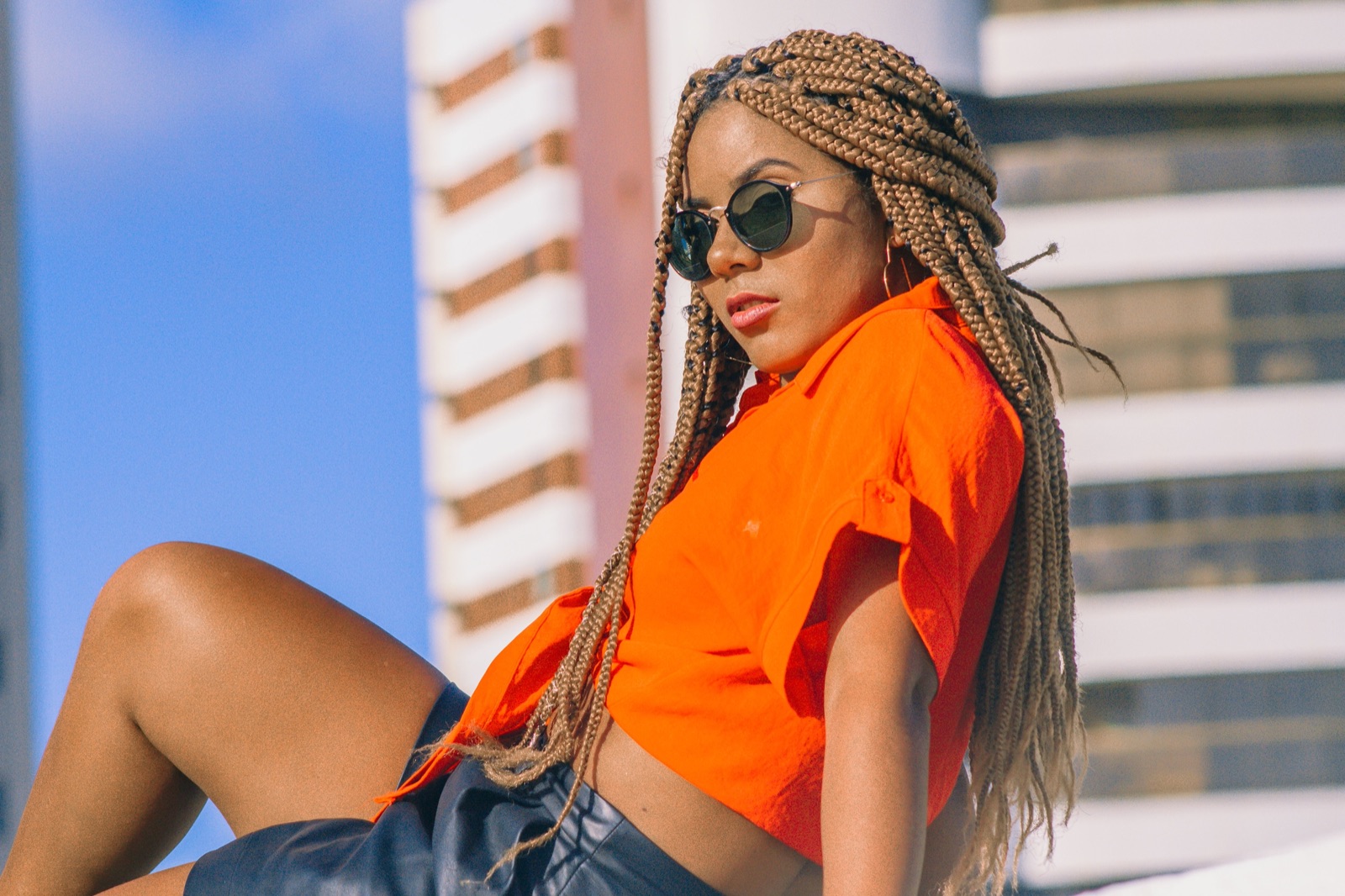
Braiding hair is the extension fiber added to your own hair for box braids, knotless braids, twists, faux locs and crochet styles. Most of it is synthetic, sold in packs by length and color code; some is human hair sold loose by weight. This guide covers the main types of braiding hair, what pre-stretched and French curl mean, how to read the color numbers, how many packs a style usually takes, and what the hot-water and apple cider vinegar steps are for.
What you'll need
Essentials
-
Braiding hair in your chosen type and color
: buy the whole amount at once, plus a spare pack, so the color matches. -
Rat-tail comb
: clean parts and even sections decide how neat the finished braids look. -
Small scissors
: trim flyaway fibers and even the ends.
Optional
-
Heatproof bowl or pot and a kettle
: for a hot-water set of synthetic ends, at the temperature your hair's maker gives. -
Apple cider vinegar
: for the pre-soak some braiders use on synthetic hair before an install.
What braiding hair is made of
Kanekalon and other modacrylic fiber
Kanekalon is a synthetic fiber brand made by the Japanese company Kaneka. Its FAQ says the fiber is made only for hair products: braids, wigs, wefts, crochet and extensions. Kaneka Americas says the fiber has built its reputation over about 50 years and is widely used by leading wig and hair extension brands.
The braid fiber is a modacrylic. Kaneka describes it as light, soft and easy to braid in both three-strand braids and twists, with a natural sheen. Two properties matter at the install:
- It can be hot-water set. Kaneka says its modacrylic braid hair can generally be set in water at 70 to 90°C, about 158 to 194°F, and adds that you should always follow the instructions of the product's maker.
- It resists flame. Kaneka says the fiber is hard to ignite, puts itself out once the flame is removed, does not melt and drip easily, and does not lose this property when shampooed. That applies to packs made of 100% of its fiber.
Many packs from different hair brands use Kanekalon fiber. Kaneka's advice is to look for "KANEKALON" with the ® or ™ mark on the label.
Toyokalon and blends
Toyokalon is a different synthetic fiber. A natural hair stylist study guide describes it as softer, slicker and glossier than Kanekalon, with less grip on natural hair and a lower heat tolerance: it says hot water above about 150°F can make it melt or warp. Some packs blend fibers. If the label does not say what the fiber is, treat it as heat-sensitive and test a strand before you dip or style the whole set.
Human braiding hair
Human hair for braiding is usually sold as loose bulk hair, not sewn into a weft, so it can be fed straight into braids. It is often chosen for boho styles and curly ends because it moves like hair and, as with other human hair extensions, can be washed, conditioned and heat-styled while installed. It is not hot-water sealed the way modacrylic is, and it usually costs more.
Types of braiding hair
Pre-stretched braiding hair
Standard braiding hair comes as a blunt-cut hank that you pull apart and stretch to taper the ends. Pre-stretched hair has already been drawn out with pre-tapered ends, so it is ready to braid in. Hair Factory's guide notes that it reduces installation time, with fewer color options as the trade-off.
X-Pression, a line by Outre, is a familiar name in pre-stretched hair; Outre lists pre-stretched braid, pre-looped crochet braid, braiding hair and bulk hair in the line. Many packs are sold as 3X bags. Curl Centric's pack guide puts a 3X bag at about 240 g and a single bundle at about 85 g, roughly three bundles to a bag, and advises trusting the gram weight printed on your pack.
Curly and French curl braiding hair
Curly braiding hair has a wave or curl set into the fiber. French curl braids are braided at the root and released into loose curls once the hair is long enough, as hairstylist Larry Sims describes them to PureWow. Curly hair is also used for curly ends on knotless and boho braids. In PureWow's step-by-step, each braid starts with regular braiding hair for thickness and the curly hair is added after, then the braids and curls are finished with mousse. The same guide says to ask your braider before using any heat, since it can damage some braiding hair.
Marley braiding hair
Marley hair is a synthetic fiber with a kinky, textured finish; L'Oréal Paris describes it as having a thin, coarse texture, and Hair Factory lists its natural look on type 4 hair as the main advantage. It is the usual fiber for Marley twists and faux locs. The drawback Hair Factory names is that it can feel coarse.
Short braiding hair
Short braiding hair is sold in lengths for bobs and short braids. You can also cut longer hair down, but a short pack wastes less and is easier to handle. With pre-stretched hair, cutting removes the tapered end, so buy the length you want to wear when you can.
Comparison of braiding hair types
| Type | Fiber | Texture | Hot-water set | Typical styles |
|---|---|---|---|---|
| Standard (Kanekalon-type) | Modacrylic | Smooth to slightly textured, blunt ends | Yes, within the maker's range | Box braids, cornrows, knotless |
| Pre-stretched | Usually modacrylic | Smooth, tapered ends | Yes | Knotless and box braids, quick installs |
| Curly / French curl | Synthetic or human | Wavy to curly | Check the pack | French curl braids, boho and curly ends |
| Marley | Synthetic | Coarse, kinky | Check the pack | Marley twists, faux locs |
| Human bulk hair | Human hair | Straight, wavy or curly | No | Boho braids, curly ends, reusable styles |

How to read braiding hair color codes
Braiding hair uses the same numbered color chart as most extensions.
Common color numbers
On Perfect Locks' chart, for example:
- 1 is jet black and 1B is a softer off-black.
- 2 to 8 run from the darkest to the lightest brown; 2 is dark brown and 4 is medium brown.
- 27 is a warm honey blonde.
- 30 to 33 are auburns; 33 is listed as dark auburn.
- 613 is platinum blonde.
A slash means more than one color in the pack, such as a black base with a blonde blend. Shade names and exact tones vary between brands, so compare packs in daylight, and buy all the hair for one install from the same brand and color number.
Choosing a shade
Color 4 and color 30 braiding hair
Color 4 sits in the middle of the brown range, so it is a common match for brown natural hair; color 30 gives an auburn tone, worn alone or mixed with 1B. Hold the pack against your own hair at the roots before you buy. If you are blending two colors, decide the ratio before you start and pre-mix the hair so each braid gets the same blend.
How many packs of braiding hair you need
The count depends on braid size, length, density and the brand's pack weight. Published estimates are a starting point, not a rule. Curl Centric's guide, for mid-back length, medium sections and average density:
| Style | Estimate |
|---|---|
| Jumbo box braids | About 5 single packs |
| Medium box braids | About 7 single packs |
| Small box braids | About 9 single packs |
| Medium knotless braids | About 7 to 10 single packs |
| Marley twists | About 6 to 9 packs |
Curl Centric plans on about 15% more hair for knotless braids than for box braids of the same size. Smaller, longer or fuller braids push the count up. Buy one or two packs more than you think you need: hair from a later batch may not match exactly.
Hot water and apple cider vinegar: what they do
Hot-water setting
Dipping the ends of finished synthetic braids in hot water sets them, so the tips stay sealed instead of unraveling. Use water within the temperature your pack's maker gives; Kaneka's general range for its modacrylic braid hair is 158 to 194°F. Pour the water into a heatproof container, never near your scalp, and blot the braids with a towel after. Do not dip a fiber whose label you do not know before testing a strand.
The apple cider vinegar soak
Some braiders soak synthetic hair in diluted apple cider vinegar before an install. A guide on Makeup.com by L'Oréal mixes one part vinegar to three parts hot water, leaves the hair in for about 15 minutes, and says a white film that forms on the water is the alkaline base lifting off the hair; the hair is then air-dried. This is a braider's method, not a fiber maker's instruction, and the hair has to be completely dry before you braid with it.
If your scalp itches, burns or turns red under braids, take the hair out and see a doctor or dermatologist; Kaneka also says to stop using its fiber and consult a doctor if itching or redness appears.
Which braiding hair suits whom
- First box braids or knotless braids: pre-stretched Kanekalon-type hair in your natural color.
- Boho or curly ends you want to keep washing: human bulk hair for the curls, often with synthetic hair for the braid body.
- Twists and faux locs: Marley hair or another coarse twist fiber.
- Short styles: short braiding hair, so the tapered ends stay.
- Sensitive scalps: fewer, larger braids and a loose hairline. The American Academy of Dermatology advises loosening braids around the hairline, choosing thicker braids and keeping them shorter, since longer hair is heavier and pulls more.
Wearing and caring for braids
The American Academy of Dermatology says to wear braids for no longer than six to eight weeks, and that a style that hurts is too tight. Tension at the hairline over time can lead to traction alopecia; if you notice broken hairs, thinning or soreness at your edges, see a board-certified dermatologist.
While you wear them, keep the scalp clean, moisturize your own hair, and sleep in a satin bonnet or scarf. For a sew-in instead of braids, see our braid pattern guide; for caring for synthetic fiber on a wig, see synthetic wig care. More protective styles are in braids.
Questions
What is the best type of braiding hair?
It depends on the style. Kanekalon-type synthetic hair is the usual choice for box braids and knotless braids because it is light, easy to braid and can be sealed with hot water. Human braiding hair suits boho and curly-end styles you want to wash and reuse, and Marley hair suits twists and faux locs.
What does pre-stretched braiding hair mean?
Pre-stretched hair has already been drawn out and tapered at the ends, so you do not have to stretch and feather it yourself before braiding. It saves time at the install and gives braids naturally tapered tips.
How many packs of braiding hair do I need for knotless braids?
For medium knotless braids to mid-back, guides usually estimate about seven to ten single packs; longer, smaller or thicker braids take more. Check the gram weight on the pack and buy one or two extra so the color matches.
What is the difference between color 1 and 1B braiding hair?
Color 1 is jet black, the darkest shade on standard hair color charts, and 1B is a softer off-black. Shades vary a little between brands, so compare packs side by side against your own hair.
Do I need to rinse synthetic braiding hair with apple cider vinegar?
It is optional. Some braiders soak synthetic hair in diluted apple cider vinegar before an install to rinse off the factory coating they link to itching; the fiber makers do not require it. If your scalp itches or turns red under braids, take the hair out and see a doctor.
Can I use human hair for braids?
Yes. Bulk human braiding hair is loose, unwefted hair made for braiding in. It is often used for boho braids and curly ends because it can be washed and styled, but it does not seal with hot water like synthetic fiber.
Sources
- KANEKALON (Kaneka) — Frequently asked questions
- KANEKALON (Kaneka) — Modacrylic braid fiber
- Kaneka Americas — Kanekalon
- Outre — X-Pression braid
- Open Exam Prep — Extension materials and selection (natural hair stylist study guide)
- Curl Centric — How many packs of braiding hair do I need?
- Hair Factory — Braiding hair guide
- Perfect Locks — Hair color chart
- PureWow — French curl braids
- L'Oréal Paris — Marley twists
- Makeup.com by L'Oréal — Soaking synthetic hair in apple cider vinegar
- American Academy of Dermatology — Hairstyles that pull can cause hair loss
Read next
Braiding gel: what it does, how to choose one and how to use it without flakes
Hold, grip and sleek parts: what is in a braid gel, how it differs from edge control and foam, and how much to use per section.
Crochet hook for hair: latch hooks for crochet braids and micro hooks for locs
The latch hook that pulls crochet hair under a cornrow and the tiny hooks that tighten locs are different tools; here is which one you need and how to use it gently.
Hair color codes explained: 1B, 99J hair color, 27, 30, 613 and ombré
The numbers on wigs, bundles and extensions, the letters and slashes that combine them, and why the same code can look different from one brand to the next.