Buying guide
Crochet hook for hair: latch hooks for crochet braids and micro hooks for locs
The latch hook that pulls crochet hair under a cornrow and the tiny hooks that tighten locs are different tools; here is which one you need and how to use it gently.
Published
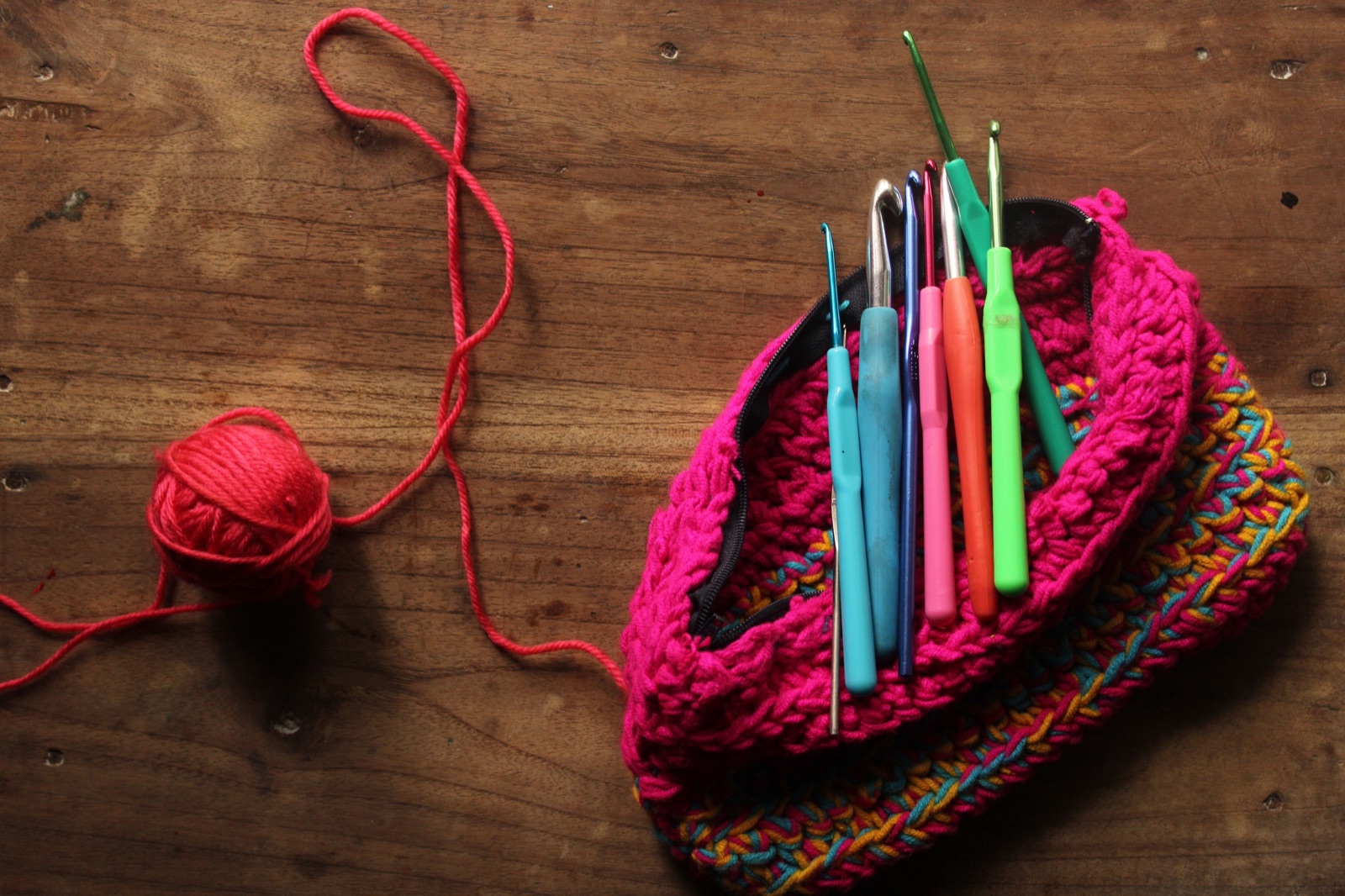
A crochet hook for hair is a small hooked tool that pulls hair through hair. Two different tools go by that name. A latch hook pulls loops of extension hair under cornrows for crochet braids. A micro crochet hook, with one to three tiny hooks on a fine needle, pulls loose hair back into locs. This guide explains each type, which sizes to look for, how to use them and how to keep the work gentle on your roots.
What you'll need
Essentials
-
Latch hook (for crochet braids)
: its hinged latch closes over the hair so the loop slides under a cornrow without catching. -
Micro crochet hook, 1 to 3 hooks (for locs)
: pulls loose hair and new growth back into a loc. -
Rat-tail comb and clips
: clean sections before you hook anything.
Optional
-
Small sharp scissors
: trim extension hair at removal without cutting your own. -
Spare hook
: latches bend and fine hooks snap; a spare keeps the install going.
Types of crochet hook for hair
Latch hook for crochet braids
A latch hook has a hook at the tip and a small hinged latch just behind it. When you push the hook under a cornrow, the latch flips open; when you pull back, it closes over the hair and keeps the loop from snagging on the braid. That latch is the difference between a hair latch hook and a yarn crochet hook. Luvme Hair's crochet guide lists a crochet or latch hook as the tool that pulls the crochet hair through each cornrow and helps secure the loop.
Latch hooks for hair have a plastic or wooden handle and a metal shaft. They also work for adding extension hair to a cornrow base for other crochet styles, such as pre-looped twists and locs.
Micro crochet hooks for locs
Loc hooks are much finer: a thin metal needle with one, two or three tiny hooks at the tip, set in a handle. KISS Colors & Care's Braid & Loc Crochet Hook, for example, is sold as a 3-hook tool with 0.75 mm smooth stainless steel hooks and a bamboo handle, for both artificial and natural hair.
They are used to:
- pull loose hairs and frizz back into an existing loc;
- tighten new growth at the root (often called crocheting or crochet hooking locs, or dreads); Hot Braids describes moving the hook in and out along one direction to tangle loose hairs into a loc;
- tuck the ends of extension hair into a loc after pre-looped or added locs are installed.
Yarn crochet hooks
Standard crochet hooks for yarn have no latch and are usually much thicker than loc hooks. Without a latch, the loop of hair can slip off as you pull it under a cornrow, and a hook that is too thick can split the braid. Keep them for yarn.
Comparison of hair crochet hooks
| Tool | Tip | Typical use | What to check |
|---|---|---|---|
| Latch hook | One hook with a hinged latch | Crochet braids, adding extension hair to cornrows | Latch opens and closes freely; hook fits under your cornrows |
| 1-hook loc tool | One tiny hook | Small locs, fine detail at the root | Hook size in mm; finer for smaller locs |
| 2- or 3-hook loc tool | Two or three tiny hooks | Larger locs, catching more loose hair per pass | Smooth hooks with no burrs |
| Yarn crochet hook | One open hook, no latch | Not made for hair | Avoid for installs |

The latch hook in the photo is a rug-making tool, but it works on the same principle as a hair latch hook: the latch closes over the strand so it slides back through the base without catching.
What to look at before you buy
Size
For crochet braids, YWigs advises matching the hook to the thickness of your cornrows and to the loop opening of the crochet hair, and warns that a hook that is too large can split the braid, so test it on one row first. For locs, pick a hook small enough to pass through the loc without opening a hole in it; finer hooks suit smaller locs.
Number of hooks
On loc tools, more hooks catch more hair per pass and suit larger locs; one hook gives more control on small or fragile locs. If you are unsure, a set with more than one tool lets you try each.
Material and finish
Look for stainless steel hooks that are smooth along the whole tip; KISS, for example, describes its loc hooks as smooth stainless steel. A burr or rough edge catches and breaks hair. On latch hooks, check that the latch swings freely and closes fully.
Handle
A handle you can grip comfortably matters on a full-head install, when you repeat the same small movement hundreds of times. Bamboo, wood and plastic handles all work.
How to use a latch hook for crochet braids
Start with a cornrow base: guides advise cornrows that are secure but not tight, and low-profile so the finished style lies flat.
- Slide the latch hook under a cornrow from one side, with the latch open.
- Place the loop of crochet hair, or a folded piece of extension hair, on the hook.
- Close the latch over the hair and pull the hook back out, bringing the loop under the braid.
- Pull the ends of the hair through the loop and tighten until secure. Luvme Hair's guide says the knot should feel snug, not painful.
- Repeat along the row, working from the back toward the front.
Tips, timing and removal
YWigs suggests starting on a hidden row so you can test the attachment before you work near the face. It notes that slippery human hair may need a different knot than textured synthetic hair, and that you should not keep tightening a piece that will not stay: change the knot or the section size instead.
How long it takes
Luvme Hair puts most crochet installs at about 1.5 to 3 hours, depending on the cornrow pattern, hair texture, fullness and experience; YWigs says a first full head often takes three to six hours. Small braids and long styles take longer.
Taking crochet braids out
Luvme Hair's guide says to cut only the extension hair near the knot, then slide the knots off gently. If you want to reuse pre-looped hair, YWigs says to open each loop and slide the piece out intact instead of cutting. Take your time near the knot so you never cut your own cornrows.
How to use a crochet hook on locs
KISS's directions for its loc hook include inserting the hook through a braid or loc and gently pulling the hair through. In practice:
- Hold the loc near the root with one hand.
- Push the hook through the loc, catch a few loose hairs, and pull back.
- Repeat in small in-and-out passes until the loose hair is worked into the loc.
- Move along the loc, but do not pull new growth so tight that the root is under strain.
For pre-looped locs, Hot Braids describes inserting the crochet hook into the base of a braid, hooking the loop of the loc, pulling it through, then pulling the braid ends through the loop and using the hook to tuck the ends in.

Which hook suits whom
- Crochet braids at home: a latch hook, plus a spare.
- Small or starter locs: a fine single-hook tool.
- Medium to large locs: a 2- or 3-hook tool.
- Stylists: a full set of loc hooks in more than one size and a few latch hooks, since latches wear out.
Care, safety and your roots
Wipe hooks clean after each use and store them in a pouch or case so the tips do not bend or catch on other tools. Replace a hook when the latch sticks or the tip is bent or rough.
Tension does more harm than the tool. The American Academy of Dermatology says tight braids and locs can cause traction alopecia, advises loosening braids around the hairline and choosing thicker braids and locs, and says a style that hurts is too tight. Crochet in gentle passes, leave the root relaxed, and give your locs time between maintenance sessions. If you notice thinning, broken hairs or soreness at your hairline, see a board-certified dermatologist.
For the cornrow base under a crochet or sew-in style, see our braid pattern guide. Ventilating a wig uses a similar tiny hook, covered in ventilating. More styles are in braids.
Questions
What kind of crochet hook do you use for crochet braids?
A latch hook: a hook with a small hinged latch that closes over the hair. You slide it under a cornrow, put the loop of crochet hair on it, close the latch and pull the loop back under the braid.
What size crochet hook is used for locs?
Loc hooks are very fine and sized in fractions of a millimeter; KISS Colors & Care's Braid & Loc Crochet Hook, for example, has 0.75 mm stainless steel hooks. Pick a hook small enough to pass through your loc without opening a hole in it.
Can I use a regular crochet hook for crochet braids?
It is possible but harder. A regular hook has no latch, so the loop of hair can slip off or snag as you pull it under the cornrow. A latch hook made for hair closes over the loop and slides through more cleanly.
What is the difference between a 1-hook, 2-hook and 3-hook loc tool?
The number of tiny hooks on the tip. More hooks catch more loose hair per pass, while a single hook gives finer control on small locs. Which suits you is a matter of loc size and preference.
Does crocheting damage locs?
Crocheting too tightly or too often puts stress on the roots, and tight locs can lead to hair loss at the hairline. Work gently, leave room at the root, and see a dermatologist if you notice thinning or soreness.
Sources
- KISS Colors & Care — Braid & Loc Crochet Hook, 3 hooks
- Luvme Hair — How to install crochet hair
- YWigs — How to install crochet braids at home
- Hot Braids — Locs guide: types, creation methods and self-install
- American Academy of Dermatology — Hairstyles that pull can cause hair loss
Read next
Braiding hair guide: Kanekalon, pre-stretched, human hair, curly and Marley
What each kind of braiding hair is made of, how the color numbers work, how many packs a style takes and what the hot-water and vinegar steps actually do.
Braid pattern for sew-in weave: straight-back, beehive, vixen and leave-out layouts
Which braid down goes under which install, how many cornrows it takes, and how to keep it flat and gentle on your edges.
Hair sewing needle and thread: C, J, L and straight needles, cotton vs nylon thread
Which needle shape fits which job, why most stylists sew with bonded synthetic thread, and how to match thread to the hair.