Buying guide
Hair sewing needle and thread: C, J, L and straight needles, cotton vs nylon thread
Which needle shape fits which job, why most stylists sew with bonded synthetic thread, and how to match thread to the hair.
Published
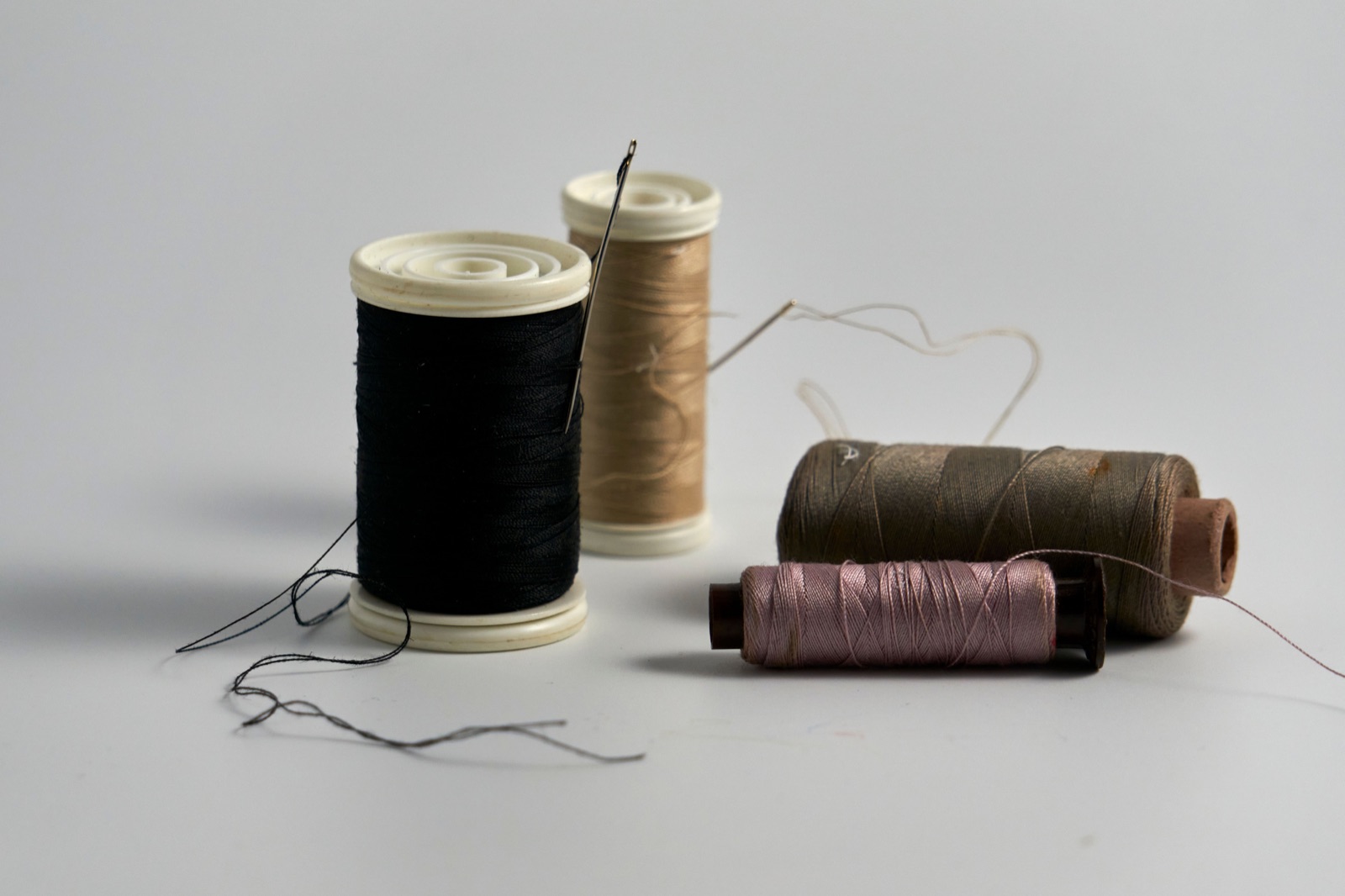
A hair sewing needle and thread look like a small purchase, but they decide how fast a sew-in goes, how secure the tracks stay and how gently the install treats the braids underneath. A weaving needle is blunt and usually curved, so it can slide under a cornrow without piercing the scalp. Weaving thread is thicker and stronger than household thread and comes in hair colors. This guide compares the needle shapes, explains the cotton vs nylon question, and covers what to look for when you buy.
We have not tested these tools. Everything below comes from cosmetology education material and the makers' own product pages, which are listed under Sources.
What you'll need
Essentials
-
Curved weaving needles (C shape), two sizes
: the everyday needle for sewing wefts onto cornrows. -
Bonded nylon or polyester weaving thread
: strong, slick and quick-drying; buy it close to the hair color. -
Small thread scissors
: clean thread ends during the install.
Optional
-
J-shaped or straight needle
: j for tight spots near the hairline; straight for wig caps and nets on a block head. -
Weave net
: spreads weft weight over the head and gives an even surface to sew into. -
Seam ripper
: cuts stitch loops cleanly at removal without nicking braids.
What a weaving needle does
When you are sewing weft hair extensions onto a braid base, each stitch goes under the cornrow, up through the weft band, and is pulled snug. A curved needle does this in one motion: you scoop under the braid and the tip comes back up where you can grab it. A natural hair stylist study guide recommends curved, dull-point needles shaped like a C or J, because the blunt tip slides under braids without puncturing the scalp or cutting base hair, and the curve scoops under tight cornrows without pulling the hair taut.
The same needles are used to sew wefts onto a wig cap on a block head, to stitch a closure, and to tack down braid ends.
Types of hair sewing needles
| Needle | Shape | Best for | Watch out for |
|---|---|---|---|
| C (curved) | A full, even curve | Sewing wefts onto cornrows; the most common choice | A large C can be awkward in tight rows near the hairline |
| J | Straight shaft with a curved end | Tight spots: nape, temples, rows close to a closure | Less curve per stitch, so slower on long tracks |
| L | An L-shaped bend | Sewing and attaching wefts, as an alternative to C and J | Fewer makers; harder to find in sizes |
| Straight | No curve | Wig caps and nets on a block head | Hard to use under braids on a head; more likely to poke the scalp |
C-curved needles
The curve follows the round of the head. Annie describes its large curved weaving needle as following the natural contour of the scalp and lists wefts, braided bases and cornrows as its uses. Curved needles are sold in several lengths. KISS's weaving combo, for example, has 3-inch and 4-inch curved metal needles; Hair Made Easi sells its curved needles in 4.5 cm and 6 cm lengths (about 1 3/4 and 2 3/8 inches), in packs of 10.
J-shaped needles
A J needle has a longer straight shaft that bends only at the end. It works well where the space is tight and you need to come up close to the braid, such as around the perimeter or the edge of a closure. Doctored Locks sells its weave needle in curved, straight and J-hook versions, and says the tip is softened to protect the scalp from punctures or scratches.
L-shaped needles
L-shaped weaving needles are sold for sewing and attaching wefts, as beauty-supply catalogs such as Paks Wholesale show, though they are less common than C and J shapes. If you find curved needles awkward, an L is worth trying.
Straight needles
A straight needle is the right tool when the work lies flat, as when you sew wefts onto a wig cap stretched over a canvas block head. On a live head, it is harder to get under the braid without angling the point toward the scalp.
Cotton vs nylon or polyester thread

Cotton thread for weaving
Cotton grips well and holds a knot firmly. The study guide notes the downside: cotton absorbs water and sweat, swells and holds dampness against the braids, which slows drying and raises the risk of mildew and odor under the install. Its appeal is that grip.
Nylon and polyester thread
Bonded nylon or polyester is non-absorbent, lightweight and strong. The study guide says it dries quickly, resists rot and mildew, slides smoothly through wefts, and calls it the professional standard for sew-in installs. Maker pages describe the same qualities. KISS calls the nylon thread in its combo tear-resistant and break-resistant. Hair Made Easi describes its thread as pre-bonded nylon and says the bonded finish prevents fraying and keeps the end clean for threading.
| Thread | Strength | Water | Feel and handling | Typical use |
|---|---|---|---|---|
| Cotton | Good grip, firm knots | Absorbs water and sweat; slow to dry | Matte, high friction | Installs where grip matters most |
| Nylon (bonded) | Strong, tear-resistant | Non-absorbent; dries fast | Slick, threads easily | Most sew-ins and wig making |
| Polyester (bonded) | Strong | Non-absorbent; dries fast | Similar to nylon | Sew-ins and wig making |
Thread color
Match the thread to the weft, not to your own hair. Black and dark browns cover most installs; blonde and light shades exist for lighter wefts. Hair Made Easi, for example, lists seven colors from icy blonde to jet black. When a stitch shows at a part or along a track, a matching color makes it disappear.
How much thread you need
Spools are sold by length. The KISS combo includes 87 yards (80 meters) of black nylon thread, and Hair Made Easi's spool is 500 meters. A small spool is fine for one install; buy a large one if you sew often or make wigs.
The weave net
A weave net is a breathable nylon mesh laid over the braids before the wefts. The study guide says it spreads the weight of the wefts across the whole head, gives a continuous stitching surface where thin hair leaves gaps between braids, and reduces friction between the tracks and your hair. You sew it around the perimeter with a continuous lock stitch, trim it away over the leave-out or closure area, then sew the wefts to the net and the braids. It adds a step, but it gives an even surface to sew into.
What to look for when you buy
Needles
- A blunt or softened tip. Weaving needles should not be sharp like household sewing needles.
- Two or more lengths. A shorter one for the hairline and nape, a longer one for the back.
- An eye large enough for weaving thread. Thick bonded thread will not fit a fine sewing needle.
- Smooth, rust-resistant metal. Stainless steel is common; a rough spot snags thread and hair.
Thread
- Bonded nylon or polyester for strength and fast drying.
- A color that matches the wefts.
- A spool size that fits how often you sew.
Combo sets
Needle-and-thread sets are the easiest start: one or two curved needles and a spool of black thread. If you need other shapes or colors, buy them separately.
Which hair sewing needle and thread suits you
- First sew-in at home: a combo set with a C needle in two sizes and black bonded nylon thread.
- Closure or frontal installs: add a J needle for the tight stitching around the lace.
- Wig making on a block head: curved and straight needles, plus thread matched to each unit.
- Sensitive scalp: look for needles described as having a blunt or softened tip.
How to use and care for them
Thread the needle with a comfortable length, double the thread and knot the end. Lock the thread to the braid before the first stitch, then sew through the weft band and under the braid, locking again at the end of each track. The closure sew-in guide walks through the stitches step by step, and the braid pattern guide covers the base you sew onto.
Wipe needles clean after each install and store them in a closed case so the tips stay smooth and they do not get lost. Replace any needle that is bent, rough or rusty. Keep thread spools dry and away from heat.
At removal, snip only the thread loops with a seam ripper or blunt-tipped scissors, never the braids. If you prefer a glued install with no sewing at all, see the quick weave guide.
Questions
What kind of needle is used for sew-in weaves?
A curved, blunt-tipped weaving needle, usually a C or J shape. The curve lets you scoop under the cornrow and back out through the weft without pulling the braid taut or scratching the scalp.
Is cotton or nylon thread better for a sew-in?
Most stylists use bonded nylon or polyester. A natural hair stylist study guide describes synthetic thread as strong, non-absorbent and quick-drying, while cotton absorbs water and sweat and holds dampness against the braids.
What color thread should I use for a sew-in?
Use thread as close to the weft color as you can find, usually black or a brown for dark hair and a blonde shade for light hair. Matching thread disappears if a stitch shows at a part or track.
What size weaving needle should I buy?
Curved needles come in several lengths, such as the 3-inch and 4-inch needles in KISS's weaving combo. A shorter needle is easier for tight rows near the hairline and nape; a longer one covers more weft per stitch at the back.
Sources
- Open Exam Prep — Weaving and sew-in techniques (natural hair stylist study guide)
- KISS Colors & Care — Weaving Combo Needle & Thread Set
- Hair Made Easi — Weaving Thread 500 Metres
- Hair Made Easi — Curved Weaving Needles
- Doctored Locks — Weave Needles for Sew In Weft Hair Extensions
- Annie — Large Curved Hair Weaving Needles
- Paks Wholesale — Weaving needles (catalog of shapes sold)
Read next
Sew-in closure: braid down, place the closure and sew it flat
A full sew-in with no leave-out: the braid base, the wefts and a closure stitched flat at the hairline.
Braid pattern for sew-in weave: straight-back, beehive, vixen and leave-out layouts
Which braid down goes under which install, how many cornrows it takes, and how to keep it flat and gentle on your edges.
How to sew a wig: hand-sewing and machine-sewing wefts onto a cap
The stitches themselves: anchoring, locking and tying off by hand, and how a sewing machine changes the job.