Guide
Cornrows: how to cornrow step by step, with hairstyles and care
The underhand stitch, clean parts, feed-in rows and straight-back or patterned layouts, with how long to wear them and how to protect your edges.
Published
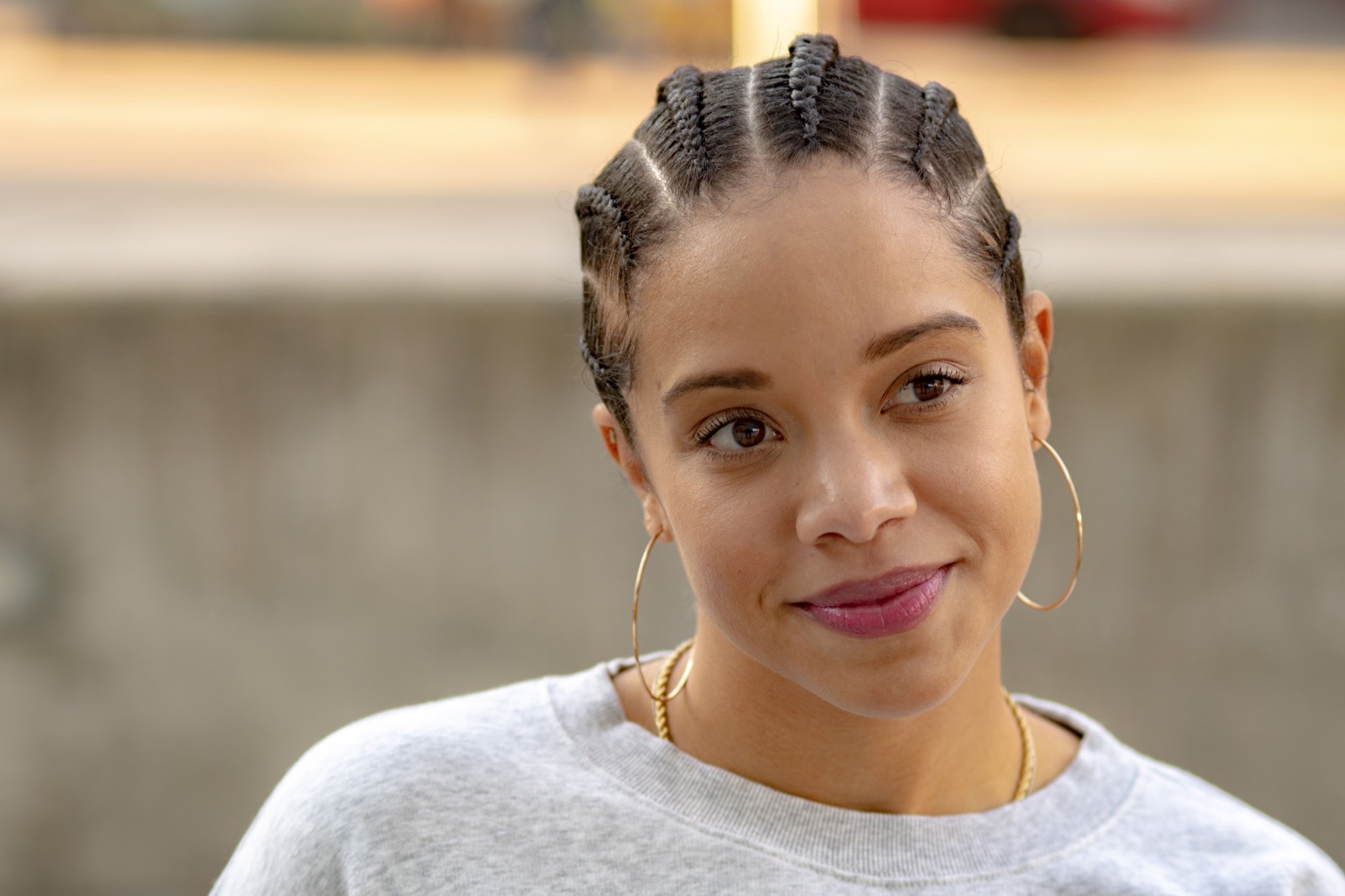
Cornrows are three-strand braids worked flat along the scalp, each one forming a raised row from the hairline back. Wikipedia's entry describes the technique as braiding very close to the scalp with an underhand, upward motion to make a continuous, raised row. This guide shows how to do cornrows step by step on your own or someone else's hair, how feed-in rows work, the main cornrow hairstyles and how to keep them neat without straining your edges.
What you'll need
Essentials
-
Rat-tail comb
: straight, even parts are the base of every cornrow. -
Braiding gel
: smooths each row and controls flyaways while you braid. -
Sectioning clips
: hold the rest of the hair back while you braid one row. -
Detangling brush or wide-tooth comb
: hair has to be fully detangled before it is braided. -
Small elastics
: secure the ends of rows that are not braided to the tips.
Optional
-
Blow dryer with a comb attachment
: stretches the hair so rows lie flatter and look neater. -
Braiding hair
: for feed-in cornrows, or to add length and thickness. -
Light oil, setting mousse and a durag or scarf
: moisture, shine and smooth rows after braiding.
What cornrows are
The underhand stitch
The raised look comes from how the strands cross. A cosmetology study guide explains that in an underhand braid the left and right outer strands cross under the center strand, which makes a three-dimensional braid sitting on top of the scalp; that is the standard technique for cornrows. Crossing over the center instead gives a flatter braid that tucks in, like a classic French braid.
Names and history
Cornrows are also called canerows, especially in the Caribbean; Wikipedia notes both names come from the rows of corn and sugarcane fields. In Yoruba they are traditionally called kolese or irun didi. Cornrows originated in Africa: Wikipedia cites Stone Age paintings on the Tassili Plateau in the Sahara dated as far back as 3000 B.C., and in the Nigerian diaspora they are often called didi braids. People of all ages and genders wear them.
Prepare the hair
Wash and detangle thoroughly
Braider Stasha Harris, who has braided for nearly 20 years, starts with shampoo, conditioner and a thorough detangle. In her interview with Well+Good (republished by theSkimm) she warns that hair not detangled properly will start knotting as you braid. Run your fingers through each section as you pick it up.
Stretch it if you like
Harris blow-dries with a comb attachment to stretch the hair, though it is optional: stretched hair is less voluminous and easier to braid neatly. If you braid damp hair, let it dry completely before covering it so it does not smell musty.
Section and part
Part the hair into four sections, first down the middle and then across. Harris says sectioning is the step her students struggle with most. Then part the first row with the tail of the comb, using a mirror to keep the line straight and the width even from front to back; a row that widens halfway will thicken there.
How to cornrow, step by step
- Gel the row. Work a little gel into the row with your fingertips.
- Split the front. At the hairline, take a small amount of hair and divide it into three equal strands.
- Cross under. Bring the left strand under the center, then the right strand under the new center. That is one underhand stitch.
- Pick up as you go. On each stitch, before crossing an outer strand under, add a small amount of loose hair from the row to it. Pick up only a little hair at a time so the row stays even.
- Stay close to the scalp. Harris keeps her fingers close together and pressed to the scalp, with one anchor finger pushing back so the braid stays firm. Firm should never mean painful.
- Braid off the scalp. When the row reaches the nape and all the hair is picked up, continue as a regular underhand braid to the end and secure it if needed.
- Repeat row by row, parting each new row from the loose hair beside the finished one.
- Finish. Harris adds a light oil to the finished braids, a setting mousse all over, then a durag while it dries.

Feed-in cornrows
Feed-in cornrows add braiding hair as the row travels. Start the row with your own hair, then lay thin pieces of braiding hair into the outer strands every few stitches, so the row starts thin at the hairline and grows thicker without a bulky knot at the front. Curl Centric's average for feed-in cornrows is 2 to 3 bundles of braiding hair, about 185 g. It notes straight-back styles usually have 6 to 10 rows, while tribal and other detailed patterns use 20 or more, so plan on more hair for those. See our braiding hair guide for fibers.
If you are a beginner
Practice on a doll head or on two large rows first. Big rows are more forgiving than many small ones, and two straight-back cornrows teach the underhand stitch before you take on a full head.
Cornrow hairstyles
Cornrows straight back
The classic: parallel rows from the hairline to the nape. It is also the base for many sew-ins; our braid pattern guide covers straight-back, beehive and other braid-downs.
Patterns and curves
Cornrows can follow curves, zigzags and geometric designs. Plan the design and part it out before you braid; rows that change direction need clean, even parts more than straight ones do.
Cornrows with hanging braids
Rows can run to the crown or nape and continue as loose braids. Fulani braids mix front and side cornrows with braids hanging at the back, and thick raised cornrows with extension hair are the original goddess braids.
Keeping the tension gentle
Cosmetology guides list the front hairline, temples, sideburns and nape as the classic places traction hair loss starts. They warn against ripping edges and baby hair into a row, call pain a stop signal, and list broken hairs, thinning edges, scabs and bumps along a tension line as warning signs. Tricoci University's braiding program puts it bluntly: braiding too tightly can cause traction alopecia.
The American Academy of Dermatology says to make sure cornrows are not tight, to loosen braids especially around the hairline, and that a style that feels painful is too tight. Smooth the hairline with a little edge control instead of pulling it into the row.
Common mistakes
- Uneven parts. A row that widens or wanders shows in the finished braid. Re-part it before you braid; it is quicker than undoing a row.
- Picking up too much hair at once. Big pick-ups make lumpy, uneven rows. Harris picks up only a small amount at a time.
- Braiding over tangles. Knots caught in a row pull at the scalp and tangle further as you go.
- Rows that drift off the scalp. Keep your fingers low and close to the head so the braid stays flat.
- Tight edges. The hairline is where traction hair loss usually shows first. Start each row gently and keep the perimeter rows larger.
Care and how long to keep them in
Day to day
Wikipedia notes cornrows can last weeks with careful washing and scalp oiling. Use a light oil on dry areas of the scalp, sleep in a durag, scarf or bonnet, and re-smooth flyaways with a little braiding gel.
When to take them out
Harris recommends taking cornrows on your own hair out after two to three weeks: after that they loosen, look messy and make the scalp harder to clean. For styles with extensions, the American Academy of Dermatology's limit for braids is six to eight weeks. Give your hair a break between installs. If you see broken hairs or thinning along your hairline, take the braids out and see a board-certified dermatologist.
Questions
What are cornrows?
Cornrows are three-strand braids worked flat against the scalp with an underhand, upward motion, so each one forms a continuous raised row. They can run straight back or follow curves and patterns.
Are cornrows and canerows the same?
Yes. Canerows is the name used especially in the Caribbean. Both names refer to rows of crops in corn and sugarcane fields.
How long can you keep cornrows in?
Cornrows on your own hair usually look neat for about two to three weeks; braider Stasha Harris recommends taking them out then. Feed-in styles with extensions are often worn longer, but the American Academy of Dermatology advises no more than six to eight weeks for braids.
What is the difference between a cornrow and a French braid?
A cornrow crosses the outer strands under the center strand, so the braid sits raised on top of the hair. A classic French braid crosses them over the center, so the braid lies flatter and tucks in.
What are feed-in cornrows?
Feed-in cornrows add small pieces of braiding hair as the row travels, so the braid starts thin at the hairline and grows thicker without a bulky knot at the front.
Do cornrows cause hair loss?
Tight cornrows worn often can cause traction alopecia, which usually shows first at the hairline. Keep rows comfortable, never braid through pain and see a dermatologist if you notice thinning.
Sources
- Wikipedia — Cornrows
- theSkimm (originally Well+Good) — How to cornrow your own hair, with braider Stasha Harris
- Open Exam Prep — Twisting, wrapping, weaving, extending, locking and braiding (NY cosmetology study guide)
- Open Exam Prep — Natural hair braiding (OK cosmetology study guide)
- Tricoci University — The art and business of African hair braiding
- Curl Centric — How many packs of braiding hair do I need?
- American Academy of Dermatology — Hairstyles that pull can cause hair loss
Read next
Crochet braids: how to install crochet hair on a cornrow base
A flat cornrow base, a latch hook and a few packs of crochet hair: the install, step by step, plus how long it lasts and how to take it out.
Fulani braids with curls: the layout, step by step, and care
Where each part of the pattern goes, the order to braid it in, how to add curls and beads, and how to keep the edges comfortable.
Braid pattern for sew-in weave: straight-back, beehive, vixen and leave-out layouts
Which braid down goes under which install, how many cornrows it takes, and how to keep it flat and gentle on your edges.