Guide
Goddess braids: cornrow and box braid versions, how to do them and care
What goddess braids mean now and what they meant first, how the curly pieces go in, which hair to use and how to keep the style from flattening or matting.
Published
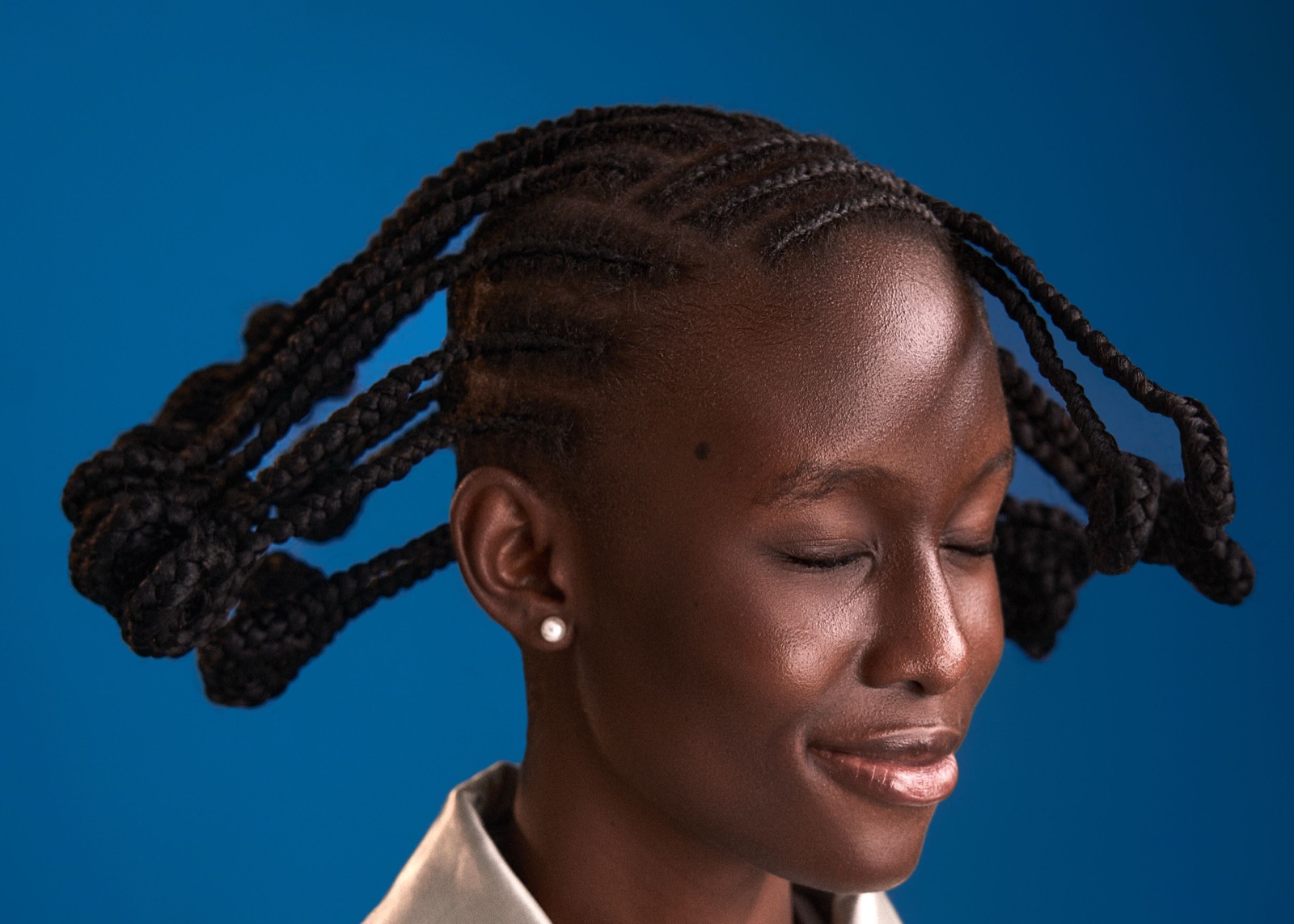
Goddess braids are big, eye-catching braids finished with curly hair. Curl Centric notes the name traditionally meant thick raised cornrows with extension hair; today many stylists also use it for box or knotless braids with loose curly pieces, usually called goddess box braids. This guide explains both versions, how to do goddess braids step by step, which hair to buy and how to care for the curls so the style lasts.
What you'll need
Essentials
-
Braiding hair
: gives the braids their length and thickness; Kanekalon-type hair is the usual choice. -
Wavy or curly hair
: for the curly pieces along the braids and at the ends; human hair or synthetic. -
Rat-tail comb
: clean parts for raised cornrows or box sections. -
Braiding gel and edge control
: smooth parts and a neat border without pulling the hairline. -
Sectioning clips
: hold the curly pieces and the unbraided hair out of the way.
Optional
-
Hair shears
: trim stray fibers and shape the curly ends. -
Light scalp oil
: for a dry or itchy scalp while you wear the style. -
Satin or silk bonnet
: stops raised braids flattening and curls frizzing overnight.
Two kinds of goddess braids
Cornrow goddess braids
The original style: a few thick cornrows braided close to the scalp and raised high, often swept into an updo or a crown, or just two large rows straight back. StyleSeat describes goddess braids as larger and raised higher than box braids and woven close to the scalp, like cornrows. Curly hair can be added along the rows or left loose at the ends.
Goddess box braids
Individual box braids, or their knotless version, with curly strands pulled out along the braid and curls at the ends. StyleSeat says the main difference from box braids is that goddess braids are usually long, thick and have curly hair added throughout and at the ends. Refinery29 describes knotless goddess braids as braids installed with the feed-in technique, with most plaits left unfinished and loose curls added to the ends, plus loose strands woven in to frame the face.
Goddess vs boho braids
StyleSeat treats "goddess" and "bohemian" as the same thing, and Curl Centric advises confirming with your braider which version they mean, since price and install time differ. In common use, boho braids have curly tendrils from root to tip, as The Zoe Report describes them, while goddess braids keep more of the braid visible with curls mostly at the ends. Bring a photo.

Choosing the hair
Braiding hair
Curl Centric recommends 100% Kanekalon braiding hair for the braid body. The amount varies with size and length; its goddess braids guide suggests about 5 to 7 packs of braiding hair plus 1 or 2 packs of wavy hair, and gives a lower figure in its summary table, so count by gram weight and buy extra. Our braiding hair guide covers fibers and color numbers.
Human hair for goddess braids
For the curly pieces, Curl Centric says synthetic wavy hair is cheaper but tangles and looks dated sooner, while human hair costs more, holds its look longer and mats less. Refinery29's writer chose human hair curls for the same reason and notes human hair can be reused if it is kept well.
How to do goddess braids, step by step
This follows Curl Centric's method for goddess box braids. For the cornrow version, braid underhand along the scalp as in our cornrows guide and add the curly hair the same way.
- Prep your hair. Shampoo, condition, detangle and moisturize. Very tightly coiled hair can be stretched first with a cool blow-dry, banding, or braiding it damp and letting it dry.
- Prep the extensions. Feather the blunt ends of the braiding hair so they taper, and trim the wavy hair to the length you want.
- Section. Split your hair into four, clip three away and part out the first braid.
- Start the braid. Apply a little edge control along the part borders and braid your hair with the braiding hair in a three-strand braid.
- Add the curls. After about an inch, add a small amount of wavy hair. After about half an inch more, pull one wavy section outside the braid and clip it out of the way. Repeat down the braid as often as you like.
- Finish the end. Leave curly hair loose at the end of each braid, or braid to the tip and let the curly pieces hang free.
- Trim and repeat. Snip stray fibers and work across the head, then shape the curly ends with shears if needed.
Install time
Curl Centric estimates about 2 to 5 hours for goddess cornrows and 4 to 7 hours for goddess box braids. StyleSeat gives four hours to a full day, depending on head size, braid length, section size and the braider's speed.
Goddess hairstyle braids to try
- Two goddess braids: two large raised cornrows straight back, with curly ends. Quick, and an easy first style.
- Goddess crown: cornrows swept up and pinned around the head.
- Fulani goddess braids: a Fulani braids layout of center and side cornrows, finished with curly ends.
- Knotless goddess box braids: a full head of knotless braids with curly ends and face-framing pieces.
Keeping it gentle
Curl Centric warns that cornrows starting at the hairline can cause traction alopecia if they are too tight, and suggests asking for thicker rows and shorter extension hair and taking the style out right away if it hurts or irritates your scalp. A cosmetology study guide lists the front hairline, temples and nape as the classic sites of traction hair loss and says pain is a stop signal. The American Academy of Dermatology also advises loosening braids at the hairline and choosing thicker, shorter braids.
Common mistakes
- Not agreeing on the style. Goddess, boho and knotless goddess braids mean different things to different braiders; a photo avoids surprises in price and time.
- Cheap curls on a long install. Synthetic curly hair mats sooner, and matted curls are hard to rescue halfway through the wear time.
- Too many curly pieces. Every loose strand is more to detangle and cover at night. Add as many as you are willing to maintain.
- Pulled edges. Thick raised rows look best smooth, but the smoothness should come from gel and edge control, not from tension.
- Going straight into the next install. Rest the scalp between styles.
Caring for goddess braids
At night
Wrap the hair in a satin or silk bonnet or scarf. Curl Centric notes the raised braid flattens quickly if you sleep uncovered.
Washing and drying
StyleSeat suggests shampooing the scalp, rinsing with cool water and using a light conditioner, then wrapping the braids in a microfiber towel and letting them dry completely to prevent mildew. Avoid dry shampoo, which leaves buildup.
Scalp and curls
Use a light oil on the scalp when it feels dry or itchy. Refresh curly pieces with water and keep synthetic curls separated so they do not tangle. Curl Centric notes raised braids catch lint and start to look fuzzy sooner.
How long to keep them in
StyleSeat gives six to eight weeks; Curl Centric says about six weeks is the usual recommendation and to remove them by eight. Taking down the cornrow version takes about one to two hours, since there are only a handful of rows, and Curl Centric suggests resting your scalp for at least one to two weeks before the next install. If you notice broken hairs or thinning at your hairline, see a board-certified dermatologist.
Questions
What are goddess braids?
The name first meant thick, raised cornrows made with extension hair. Today it is also used for box or knotless braids with curly hair left loose along the braids and at the ends, often called goddess box braids.
What is the difference between goddess braids and box braids?
Goddess braids are usually longer and thicker than regular box braids and carry curly hair along the braid and at the ends. The cornrow version is braided flat to the scalp instead of hanging free from square parts.
What is the difference between goddess braids and boho braids?
Many braiders use the names interchangeably. Boho braids usually have curly strands from root to tip on a knotless base; goddess braids more often have curls at the ends and a few loose pieces, or are the original raised-cornrow style.
How long do goddess braids last?
About four to eight weeks depending on your hair, the tension and your care, and around six weeks is a common recommendation. The American Academy of Dermatology advises wearing braids no longer than six to eight weeks.
Should I use human hair for goddess braids?
Human hair for the curly pieces costs more but holds its look longer and mats less. Synthetic curly hair is cheaper but tangles and looks worn sooner.
How long does it take to do goddess braids?
Curl Centric estimates about 2 to 5 hours for the cornrow version and about 4 to 7 hours for goddess box braids. StyleSeat suggests setting aside most of a day for a first install.
Sources
- Curl Centric — Goddess braids
- StyleSeat — What are goddess braids?
- Refinery29 — Knotless goddess braids
- The Zoe Report — Boho braids
- Tricoci University — The art and business of African hair braiding
- Open Exam Prep — Natural hair braiding (OK cosmetology study guide)
- American Academy of Dermatology — Hairstyles that pull can cause hair loss
Read next
Boho braids: how to do boho knotless braids and keep the curls fresh
What makes a braid boho, which curly hair to use, how the curls are added as you braid, and the extra care the loose strands need.
Cornrows: how to cornrow step by step, with hairstyles and care
The underhand stitch, clean parts, feed-in rows and straight-back or patterned layouts, with how long to wear them and how to protect your edges.
Faux locs: how to install wrapped and crochet locs, plus soft and butterfly locs
Temporary locs built from extension hair over braids: the two install methods, the soft, butterfly and goddess variations, and how to take them out without losing your own hair.