Comparison
Silk bonnet vs satin bonnet: fiber, weave and what to look for
Satin is a weave, silk is a fiber, and many bonnets are both. How to read the label, what each costs you in care, and how to pick the size and band.
Published
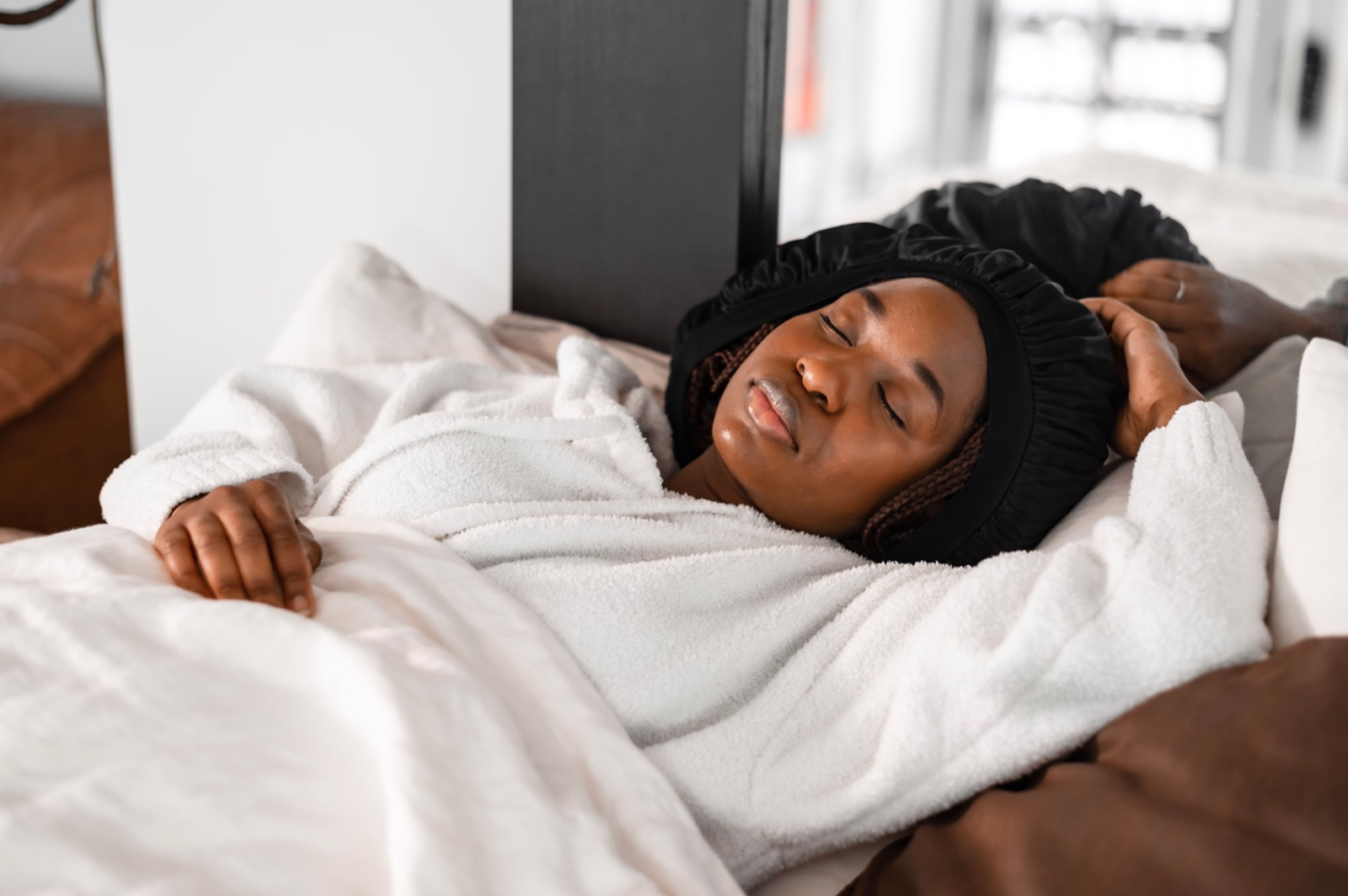
A silk bonnet and a satin bonnet do the same job: they cover your hair at night so it rubs against a smooth surface instead of a cotton pillowcase. The short answer to which one to buy: satin is a weave and silk is a fiber, so the two words are not opposites. A "silk bonnet" is usually silk woven as satin; a "satin bonnet" is usually polyester woven as satin. Choose silk if you want a natural fiber and are happy to hand-wash it gently. Choose polyester satin if you want something inexpensive, easy to wash and easy to replace. Either way, the size, the band and the lining decide more about how well a bonnet works for you than the fiber alone.
Silk vs satin bonnet at a glance
| Silk bonnet | Satin bonnet (polyester) | |
|---|---|---|
| What the word means | A fiber: natural protein spun by silkworms | A weave: long floats give a glossy face |
| Usual fabric | Silk charmeuse, a satin-weave silk | Polyester (sometimes nylon) in a satin weave |
| Weight label | Often sold by momme | Rarely given |
| Surface | Smooth and glossy on the face | Smooth and glossy on the face |
| Care | Gentle: cool water, mild detergent, no wringing, no dryer | Follow the label; synthetics are usually easier |
| Price | Usually higher | Usually lower |
| Snagging | Satin weaves snag, whatever the fiber | Satin weaves snag, whatever the fiber |
Satin is a weave, silk is a fiber
Satin describes how the threads are woven. In a satin weave, four or more threads float over a single crossing thread before going under, and those long floats make the face of the fabric smooth and glossy while the back stays matte. Satin can be woven from silk, polyester or nylon. The trade-off of those floats is durability: satin tends to snag.
Silk is a fiber: a natural protein, mostly fibroin, spun by silkworms. The best-known silk comes from the mulberry silkworm, Bombyx mori, which is why bonnets are often labeled "mulberry silk."

The two meet in charmeuse, a lightweight satin-weave fabric that can be made from silk, polyester or rayon. LILYSILK, for example, describes one of its tie bonnets as silk charmeuse. So a well-made silk bonnet is silk and satin at once, and a cheap satin bonnet can look almost the same while being polyester.
How to read the label
In the US, textile products must list the generic fiber names and the percentage of each by weight, according to the Federal Trade Commission. A product that is 97% silk and 3% polyester cannot be labeled "100% silk." That fiber line is what tells you what you are buying. Product titles are looser: words like "silky" or "silk satin" in a listing name describe a look, so check the material or fiber content before you pay a silk price.
What a bonnet does for your hair
The American Academy of Dermatology (AAD) says that styling hair in twists and using satin or silk bonnets or pillowcases may reduce friction and help preserve your hairstyle. The AAD explains why that matters: friction against your pillowcase can make hair frizzy and easier to break. A University of Utah Health dermatologist makes a similar point about pillowcases: silk or satin creates less friction than cotton, which can reduce hair breakage. The same article notes that friction against the pillow matters more if you toss and turn a lot.
Note what those sources do and do not say. They put silk and satin side by side and speak about friction. Bonnet listings often add claims about keeping hair hydrated; the dermatology sources used here do not make that claim, so treat it as marketing until you see evidence. The Utah dermatologist also notes that wet hair is more fragile and prone to breakage than dry hair, so it is better not to go to bed with soaking wet hair under any bonnet.
Silk bonnets
Momme and grade
Silk is sold by momme (mm), a weight unit: the weight in pounds of a piece of silk 45 inches wide and 100 yards long. A higher momme generally means a heavier, more durable fabric. Silk charmeuse usually runs from about 12 to 30 momme. Mulberry Park Silks, for example, sells its pillowcases at 19, 22 and 30 momme and its reversible bonnets at 22 momme.
Momme is weight, not quality. "Grade 6A," which some makers print next to it, is a grade the seller gives the fiber; Mulberry Park, for one, calls 6A the highest grade on the market, and none of the pages used here points to an independent standard behind it. Look for both a fiber statement (100% mulberry silk) and a momme number; if a listing gives neither, you cannot compare it with anything.
Pros and cons of silk
- Pros: natural fiber, smooth satin face when woven as charmeuse, weight you can compare by momme.
- Cons: costs more, needs gentle washing, and silk loses up to 20% of its strength when wet. Too much sunlight can weaken it and chlorine bleach destroys it.
Satin bonnets

Most satin bonnets are polyester woven as satin, with the glossy face on the side that touches your hair. Because polyester costs less, satin bonnets are the usual choice when you want several to rotate, extra-large sizes for braids, or a bonnet you do not mind replacing when the band wears out. The weave still snags, so keep it away from rough nails, jewelry and hook-and-loop closures.
Pros and cons of satin
- Pros: inexpensive, many sizes and shapes, usually easy to wash (check the label).
- Cons: synthetic fiber, quality varies widely, and listings do not always state the fiber clearly.
What to look for in any bonnet
Size and length
Most bonnets are sold one size and adjust at the band. If you wear braids, locs, twists or a lot of volume, look for a long or extra-large bonnet. Mulberry Park, for example, sells a long version for braids, twists, locs, extensions and silk presses, and a short one for short styles and fine or medium-density hair. Your hair should fit inside without being crushed.
Band
The band is what keeps the bonnet on all night, and it sits on your hairline. Options include an elastic band, a silk-covered elastic band with ties (Mulberry Park's design), a tie closure (LILYSILK's tie bonnet), or a drawstring. An adjustable band lets you keep it snug without pressing on your edges; Mulberry Park describes its wide band as a way to protect the hairline. If a bonnet leaves a deep mark on your forehead, it is probably too tight.
Lining and layers
The fabric that touches your hair is what counts. Some bonnets are satin or silk on the outside only; others are double-layer or reversible, with the smooth fabric on both sides. Satin-lined caps usually put the smooth fabric inside and a different fabric outside. Whatever the design, check the material line for the layer against your hair.
Over a wig or a sew-in
A bonnet also covers an install at night. It keeps a sew-in or wig from rubbing on the pillow, and the extra-large shapes fit over braids. If your wig is taped or glued, a bonnet or satin scarf at night cuts down on rubbing at the hairline; see wig tape.
Washing a bonnet
Follow the care label first. For silk, Mulberry Park Silks' washing advice is typical of what silk makers print: cold or lukewarm water, a small amount of pH-neutral, enzyme-free detergent, no scrubbing, twisting or wringing, no fabric softener or bleach, no tumble dryer, and air-drying away from direct sun and heat. Press the water out in a towel. Polyester satin is usually more forgiving (polyester charmeuse often tolerates machine washing), but the label has the last word. A bonnet picks up oil and product from your hair, so wash it regularly and keep it to yourself rather than sharing it.
Which to choose
- You want a natural fiber and don't mind hand-washing: a mulberry silk bonnet with a stated momme.
- You want low cost and easy care, or several to rotate: a polyester satin bonnet.
- You wear braids, locs or a lot of volume: a long or extra-large bonnet with an adjustable band, in either fabric. For laying a braid foundation, see braid patterns.
- You toss and turn and the bonnet comes off: pick by the band first (ties or a drawstring), or pair it with a silk or satin pillowcase.
- You have a tender hairline: a wide, soft, adjustable band worn loose enough that you feel no pressure.
More guides for your own hair under wigs, weaves and braids are in natural hair.
Questions
Is a silk bonnet better than a satin bonnet?
Not automatically. Satin is a weave and silk is a fiber, so a silk bonnet is usually silk woven as satin. The American Academy of Dermatology names satin and silk bonnets together as a way to reduce friction; silk costs more and needs gentler washing, while polyester satin is cheaper and easier to care for.
Is satin the same as silk?
No. Satin is a way of weaving that leaves long floating threads on the surface for a smooth, glossy face, and it can be made from silk, polyester or nylon. Silk is a natural protein fiber spun by silkworms. Check the fiber content on the label to know which you are buying.
What momme should a silk bonnet be?
Momme is a weight unit for silk fabric, and a higher momme generally means a heavier, more durable fabric. Silk charmeuse, the satin-weave silk used for many sleep products, usually runs from about 12 to 30 momme; one silk maker sells its bonnets at 22 momme. Momme says nothing about fiber quality on its own.
Do bonnets work for braids and locs?
Yes, if the bonnet is big enough. Look for a long or extra-large bonnet with an adjustable band, so the braids or locs fit inside without being crushed and the band does not need to be tight to stay on.
How do you wash a silk bonnet?
Follow the care label. Mulberry Park Silks, for example, says to wash silk in cold or lukewarm water with a pH-neutral, enzyme-free detergent, never wring or tumble dry it, skip bleach and fabric softener, and air-dry it away from direct sun.
Sources
- American Academy of Dermatology — 6 curly hair tips from dermatologists
- University of Utah Health — Is it bad to sleep with wet hair?
- Wikipedia — Satin
- Wikipedia — Charmeuse
- Wikipedia — Silk
- Wikipedia — Units of textile measurement (momme)
- Federal Trade Commission — Threading your way through the labeling requirements under the Textile and Wool Acts
- Mulberry Park Silks — Silk reversible sleep bonnets
- Mulberry Park Silks — How to choose a pillowcase momme
- Mulberry Park Silks — How to wash your silk pillowcases
- LILYSILK — Zodiac-inspired silk tie bonnet
Read next
Edge control: hold types, ingredients and how to lay your edges
Gel, pomade or wax stick: how edge control holds, what is in the jar, how to apply it with a brush, and how to keep it from building up on your hairline.
Braiding hair guide: Kanekalon, pre-stretched, human hair, curly and Marley
What each kind of braiding hair is made of, how the color numbers work, how many packs a style takes and what the hot-water and vinegar steps actually do.
Wig tape: hold types, tape vs glue, and how to apply and remove it
What lace tape does, how the hold tiers and formats differ, and the steps for a clean tape install and a gentle take-down.