Guide
Hair extension types: clip-in, halo, tape-in, sew-in, I-tip and K-tip compared
How each kind of extension attaches, how long one install lasts, how it comes out, and which ones you can put in yourself.
Published
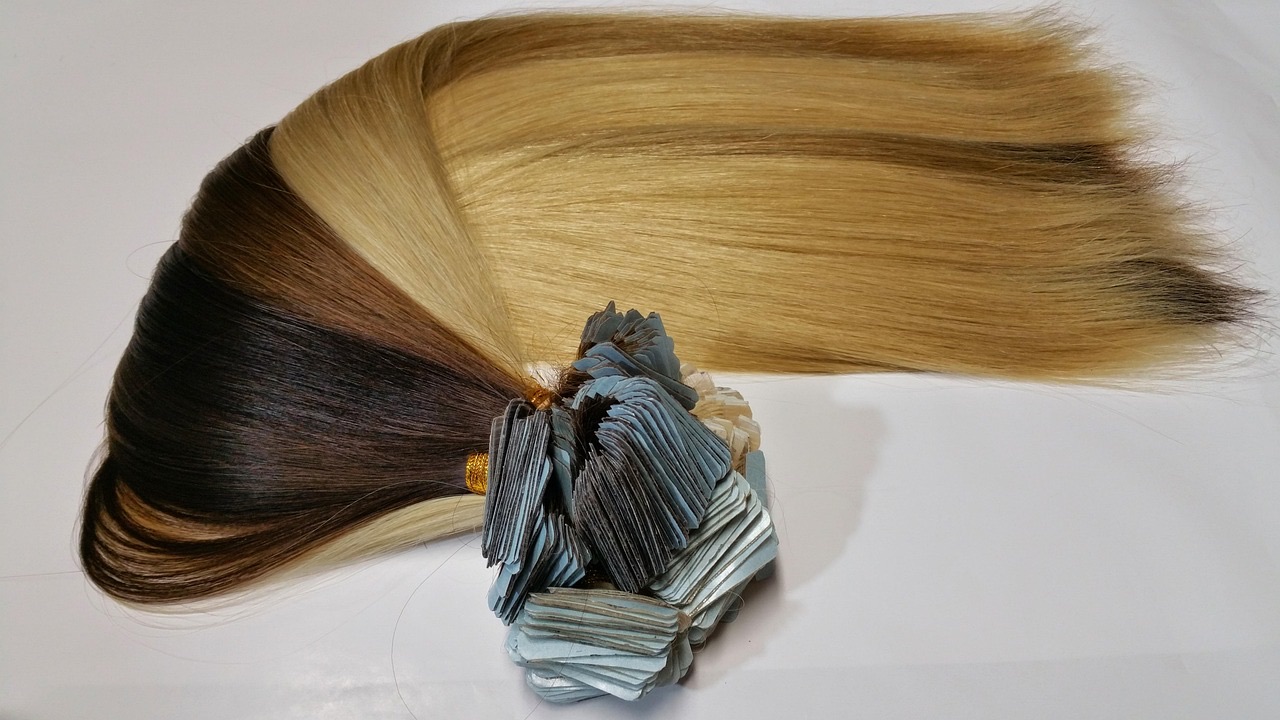
Hair extensions come in two broad groups. Temporary extensions (clip-ins, halos and ponytail pieces) go in and come out the same day, and you put them in yourself. Semi-permanent extensions (tape-ins, sewn-in wefts, I-tips and K-tips) are attached at the root by a stylist and stay in for weeks or months. This guide walks through each type of hair extension: how it attaches, how long one install lasts, how it is removed and what kind of hair it suits, so you can pick one before you book or buy.
Hair extension types at a glance
| Type | How it attaches | Who installs | One install lasts | How it comes out |
|---|---|---|---|---|
| Clip-in | Wefts with small clips | You | A day; reused for months | Unclip |
| Halo | A clear wire resting on the head | You | A day; reused | Lift off |
| Ponytail | Comb, clip or drawstring around your ponytail | You | A day; reused | Unclip or loosen |
| Tape-in | Adhesive wefts sandwiched around thin sections | Stylist | About 4 to 8 weeks | Adhesive remover |
| Sew-in weft | Sewn onto cornrows with needle and thread | Stylist | About 6 to 8 weeks | Threads cut |
| I-tip (micro-link) | Strands clamped into small beads | Stylist | About 2 to 4 months | Beads opened with pliers |
| K-tip (fusion) | Keratin bond melted onto the hair | Stylist | About 3 to 4 months | Bond remover |
Wear times are the ranges given by StyleSeat and Bombay Hair; they vary with your hair's growth, the hair quality and aftercare. Most types are sold in human hair or synthetic fiber. Human hair extensions can be heat-styled, colored and blended like your own hair; synthetic extensions cost less but don't take heat unless the maker says they are heat-resistant.
Temporary extensions
Temporary types are the ones to start with if you have never worn extensions. Nothing is attached at the root, so you can stop any time.
Clip-in extensions
Clip-ins are wefts, strips of hair stitched together at the top, with small snap clips sewn along the band. You section your hair, snap each weft in underneath and let your own hair fall over it. Bombay Hair notes that they come out at night and can be reused for months with care. StyleSeat adds two practical points: you can't shower in them, and they should be completely dry before you brush them. Store them flat so they don't tangle.
Halo extensions
A halo is a single wide weft on a thin, clear wire. You set the wire on your head like a headband, behind your hairline, and pull your own hair over it; nothing clips, tapes or bonds to your hair. Bombay Hair suggests halos for fragile or damaged hair because they need no adhesive or heat. Bombay Hair's caveats: you need enough hair on top to cover the wire, all the added hair sits in one band across the back rather than at the sides, and for updos clip-ins are easier to place.
Ponytail extensions
A ponytail piece adds length and volume to your own ponytail or bun. Wrap-around pieces clip on and hide the comb with a strand wrapped around the base; drawstring pieces cinch over a bun or puff; claw-clip pieces clamp on. They are among the quickest extensions to wear and are reused like clip-ins.
Taking care of temporary extensions
Because they come out every day, temporary extensions are washed less often than your own hair. Detangle them before and after each wear, wash them gently and let them dry fully, and store them flat or hung, away from dust. Synthetic pieces follow the synthetic wig care rules: cool water and no heat tools unless the fiber is rated for heat.

Semi-permanent extensions
These are installed at the root in a salon and need moving up as your hair grows. Each is removed with a specific tool or product, so plan the removal appointment when you book the install.
Tape-in extensions
Tape-ins are thin wefts with a strip of adhesive tape at the top. The stylist takes a very thin section of your hair and sandwiches it between two wefts, tape to tape, close to the root. StyleSeat puts one install at about four to eight weeks and notes that no heat is needed to apply them; Bombay Hair gives about six to eight weeks per install and suggests tape-ins for fine or thinning hair because the wefts lie flat and light.
At a move-up, the stylist loosens the tape with an adhesive remover, slides the wefts out, and usually re-tapes them with fresh tape for extensions before putting them back closer to the root. Between appointments, keep oils and conditioner off the tape: StyleSeat warns that heat and product on the tape can weaken it.
Sew-in wefts
For a sew-in, your hair is braided into cornrows close to the scalp and the wefts are sewn onto the braids with a needle and thread. StyleSeat and Bombay Hair both put a sew-in at about six to eight weeks; Bombay Hair says the method suits thicker hair. The threads are cut to take it down. The braid pattern guide covers the base, needle and thread covers the tools, and the closure sew-in and quick weave guides walk through two full installs.
StyleSeat's care point for sew-ins is moisture: dry your braids fully after washing, since damp hair trapped under wefts can develop mildew.
I-tip and micro-link extensions
I-tips are small individual strands with a straight tip. The stylist threads a section of your hair and the tip through a tiny bead (the micro-link) and crimps the bead shut; no heat or glue is used. StyleSeat puts micro-links at three to four months and says they suit fine to medium hair; Bombay Hair gives two to three months per install. To move them up or remove them, the beads are opened with pliers and slid off.
Keep high heat away from the beads: StyleSeat warns that heat can warp the beads, and recommends gentle brushes that won't catch on them.
K-tip and fusion extensions
K-tips, also called keratin bond or fusion extensions, have a small tip of keratin at the top of each strand. The stylist places it against a section of your hair and melts it with a heat tool so it fuses around the hair. StyleSeat puts fusion at up to three months, Bombay Hair at three to four months; both describe them as suiting thick hair. Removal uses a bond remover that softens the keratin, after which the strands slide off. StyleSeat advises against over-brushing, overwashing and too many heat-styling products.
I-tip or K-tip?
Both give strand-by-strand placement that moves like your own hair. I-tips need no heat to apply or remove; K-tips are bonded with heat and need a remover. If you would rather nothing hot touches your roots, ask for I-tips.
Which hair extensions suit your hair
Fine or thinning hair
Bombay Hair points to lightweight options: tape-ins or slim clip-ins. A halo is the other route, since it puts no weight on your own hair.
Thick hair
Bombay Hair suggests sew-in wefts, I-tips and K-tips for thick hair.
Natural and textured hair
Sew-ins over braids keep your own hair braided away under the wefts. Bombay Hair says sew-in wefts and clip-ins work especially well on textured hair when they match your natural curl, and that drawstring ponytails are especially popular for textured and curly hair, since they sit over a bun or puff. Match the extension texture to your own curl pattern so the leave-out blends; leave-out vs no leave-out explains that choice for sew-ins.
Fragile or damaged hair
Bombay Hair calls clip-ins and halos the gentlest options, since neither needs adhesive, glue or heat. Ponytail pieces worn for short stretches also leave your roots alone.
Protecting your own hair
Every root-attached extension adds weight and tension. The American Academy of Dermatology lists extensions and weaves among styles that can cause hair loss when they are too tight, and advises wearing them for short periods and removing them right away if they hurt or irritate your scalp. If you notice thinning at your edges or part, see a board-certified dermatologist.
The hair guides section covers choosing the hair itself, and the sew-ins section has step-by-step installs for wefts.
Questions
What are the main types of hair extensions?
Temporary types you put in and take out yourself: clip-ins, halos and ponytails. Semi-permanent types a stylist installs: tape-ins, sewn-in wefts, I-tips (micro-links) and K-tips (keratin fusion bonds).
Which hair extensions last the longest per install?
Bonded strand extensions usually go longest between appointments: StyleSeat puts micro-link I-tips at three to four months and keratin fusion at up to three months. Tape-ins usually need moving up after four to eight weeks, and sew-ins after about six to eight weeks.
What is the difference between I-tip and K-tip extensions?
Both are small strands attached close to the root. An I-tip is threaded through a small bead that is clamped shut, with no heat or glue; a K-tip has a keratin bond that is melted onto your hair with a heat tool and later dissolved with a bond remover.
Are halo extensions damaging?
A halo does not attach to your hair at all: a thin, clear wire sits on your head like a headband and your own hair covers it. That is why Bombay Hair suggests halos for fragile hair, but you need enough hair on top to hide the wire.
Can I put in hair extensions myself?
Clip-ins, halos and ponytail pieces are made for doing at home. Tape-ins, sew-ins, I-tips and K-tips are installed by a stylist, because they sit right at the root and are removed with tools or solvents.
Sources
- StyleSeat — How long do hair extensions last?
- Bombay Hair — What are the different types of hair extensions?
- Bombay Hair — Halo hair extensions: how they work and who they suit
- Bombay Hair — The complete guide to ponytail extensions
- American Academy of Dermatology — Hairstyles that pull can cause hair loss
Read next
Ponytail extensions and the frontal ponytail: drawstring, wrap-around and claw clip
Which attachment holds which ponytail, how to match the hair to yours, and what a frontal ponytail takes.
Quick weave: protective cap, bonding glue and a leave-out or closure, step by step
Prep and protect your hair, glue the tracks to the cap instead of your hair, and take it out without a fight.
Human hair bundles: wefts, textures, lengths and how many you need
What a bundle actually is, what the labels on it mean, and how many you need for the length you want.