Comparison
Sew-in with leave-out vs no leave-out: leave-out, closure or frontal
How a leave-out, a closure and a frontal compare on blending, heat, parting and upkeep, and who each one suits.
Published
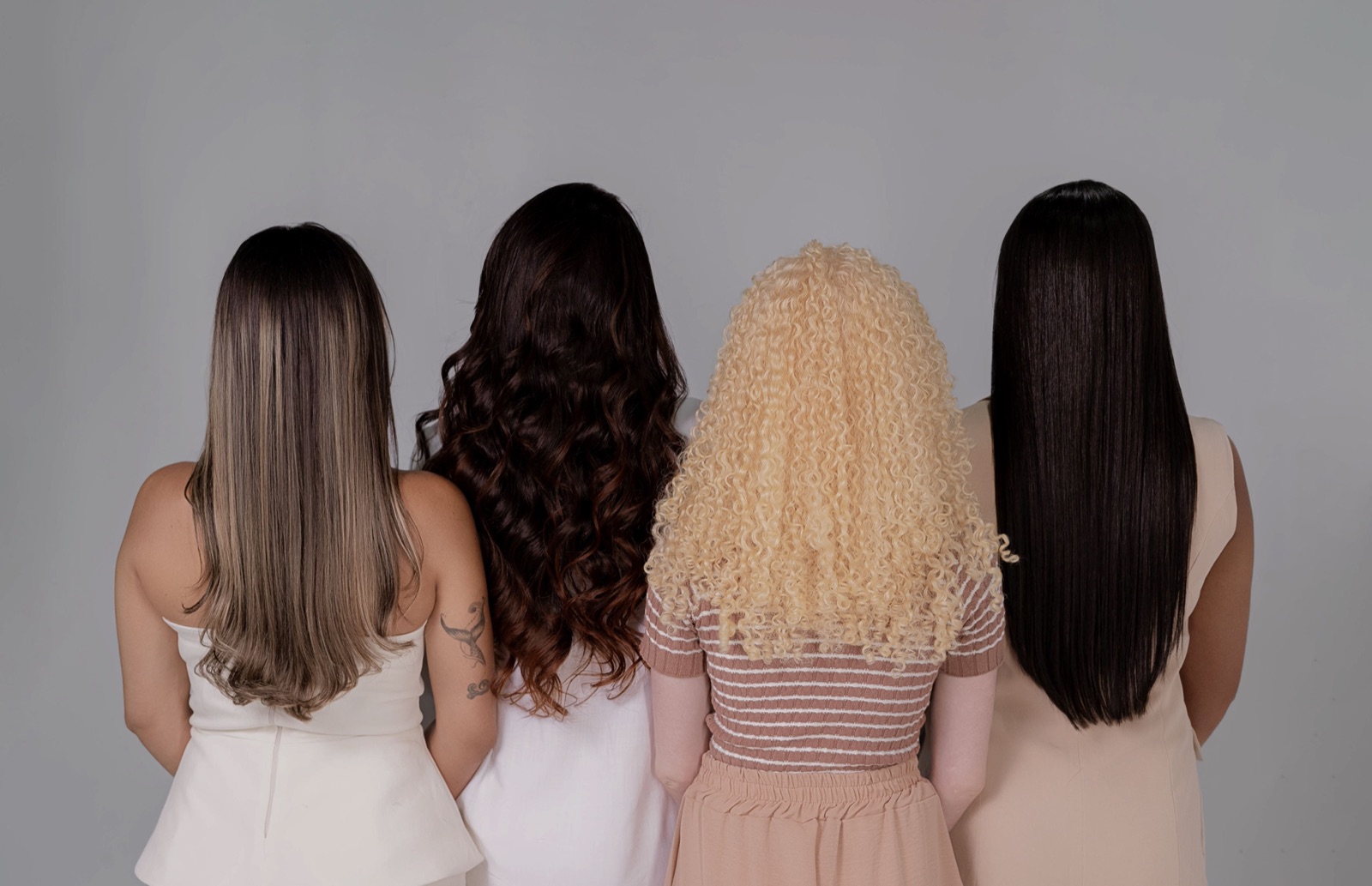
A sew in with leave out keeps a small section of your own hair out at the front or along the part and blends it over the tracks. A sew-in with no leave out braids all of your hair down and covers the part with a closure or a frontal. The short answer: leave-out gives the most natural part and the lowest cost, but your exposed hair usually needs heat to blend. No leave-out protects all of your hair, at the price of a closure or frontal and, with a frontal, more upkeep.
Leave-out vs closure vs frontal at a glance
| Leave-out | Closure (no leave-out) | Frontal (no leave-out) | |
|---|---|---|---|
| What covers the part | Your own hair | A lace or silk piece, commonly 4x4 or 5x5 inches | Lace from ear to ear, usually 13x4 inches |
| Braid base | Straight-back rows toward the leave-out | Beehive (centered or offset) | Straight-back, fewest flat braids |
| Blending | Your hair must match the weft texture | Closure hair matches the bundles | Frontal hair matches the bundles |
| Heat on your own hair | Usually, if the wefts are straighter than your hair | None needed | None needed |
| Parting | Fixed where you left hair out | Limited to the closure area | Anywhere along the hairline |
| Ponytails and updos | Limited | Not suited; tracks behind it show | Possible |
| Upkeep | Style the leave-out regularly | Low; nothing to lay daily | Higher; edges need laying every few days |
| Extra cost | None | A closure | A frontal, the most expensive of the three |
Closure and frontal sizes and upkeep come from Mayvenn's closure vs frontal guide.
Sew-in with leave-out
How it works
Most of the hair is braided straight back, and a narrow strip is left out along a middle part, a side part or the front hairline. The wefts are sewn up to the edge of the leave-out, and your own hair falls over the last track. Mayvenn's braid pattern guide gives 7 to 9 cornrows for a middle or side part leave-out pattern.
Sew in leave-out side part
For a side part, part off one side and leave that section out, angling the front rows toward the part so your hair falls over the tracks.
Blending
The leave-out looks real because it is real. The catch is texture. If your hair is coily and the wefts are straight or loosely wavy, the leave-out has to be straightened or set to match. If you pick wefts close to your natural or stretched texture, you can blend with a twist-out, braid-out or roller set instead of a flat iron.
Heat on the leave-out

Mayvenn's braid pattern guide notes that a center leave-out gets flat-ironed to blend every time you style, for the whole install, and advises taking out less hair than you think you need: a narrow strip blends fine and risks less. To limit the heat:
- Leave out as little hair as covers the tracks.
- Choose wefts close to your texture so you need less heat.
- Use a heat protectant and the lowest flat-iron setting that works for your hair.
- Rotate the part side from one install to the next.
Who it suits
Leave-out suits you if your hair takes heat well or your texture matches the wefts, you want the most natural part, and you do not want to buy a closure.
Sew-in with no leave-out: closure
A full sew in no leave out with a closure braids all of the hair into a beehive and stitches the closure over the top. Mayvenn's braid guide gives 6 to 8 cornrows for this base. Your own hair stays braided under the install for the whole wear time, so none of it is flat-ironed.
The trade-off is parting. You can only part within the closure, and a closure does not suit ponytails or updos, because the tracks behind it would show. A 5x5 gives you more room to move the part than a 4x4, according to Mayvenn's closure guide. The closure sew-in guide covers the full install.
Who it suits
A closure suits you if you want to protect all of your hair from heat, your texture is very different from the wefts, or you want low daily upkeep.
Sew-in with no leave-out: frontal
A frontal covers the hairline from ear to ear, so you can part anywhere and wear the hair pulled back. It sits on a straight-back base of 5 to 7 cornrows in Mayvenn's guide. The costs: it is the most expensive option, the install takes longer, and the edges need laying every few days. If you secure the lace at the hairline with adhesive or tape, patch-test it first and follow the instructions on your product.
Who it suits
A frontal suits you if you want ponytails, slicked-back styles or a hairline-to-hairline look, and you have the time or a stylist for the upkeep.
Quick weave with leave-out or no leave-out
The same choice applies to a quick weave. With leave-out, you cut the cap open along the part and let your hair fall over the last glued track; StyleSeat's guide describes marking the leave-out on the cap before gluing. With no leave-out, a closure goes on top, which makes a quick weave no leave out bob a popular short style. The quick weave guide covers both.
A note on tension
Every option here sits on braids or a cap. The AAD advises that cornrows should not be tight and that pain means a style is too tight. Tight braids can damage the hairline over time; if you notice thinning, see a board-certified dermatologist. A stylist study guide also suggests keeping sew-ins in no longer than 6 to 8 weeks.
Which to choose
- You want the most natural part and your hair matches the wefts: leave-out.
- You want to avoid heat on your own hair: a closure.
- You want ponytails, updos or to part anywhere: a frontal, or a vixen pattern with small leave-outs; see the braid pattern guide.
- You want low upkeep and a lower price than a frontal: a closure.
- Your edges are fragile: no leave-out with light braids at the hairline, and skip frontal adhesive.
- You want something fast and short: a quick weave bob with a closure.
Questions
Is a sew-in with leave-out or no leave-out better for your hair?
No leave-out keeps all of your hair braided under the install, so it avoids the heat that straight leave-out usually needs to blend. Leave-out can look the most natural, but the exposed hair takes repeated heat and styling for the whole wear time, which can damage it.
How much hair should you leave out for a sew-in?
Less than you think. A narrow strip along the part is usually enough to cover the tracks, and a smaller leave-out means less hair exposed to heat. Rotate which side you part on between installs.
Can you do a quick weave with no leave-out?
Yes. A quick weave with no leave-out is finished with a closure glued or sewn on top of the cap, so all of your hair stays under the cap. Short styles like a bob work well this way.
Do frontals need more upkeep than closures?
Yes. Mayvenn's guide rates closure upkeep as low, with nothing to lay daily, while frontal edges need laying every few days. Frontals also cost more and take longer to install.
Sources
- Mayvenn — Sew-In Braid Patterns: 6 Braid Downs for Every Install
- Mayvenn — Closure vs Frontal: What's the Difference?
- StyleSeat — What Is a Quick Weave and How Is It Installed?
- Open Exam Prep — Weaving and sew-in techniques (natural hair stylist study guide)
- American Academy of Dermatology — Hairstyles that pull can lead to hair loss
Read next
Sew-in closure: braid down, place the closure and sew it flat
A full sew-in with no leave-out: the braid base, the wefts and a closure stitched flat at the hairline.
Closure wig vs frontal wig: sizes, parting, install and upkeep compared
A closure gives you a small patch of lace and an easy install; a frontal gives you lace ear to ear and more ways to part and pull the hair back.
Braid pattern for sew-in weave: straight-back, beehive, vixen and leave-out layouts
Which braid down goes under which install, how many cornrows it takes, and how to keep it flat and gentle on your edges.