Guide
How to make a wig look natural: fit, hairline, part and shine
Fit, hairline, part, shine and cut: the five places a wig gives itself away, and what to do about each one.
Published
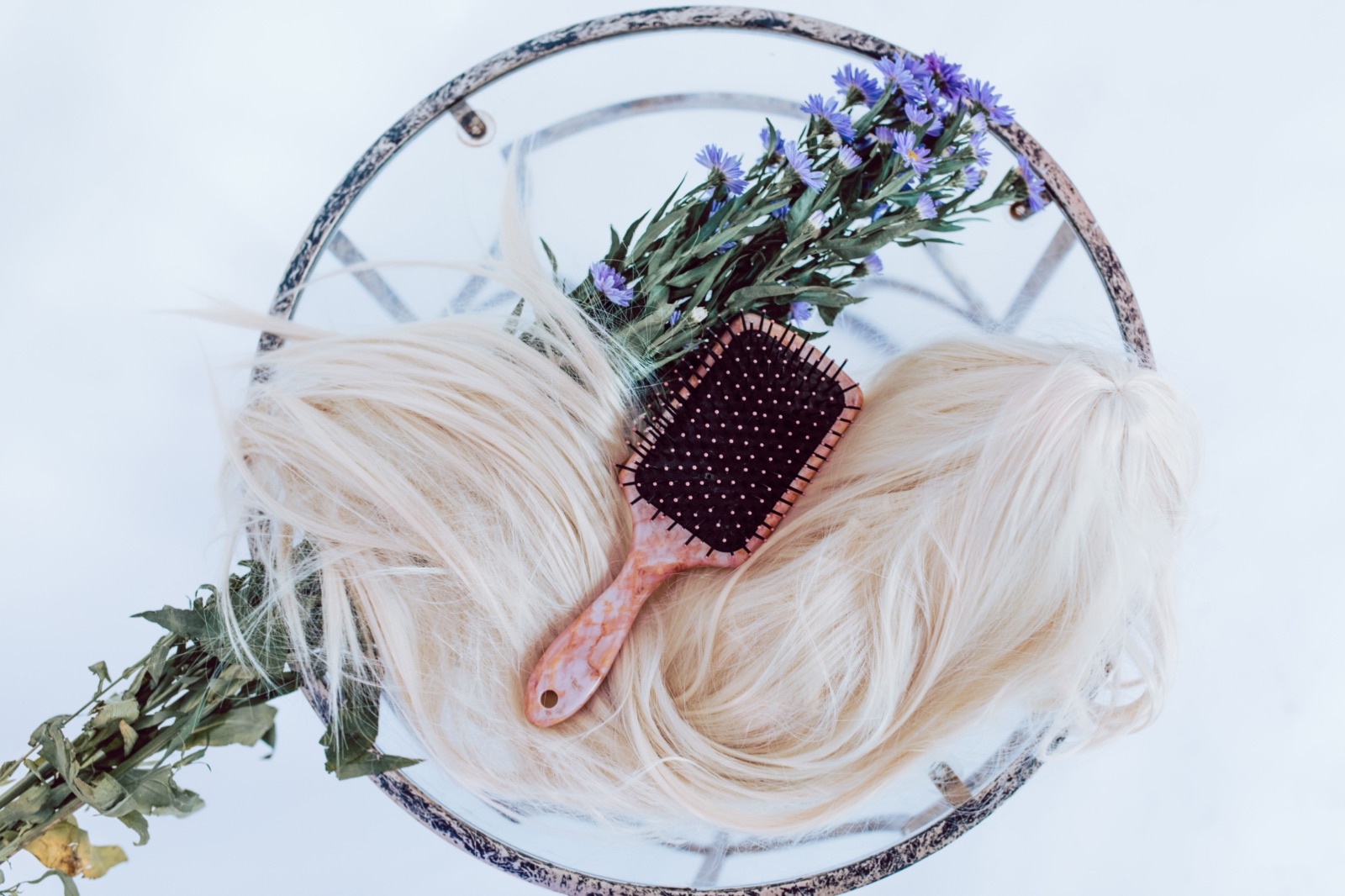
Most wigs look like wigs for the same few reasons: the cap rides high, the hairline is too dense and too even, the part looks like fabric, the fiber shines like plastic, or the style is a factory shape that ignores the face under it. This guide shows how to make a wig look natural by working through each of those in order, for human hair and synthetic wigs alike. You will end up with a wig that fits close to your head, a hairline and part that blend into your skin, and a finish that catches light like hair.
What you'll need
Essentials
-
Wig cap or grip cap
: keeps your own hair flat so the wig sits close to the head instead of rising at the crown. -
Wide-tooth comb
: works powder through the fiber and detangles without stretching the cap. -
Tweezers
: thins a dense hairline and part so they look like hair growing from the scalp. -
Fluffy makeup brush with powder or concealer
: blends the lace and the part into your skin tone. -
Wig shampoo for your fiber
: removes the product buildup that makes a wig look shiny and stiff.
Optional
-
Dry shampoo or cornstarch powder
: dulls the factory shine of a new synthetic wig. -
Lace tint spray
: tints the lace closer to your skin without bleaching or dyeing it. -
Wig grip band
: stops the wig from sliding back or lifting at the nape. -
Hair shears
: for trimming lace and, if you are confident, adding face-framing layers.
Start with fit: the base under the wig
A wig that is the wrong size shifts, lifts at the nape or slides back, and Headcovers points out that real hair does not move that way. Fit comes first because nothing done to the lace hides a cap that sits wrong.
Measure your head
Mayvenn recommends taking five measurements with a cloth tape: the full circumference, from the front hairline to the nape, ear to ear over the top, across the nape at the base of the hairline, and temple to temple around the back. Compare those numbers with the wig's size chart. Sizes vary between makers, so check each brand's chart rather than assuming you are always "average". Headcovers sorts its wigs into petite, average and large.
Flatten your own hair
"The flatter your natural hair, the better your wig will fit," as Mayvenn puts it. Braid it into flat cornrows, twist it close to the scalp, or wrap long hair into a low ponytail or bun. Short hair can be slicked down with gel or a leave-in. Then cover it with a wig cap. Milano suggests a grip cap or grip band that matches your scalp tone, and for wigs with a transparent top, one with a lace element at the part and hairline so nothing dark shows through.
Stop it from moving
If the wig slides back or pops up at the nape, a wig grip band under it adds friction at the hairline without glue. If you do use adhesive on a lace front, Milano advises a light touch, just enough to hold the lace, since excess can leave residue and damage the lace. Our guide on how to put on a lace front wig covers placement step by step.
Make the hairline look real
The front edge is where people look first. A natural hairline is uneven and gets less dense toward the face; a factory hairline is a straight, solid line.
Pluck a dense hairline
Mayvenn describes wigs as often dense and unnatural looking at the hairline, and recommends plucking along the hairline and part so the hair goes "from less dense around the hairline to full coverage". Work in small amounts, spread your plucking out rather than clearing one spot, and stay off the lace itself. Our guide to plucking a wig shows the full method. Dark knots that show as dots at the root can be lightened, explained in bleaching knots.
Cut the lace to your hairline
Cut the lace with the wig on your head, positioned where you will wear it and with your hair clipped back. Mayvenn makes the first cut at the middle of the forehead and follows the curves of your own hairline instead of a straight line, keeping clear of any baby hairs you want to keep, and trims the ear tabs close to the ears. Milano warns that cutting too close to the hairline looks harsh: leave a little lace for blending. It also notes that a zigzag lace front follows the irregular shape of a real hairline.
Baby hairs
Short hairs along the edge soften the line between lace and skin. Milano suggests using the baby hairs that come with the wig or cutting your own from the front, then styling them with a hairline brush and a little gel. Keep them sparse and close to your own hair color.
Blend the lace and the part
Powder or concealer
Lace that is lighter or darker than your skin outlines the wig. Mayvenn suggests lightly brushing powder and concealer you already own along the hairline and part, then dabbing or blotting it into the lace. Milano also suggests dabbing makeup where the part meets the front hairline.

Tint the lace
For a longer-lasting match, a lace tint spray lightly colors the lace without bleaching or dyeing, as Milano notes. Follow the directions on your product and test it on a small area first. If you are still choosing a wig, the lace itself matters: see HD vs transparent lace for how each blends.
Thin a heavy part
If the hair is too dense at the part and the part cannot be moved, Mayvenn suggests plucking it lightly for a more natural-looking part. A part should look a little uneven, not like a drawn line.
How to make a wig less shiny
Shine is the main giveaway of a synthetic wig, and it is strongest when the wig is new. Headcovers suggests these steps, starting with the gentlest.
- Wash it. Wash the wig a couple of times with a shampoo made for synthetic wigs. Shine that appears after serums or shine sprays is usually buildup, which a wash removes. See synthetic wig care for the method.
- Powder it. On the dry wig, on a stand, lightly sprinkle or spray the crown and work it through with a wig comb, then shake out the excess. Headcovers suggests cornstarch baby powder for light colors (blonde, light brown, gray) and dry shampoo for darker colors such as brunette and black. Test a small section at the back underneath first: too much leaves a white cast that shows most on dark hair. UniWigs also warns that dry shampoo can leave a temporary white coating.
- Add texture. Wavy, curly or messier styles catch less light than a sleek, straight finish.
- Check your spray. Headcovers advises skipping any product whose label promises gloss or luster.
- Give it time. Headcovers notes that a synthetic wig gradually looks less shiny over time.
Soaks in diluted apple cider vinegar or fabric softener are widely suggested online. UniWigs describes a vinegar soak of up to 20 minutes, but Headcovers warns that fabric softener can damage a synthetic wig and that vinegar may damage the hair or the cap. Treat both as risky and try washing and powder first.
How to make a synthetic wig look real
Beyond shine, Headcovers stresses one rule: no hot tools on a standard synthetic wig, because heat melts the fiber. If you want to curl or straighten, choose a heat-friendly synthetic (it often has less shine too) or a human hair wig. On a human hair wig, go easy on oils, serums and shine sprays, and keep conditioner off the cap and roots.
Cut and style it for your face
A wig straight out of the bag has a generic shape. Headcovers recommends having a stylist trim it to your face shape, and thin it in places if needed, while you are wearing it. Milano notes that layers add movement and depth and that bangs can soften the hairline, which also helps if the front lace is hard to hide.
Color matters as much as cut. Milano suggests a shade close to your roots, eyebrows or complexion.
Changing the style now and then also helps. Headcovers points out that a human hair or heat-friendly wig styled differently from day to day looks more like your own hair.
How to make a cheap wig look better
A budget wig can come a long way with the steps above, in this order:
- Wash off the factory finish with a shampoo for its fiber.
- Thin it. Headcovers says budget wigs almost always need thinning to look their best. Pluck the hairline and part, and have a stylist thin the bulk if it looks helmet-like.
- Tone down the shine with powder or dry shampoo.
- Trim it to your face, including the lace.
- Add texture rather than wearing it poker straight.
Headcovers also notes that construction makes a difference you cannot add later: monofilament tops make hair appear to grow from the scalp and allow different parts, hand-tied wigs move more like real hair, and lace fronts give a nearly invisible hairline. When a cheap wig still looks flat after all this, those are the features to look for next time.
Common mistakes
- Wearing it too far forward. The front of the wig should meet your own hairline, not sit low on the forehead.
- Over-plucking. Thin gradually and check in a mirror; you cannot put hair back.
- Too much powder. A dusty or white look is worse than shine. More product on top will not hide it; Headcovers suggests washing it out with wig shampoo and using less next time.
- Judging it in the bathroom mirror. Headcovers suggests checking shine in indirect daylight, from conversation distance. Camera flash and bright overhead light bounce off synthetic fiber.
How to make a wig look natural for longer
A wig stays natural looking when it stays clean and in shape. Wash it when product builds up (our guide to how to wash a wig covers both fibers), use combs and products made for wigs, and store it on a mannequin head or stand so the cap keeps its shape. Mayvenn also advises keeping wigs away from chlorine, salt water and hot water. More guides are in wig making and wig care.
Questions
How do you make a wig look natural for beginners?
Start with fit: flatten your own hair under a cap and choose a wig in your head size. Then work on the front, where most wigs give themselves away: pluck a dense hairline lightly, cut the lace to follow your own hairline, and blend the lace and part with powder or concealer in your skin tone.
How do you make a synthetic wig less shiny?
Wash it in a shampoo made for synthetic wigs, then dust the dry wig lightly with cornstarch powder (for light colors) or dry shampoo (for dark colors) and comb it through. Test a small section underneath first, and never use heat tools on a standard synthetic, since heat melts the fiber.
Do human hair wigs look more real than synthetic ones?
Usually, yes. Human hair has the movement and low shine of real hair and can be heat-styled like your own. Good synthetics and heat-friendly synthetics can still look natural, especially once the shine is toned down and the wig is styled with some texture.
How do you make a cheap wig look better?
Wash out the factory finish, tone down the shine with powder, thin out a heavy hairline and part, and get it trimmed to your face. Headcovers notes that budget wigs almost always need thinning to look their best.
Should a wig be cut while you are wearing it?
Yes. Trim the lace with the wig on your head, positioned where it will be worn, and have any layers or bangs cut while you wear it too, so the shape follows your face and hairline.
Sources
- Mayvenn — How to make a wig look natural
- Headcovers.com — How to make your wig look real
- Headcovers.com — How to make a wig less shiny
- Milano Collection — How do you make a lace front wig look natural?
- UniWigs — 5 expert tips: how to make a synthetic wig less shiny
Read next
Plucking a wig: how to thin a lace hairline and part so they look natural
Pin the wig, work in thin layers from ear to ear, thin the part, and stop before it goes too far.
Lace front wigs: lace front vs 360 vs full lace, and what to check before you buy
How much lace you need depends on how you wear your hair: the lace front, 360 and full lace wig compared, and what to check in each.
Hair color codes explained: 1B, 99J hair color, 27, 30, 613 and ombré
The numbers on wigs, bundles and extensions, the letters and slashes that combine them, and why the same code can look different from one brand to the next.