Guide
How to wash a wig: a human hair wig wash at home, step by step
Detangle, wash in the direction the hair falls, keep conditioner off the knots and dry the cap on a stand before you style.
Published
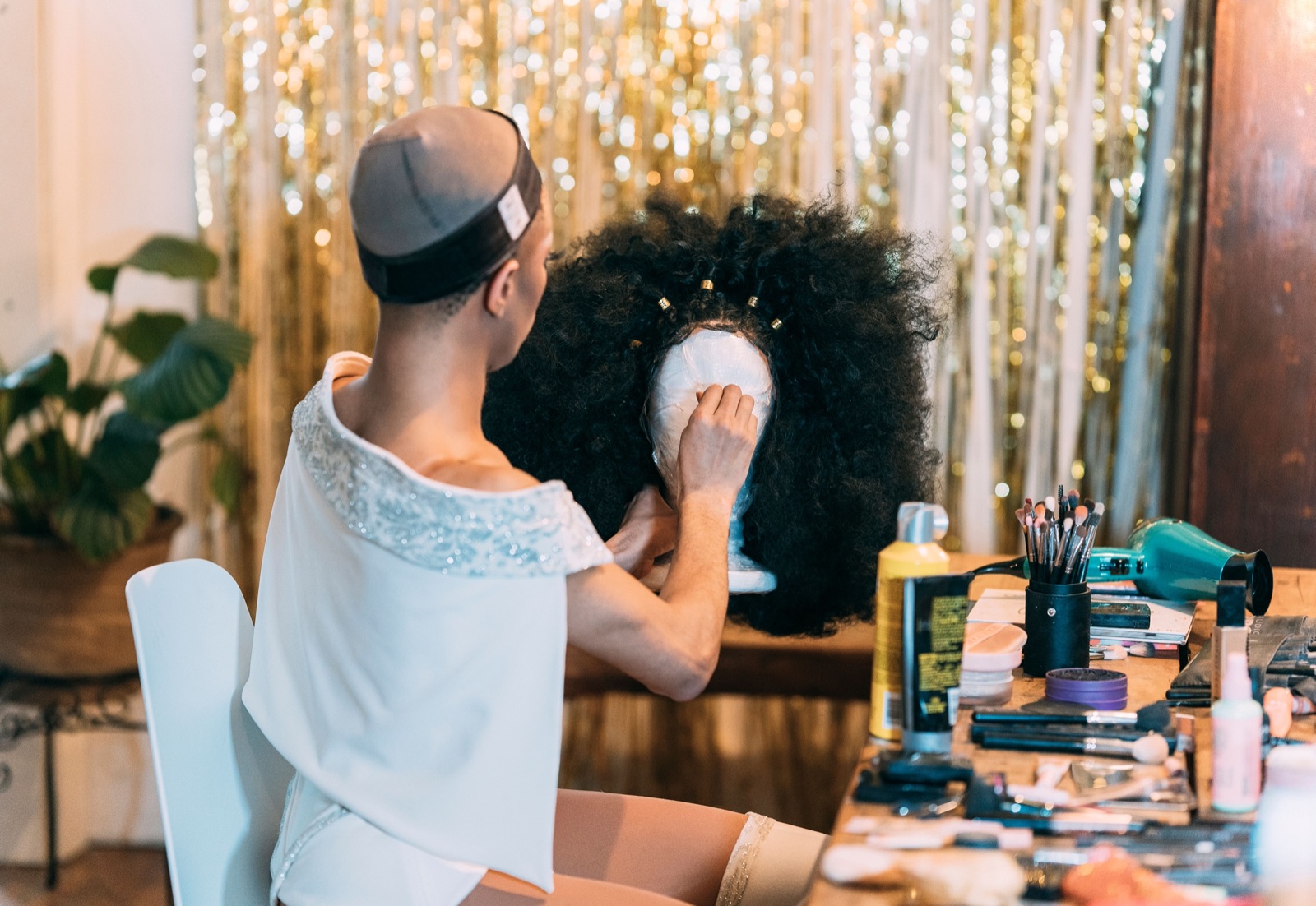
Learning how to wash a wig properly does a lot to keep a human hair unit soft and tangle-free. This guide walks through one full wash of a human hair wig at home: detangling, rinsing, shampoo, conditioner, drying and a first style. By the end you will have a clean wig drying on a stand, conditioner kept away from the knots, and a schedule for the next wash. If your wig is synthetic fiber, the steps differ in a few important places (water temperature and heat above all), so use the synthetic wig care guide instead.
What you'll need
Essentials
-
Wide-tooth comb
: detangles from the ends up before washing and is the only tool to use on the hair while it is wet. -
Shampoo for human hair wigs
: a gentle, sulfate-free or color-safe formula cleans without stripping hair that no longer gets oil from a scalp. -
Conditioner
: goes on the mid-lengths and ends only, never on the cap or knots. -
Folding or open wig stand
: lets air reach the inside of the cap so the base dries fully. -
Clean towel
: blots water out without wringing or twisting the hair.
Optional
-
Heat protectant spray
: goes on each section before a blow dryer or iron touches the hair. -
Blow dryer and round brush
: some makers recommend blow-drying human hair after the cap dries, to avoid frizz. -
Plastic processing cap
: covers the hair during a deep-conditioning treatment.
How to wash a wig: start with the label and the cap
Wig makers do not agree on every detail, so read the care card that came with your unit first. Where it differs from this guide, follow the card.
Human hair, synthetic or heat-friendly fiber
Human hair can take warmer water and heat styling; standard synthetic fiber cannot. If the listing only says "premium fiber" or "heat-resistant," treat it as synthetic. For blended units (human hair mixed with fiber), follow the care card; if there is none, the gentler synthetic method is the safer default.
Remove adhesive first
If you wear a lace front or closure wig with glue or tape, take off any adhesive residue from the lace before the wig goes near water, using the remover your adhesive maker recommends. Washing over leftover glue spreads it through the hair near the hairline and makes it harder to lift later. If you are not sure which lace you have, the HD vs transparent lace comparison explains why the thinner laces need a lighter hand here.
New wigs: do a check wash
HairUWear says human hair should be washed, rinsed and styled before the first wear. Jon Renau goes further and recommends a "check wash" within 14 days of receiving any human hair piece: heavy tangling after a gentle wash can be a sign that some hairs were put in upside down (inversion), which is a seller issue to raise early.
Step 1: detangle dry, from the ends up
- Put the wig on a stand or hold it by the cap.
- Take a wide-tooth comb and start at the very ends of one section. Comb out the bottom few inches, then move up a little and comb down through the ends again.
- Work up to the root this way, section by section, holding the hair above the comb so you do not pull on the knots.
Wigs.com describes the same direction, "from the ends and work toward the root," to reduce shedding. On curly and coily textures, finger-detangle first and use the comb only where the curls have matted; brushing dry curls out fully will leave them frizzy after the wash.
Step 2: wet the wig with cool to lukewarm water
Sources range from cool (Jon Renau, HairUWear) to lukewarm (Cleveland Clinic, Wigs.com); UniWigs says room temperature or slightly warmer. They all agree on one thing: never hot.
Run water in the direction the hair falls
Hold the wig by the cap, hair pointing down, and let the water run from the base toward the ends. Jon Renau tells you not to lay, swish or soak a human hair piece in a basin. Water moving with the hair keeps the strands aligned; swishing them around in a sink is how most wash-day tangles start.
Wet the inside of the cap as well
Turn the cap inside out under the faucet for a moment. Sweat, oil and product build up inside the cap and on the lace, and that is the part of the wig touching your skin.
Step 3: shampoo

- Squeeze a small amount of shampoo into your palm and rub your hands together. Add more only if longer or thicker hair needs it.
- Smooth it down the hair from roots to ends, in the same direction the water ran. Do not scrub or bunch the hair up on top; Jon Renau warns that rubbing causes tangling.
- Clean the inside of the cap and the lace with gentle pressing motions. UniWigs says to "not scrub the cap."
- Rinse under cool to lukewarm running water, roots to ends, until the water runs clear and the hair no longer feels slippery.
Which shampoo? A gentle, sulfate-free formula made for human hair or color-treated hair is the usual recommendation. The wig shampoo guide explains how human hair and synthetic formulas differ and what to look for on the label.
Step 4: condition the ends, not the knots
- Gently press water out of the hair with your hands. Do not wring.
- Apply conditioner from the mid-lengths to the ends. UniWigs and Wigs.com both warn that conditioner on the base or scalp area can loosen the knots; Jon Renau says to keep conditioners and shine products at least 4 inches from the base and off any hand-tied areas.
- Leave it on briefly. HairUWear suggests 1 to 2 minutes, or the time on your product, and warns that more than 3 to 5 minutes can damage the piece; Jon Renau works its conditioner through the ends for about 3 to 5 minutes.
- While the conditioner is in, comb through the ends with the wide-tooth comb. This is the easiest moment to detangle curly hair.
- Rinse in cool water until the water runs clear.
Deep conditioning
Human hair on a wig gets no oil from a scalp, so it dries out over time. Jon Renau recommends deep conditioning every 3 to 5 washes: conditioner on the bottom half of the hair, a plastic cap over it, and about 20 minutes before rinsing. Keep the treatment away from the base, as above.
Step 5: dry on a stand
- Wrap the hair in a towel and pat or press to remove water. Do not twist the wig in the towel.
- Place the wig on a folding or open wig stand so air reaches the inside of the cap. HairUWear advises against drying on a solid form or mannequin head, which can overstretch a wet cap. Pin the wig to a canvas head only once it is dry, for styling.
- Keep it out of direct sunlight and away from heaters while it dries.
Air dry or blow-dry
Here the makers differ. Cleveland Clinic describes air-drying a human hair wig on a stand. Jon Renau says air drying a human hair piece "is not recommended, as the hair will tend to frizz," and has you let the cap dry on a stand, then blow-dry at medium to medium-high heat with a round brush. Wigs.com blow-dries "about 80% of the way" and finishes with a round brush. A reasonable approach: let the cap dry completely first, then decide by texture. Straight and body-wave hair usually looks smoother blow-dried; curly hair often keeps its pattern better air-dried with a little leave-in conditioner.
Step 6: style once dry, with heat kept moderate
Style only when the hair is fully dry, or damp at most if your heat tool's instructions allow it. Use a heat protectant on each section before a blow dryer, flat iron or curling iron. Jon Renau says styling tools should be set no higher than 350°F; HairUWear says low settings only, because the hair can scorch. Work in small sections of 1 to 2 inches rather than passing over thick sections several times.
How often to wash a wig
Jon Renau recommends washing alternative hair every 6 to 8 wears. Treat that as a starting point and adjust:
| Situation | Wash |
|---|---|
| Daily wear, light product | Every 6 to 8 wears |
| Heavy styling product, edge control or hairspray | Sooner, when the hair feels coated |
| Hot weather, workouts, sweat on the lace | Sooner, at least clean the cap and lace |
| Occasional wear | When it looks or smells like it needs it, not on a timer |
Every wash wears the hair a little, so washing more often than needed is not better. Between washes, comb through after each wear and keep the wig on a stand.
Common mistakes
Washing like your own hair
Piling the hair on top of the head shape and scrubbing works for a scalp, not for a wig. It tangles the strands and stresses the knots. Keep the hair hanging and the motions downward.
Hot water and high heat
Hot water dries the hair and, over time, can weaken knots and the cap. On the styling side, temperatures above what your maker lists dry out hair that cannot replace its own oil.
Brushing the hair wet
Jon Renau says not to use a brush on a human hair wig while it is wet, only a wide-tooth comb. Wet hair stretches and snaps more easily.
Conditioner on the lace
Conditioner left on the knots can loosen them and cause shedding at the hairline. If the lace feels slippery after rinsing, rinse the base again.
Care between washes
- Comb through from the ends after each wear and store the wig on a stand.
- Use a light leave-in conditioner on the ends if the hair feels dry, not near the base.
- Keep it out of strong sun when not wearing it; Jon Renau notes that sun exposure can cause extra fading of color.
- Jon Renau strongly discourages coloring or chemically altering its pieces. If you want a color change anyway, take it to a stylist who works on units.
Washing is the part of wig care you will repeat most often. For the other parts (fitting, storage and tools), start from the wig care section and the tools section.
Questions
How often should you wash a human hair wig?
Jon Renau recommends washing a human hair wig every 6 to 8 wears. Wash sooner if you use a lot of styling product or wear it in heat, and later if you wear it rarely.
Can you use regular shampoo on a human hair wig?
You can use a gentle shampoo made for human hair, but a wig gets no natural oil from a scalp, so a sulfate-free or color-safe formula is the safer choice. HairUWear, for example, tells you to use shampoo and conditioner for color-treated hair on human hair pieces.
Should a human hair wig air dry or be blow-dried?
Both are used. Let the cap dry on a wig stand first; some makers, such as Jon Renau, then recommend blow-drying because air-dried human hair tends to frizz, while others suggest air-drying fully and styling once dry.
Why does conditioner have to stay off the cap?
Conditioner on the base can loosen the knots that hold each hair to the lace or cap, which leads to shedding. Apply it from the mid-lengths to the ends and keep it a few inches away from the base.
Do you wash a new wig before wearing it?
Many makers say yes. HairUWear says human hair should be washed and styled before the first wear, and Jon Renau recommends a check wash within 14 days of receiving a human hair piece so any tangling problem shows up while you can still contact the seller.
Sources
- Jon Renau — HOW TO: Human Hair Care
- Jon Renau — Alternative Hair Care Guide
- HairUWear — Hair fibers care
- Wigs.com — How to Wash a Wig
- UniWigs — Care Instructions for Wigs
- Jon Renau — Protect your color
- Cleveland Clinic — Wig Care 101: How to Wash, Style and More
Read next
How to wash a synthetic wig: cool water, the right products and no heat
Cool water, a short gentle wash, conditioner sprayed on and a night on a wig stand: the routine that keeps synthetic fiber smooth.
Wig shampoo: how to choose one for synthetic and human hair wigs
Match the formula to the fiber, read the cleanser on the label, and keep conditioner and shine products away from the knots.
Wig stand tripod, table clamp or storage stand: how to choose
A tripod for working standing up, a clamp for a desk, a collapsible stand for drying and storage: what each one does and what to check.