Guide
Hair products for 4C hair: a wash-day and moisture routine
Shampoo, conditioner, leave-in, oil and cream: what each does for tightly coiled hair, the order to use them in, and how often.
Published
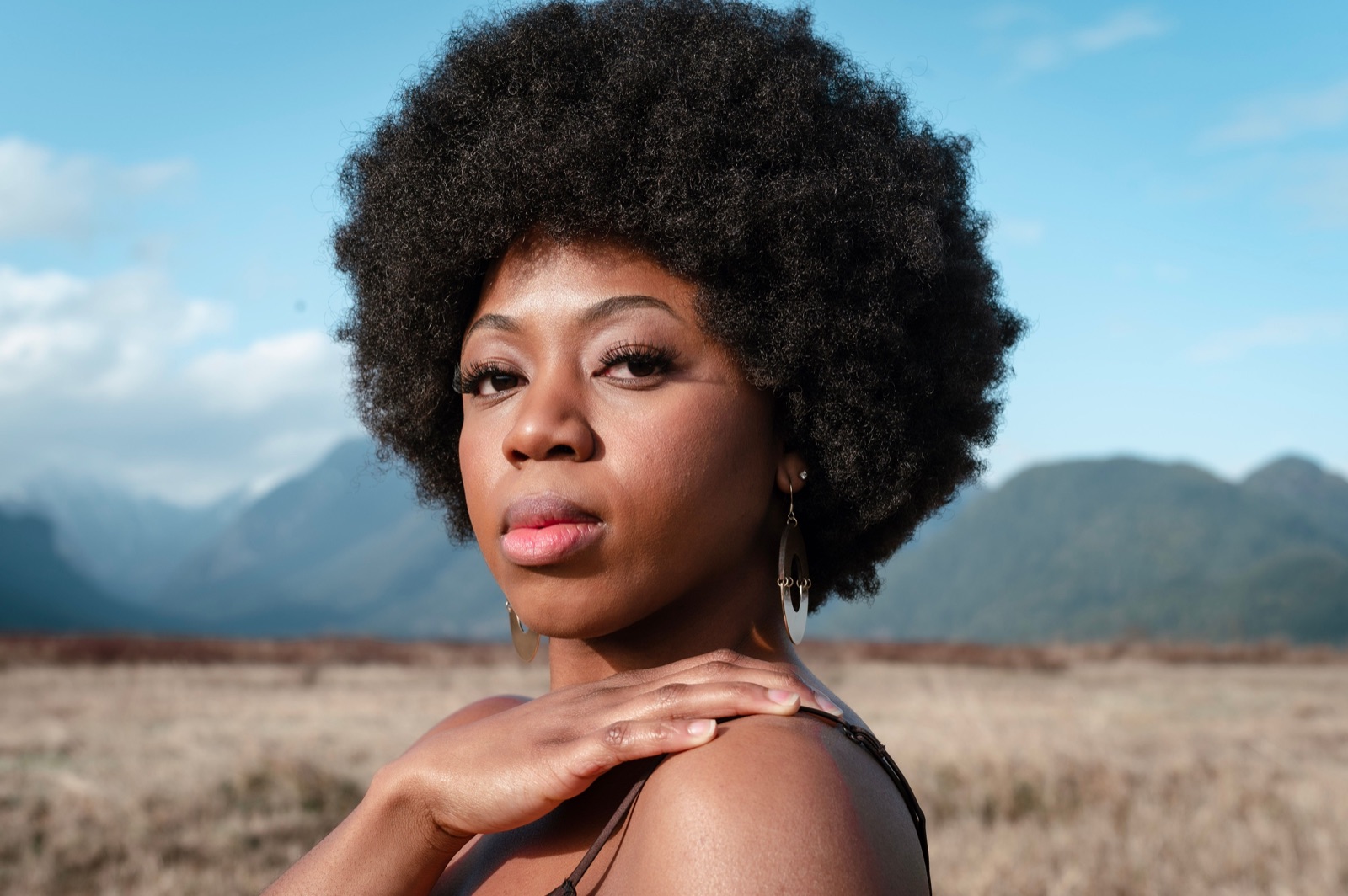
The right hair products for 4C hair are less about one jar and more about a routine: a gentle cleanse, a lot of conditioner, careful detangling, then layers of leave-in, oil and cream that keep water in the hair between wash days. This guide covers that routine in order, what each product is for, styling, night care and common mistakes.
What you'll need
Essentials
-
Moisturizing shampoo
: cleans the scalp on wash day; choose one made for curly or coily hair rather than a harsh, drying formula. -
Clarifying shampoo
: lifts the buildup that gels, creams, oils and pomades leave behind, before your regular wash. -
Thick rinse-out conditioner
: used every wash, through the whole length, for slip while you detangle. -
Deep conditioner
: a richer conditioner left on longer, every week or two, to help the hair hold moisture. -
Leave-in conditioner
: the first layer after washing and the one you detangle with. -
Hair oil
: sealed over the leave-in, or used for a pre-wash or hot oil treatment. -
Cream or butter
: a styling cream or shea butter as the heavier last (or middle) layer that holds moisture in. -
Wide-tooth comb
: detangles wet, conditioned hair section by section, as dermatology guidance for curly and Afro-textured hair advises. -
Satin or silk bonnet or scarf
: cuts down friction overnight and helps your style last.
Optional
-
Co-wash (conditioning cleanser)
: a conditioner-based wash for between shampoos; not a full replacement for shampoo. -
Detangling brush
: a brush with widely spaced, coated bristles made for curly or coily hair. -
Spray bottle
: re-dampens a section with water before you add leave-in between wash days. -
Plastic cap or heat cap
: holds warmth and steam around a deep conditioner or hot oil treatment. -
Soft towel or cotton T-shirt
: wraps wet hair to blot water instead of rubbing it. -
Covered hair ties
: fabric-covered elastics without metal for puffs and loose updos.
What 4C means, and why moisture comes first
"4C" comes from the Andre Walker hair typing system, which a celebrity stylist created in the 1990s to market his own line of hair products. In that chart, type 4 is coily or kinky hair, and 4C is the tightest coil, with almost no visible pattern unless you look up close. The labels are useful shorthand, not a scientific measurement, and critics point out that the chart ignores density, scalp type and the fact that one head often has several textures. Use the label to find advice, not to judge your hair.
What matters for products is how tightly coiled hair behaves. A 2025 clinical review in Cutis explains that Afro-textured hair has an elliptical, curved shaft; each bend is a weak point, which lowers the hair's tensile strength and leads to more breakage, lower moisture content and slower growth. The same review says that for natural hair, keeping moisture in the hair shaft "should be the main focus," and it describes type 4 hair as extremely fragile and harder to manage than looser curl types. Everything below is built around those two facts: keep the hair moist, and handle it as little and as gently as you can.
Step 1: cleanse on a schedule
How often to wash
The American Academy of Dermatology (AAD) suggests washing Black hair once a week or every other week, which limits product buildup. Its curly hair tips put the outer limit at least every 2 to 3 weeks and note that thick, curly hair does not need washing daily or even weekly. The British Association of Dermatologists gives a similar range of every 1 to 3 weeks, or whenever product buildup or oiliness calls for it. The Cutis review adds that the right interval depends on your hair length and how much oil your scalp makes.
Which shampoo
- Moisturizing shampoo: The AAD recommends a moisturizing shampoo made for curly hair. The Cutis review advises avoiding shampoos that are drying and names sulfate and silicone products as examples.
- Clarifying shampoo: If you use gels, oils, creams or pomades, the AAD suggests a clarifying shampoo first, then your moisturizing shampoo.
- Co-wash: A co-wash is a conditioning cleanser used instead of shampoo and conditioner. The Cutis review says it is not meant to replace shampoo completely and recommends a clarifying shampoo after every 3 or 4 co-washes.
How to shampoo
Put the shampoo on your scalp, not the full length of your hair; the AAD notes that this removes oil and buildup without drying the rest. With long or thick hair, the AAD suggests washing in sections to reduce damage and tangling.
Step 2: condition every time, and deep condition often
The AAD's tips for Black hair say to use conditioner every time you shampoo. For curly hair it recommends a thick conditioner over all of your hair, not only the ends, and it suggests that if your hair is very dry or hard to detangle, you can condition before you shampoo. Ingredients it lists to look for include argan oil, glycerin and cetyl or stearyl alcohol.
On top of that:
- Deep conditioner: The Cutis review says deep conditioning helps moisture retention and should be done weekly or every other week. Leave it on for the time the label gives; a plastic cap holds in warmth while it works.
- Hot oil treatment: Both the AAD and the review mention a hot oil treatment twice a month for moisture and, per the review, fewer split ends.
- Protein treatment: The review says protein treatments can be considered about once a month, depending on the health of the hair. More is not better; follow the product's directions.
Step 3: detangle while the hair is wet and coated

Tightly coiled hair tangles and knots easily, and the strands are weaker when wet, so this is the step where rough handling does the most damage. Putting the AAD's and the Cutis review's advice together:
- Wet the hair thoroughly and apply a leave-in conditioner, or detangle while the rinse-out conditioner is still in.
- Work in sections. Clip or twist away everything except the section you are working on.
- Use your fingers first, then a wide-tooth comb or a brush made for curly hair. The British Association of Dermatologists describes a suitable brush as soft, with widely spaced bristles and coated tips.
- Start at the ends and work up to the roots. The Cutis review calls this detangling "in a retrograde fashion": you remove the knots at the bottom before they jam at the top.
- Twist or braid each finished section so it stays detangled while you do the rest.
Avoid brushing dry hair; the AAD warns that it causes breakage and frizz. Afterward, the AAD suggests wrapping the hair in a towel or T-shirt to absorb the water, since rubbing it dry can cause damage.
Step 4: layer moisture with the LOC or LCO method
The Cutis review describes the routine many people with natural hair use between washes: the LOC method (liquid, oil, cream) or the LCO method (liquid, cream, oil). Water goes in first, then an oil of your choice and a cream such as shea butter, which help hold that water in. The review says the method can be used as often as dry hair needs it. The British Association of Dermatologists likewise recommends a leave-in conditioner after washing and moisturizing between wash days with lotions, creams or oils.
Liquid
Water or a water-based leave-in conditioner. Between washes, mist each section with a spray bottle first.
Oil
A thin layer smoothed over each section. Oils differ: a 2003 laboratory study on hair fibers found that coconut oil reduced protein loss from hair while mineral oil and sunflower oil did not, and its authors linked this to coconut oil's ability to penetrate the hair shaft. That study was done on hair samples, not people, by researchers at a hair oil maker, and Medical News Today notes that a more recent study found no improvement in hair health from coconut oil. Treat it as one option to try, not a guarantee.
Cream
A leave-in cream, styling cream or butter. Shea butter is the example the review gives. Use the cream heavier on the ends, which the AAD calls the oldest and most fragile part of the hair.
Which order: LOC or LCO
Neither is proven better. Try both on separate wash days and keep the one that leaves your hair softer for longer. If your hair feels coated rather than soft, use less product before switching.
Choosing products for low porosity 4C hair
Porosity describes how easily water gets into the hair. Medical News Today describes low porosity hair as having a flat cuticle that takes in water and products slowly, so products tend to sit on the surface, while the moisture that does get in stays longer. Its suggestions, which it credits to the New York Society of Cosmetic Chemists:
- Use warmth or steam with a deep conditioner, from a heat cap or a plastic cap, to help moisture in.
- Look for humectants such as glycerin, honey or hyaluronic acid in shampoos, conditioners and deep conditioners.
- Use light oils sparingly, alongside steam or a humectant, since oil on its own repels water.
- Go easy on heavy butters, silicones and protein, which can build up, and use less product overall.
Medical News Today describes the popular float test (a clean strand that floats before sinking is likely less porous) but does not report how accurate it is. Watching how your hair behaves over several wash days also helps: if water and products seem to sit on top rather than soak in, it may lean low porosity.
If your hair is high porosity instead
High porosity is the opposite: moisture gets in and out easily, and the hair dries quickly and breaks easily. Medical News Today lists coily texture, rough handling and chemical treatments such as relaxers, dyes and bleach among the causes. Here, gentle handling and the sealing layers of the LOC or LCO method matter most.
4C hair styling: what to use and what to avoid
The Cutis review leaves the choice of braids, twists or other protective styles, locs included, to the individual. A few rules apply to all of them:
- Defined styles (twist-outs, braid-outs, wash-and-gos): set them on moisturized hair, with a styling cream, curl cream or gel last.
- Sleek styles: if you want a slicked-back look, the Cutis review suggests an alcohol-free gel and a satin scarf tied around the hairline while it sets, instead of pulling the hair tight. For the hairline itself, see our guide to edge control.
- Puffs and buns: use covered elastics without metal; the review warns against rubber bands, which cause friction and tangles.
- Braids, twists, weaves and extensions: keep them loose, especially at the hairline. The AAD says to wear braids for no longer than 6 to 8 weeks and to remove weaves or extensions right away if they hurt or irritate your scalp. If you wear 4C-textured extensions or braiding hair, keep the same wash, condition and moisture routine for the hair underneath; our guides to braiding hair and braiding gel cover the add-ons.
- Locs: the AAD recommends thicker, shorter locs, since long, heavy ones pull more, and the British Association of Dermatologists says to dry locs thoroughly after washing.
- Heat: the AAD advises a heat protectant before heat styling, and pressing or straightening no more than once a week at the lowest temperature that works.
Night care
The AAD notes that friction against your pillowcase can make curly hair frizzy and easier to break. It suggests loosely gathering curly hair into a high ponytail (the "pineapple") or a loose braid, and wearing a satin or silk bonnet or using a satin or silk pillowcase. The British Association of Dermatologists recommends loosely plaiting or twisting the hair at bedtime under a satin or silk cap or scarf. If you are choosing one, our silk vs satin bonnet comparison covers fabric, size and band.
Common mistakes
- Skipping the clarifying wash. Layers of cream, oil and gel build up; buildup makes hair feel dry even when you keep adding product.
- Detangling dry or in a hurry. Wet coils are weaker and dry ones snap; go slowly, with conditioner in.
- Too much product. More cream does not mean more moisture; Medical News Today lists using too much product among the things to avoid with low porosity hair.
- Tight styles. The AAD's warning signs include pain, stinging, crusts on the scalp and broken hairs at the hairline. A style that hurts is too tight.
- Constant restyling. Every combing session is stress on fragile coils. The Cutis review encourages giving the hair a break between repeated or long-worn styles.
If you notice thinning, broken hairs along the hairline or bald patches, see a board-certified dermatologist; the AAD notes that treatment works better when hair loss is caught early.
For a closer look at each product type and how to read the labels, see our guide to natural hair care products, and more care guides are in natural hair.
Questions
What hair products do you need for 4C hair?
A basic routine uses a moisturizing shampoo, a clarifying shampoo for buildup, a thick rinse-out conditioner, a deep conditioner, a leave-in conditioner, an oil and a cream or butter such as shea butter. Add a wide-tooth comb and a satin or silk bonnet, and you have the full set.
How often should you wash 4C hair?
The American Academy of Dermatology suggests washing Black hair once a week or every other week to prevent product buildup, and conditioning every time. Its curly hair tips say to wash at least every 2 to 3 weeks; how often within that range depends on your hair length and how oily your scalp gets.
What is the LOC method?
LOC stands for liquid, oil, cream: you apply water or a water-based leave-in, then an oil, then a cream such as shea butter to hold moisture in. LCO swaps the last two steps. A 2025 dermatology review in Cutis describes both as common between-wash routines that can be used as often as dry hair needs.
What products work for 4C low porosity hair?
Low porosity hair has a flat cuticle that takes in water slowly, so heavy products tend to sit on top. Medical News Today, citing the New York Society of Cosmetic Chemists, suggests warmth or steam with deep conditioners, humectants such as glycerin, light oils used sparingly and less product overall.
Is 4C a real hair type?
4C is part of the Andre Walker hair typing system, created in the 1990s to market a stylist's own product line. It is a handy shorthand for tightly coiled hair, but it is not a scientific measurement, and many heads have several textures.
Should 4C hair be detangled wet or dry?
Detangle with conditioner or leave-in in the hair. The AAD warns that brushing dry curly hair can cause breakage, and recommends working in sections with fingers or a wide-tooth comb after wetting the hair and applying a leave-in conditioner.
Sources
- Wong N, Williams K, Tolliver S, Potts G — Historical perspectives on hair care and common styling practices in Black women (Cutis, 2025)
- American Academy of Dermatology — Black hair: Tips for everyday care
- American Academy of Dermatology — 6 curly hair tips from dermatologists
- American Academy of Dermatology — Tips for healthy hair
- American Academy of Dermatology — Hairstyles that pull can lead to hair loss
- British Association of Dermatologists — Caring for Afro-textured hair
- Wikipedia — Andre Walker Hair Typing System
- Medical News Today — Low porosity hair: What it is and how to care for it
- Rele AS, Mohile RB — Effect of mineral oil, sunflower oil, and coconut oil on prevention of hair damage (J Cosmet Sci, 2003)
Read next
Natural hair care products: the types, what they do, how to choose
Cleansers, conditioners, leave-ins, oils, butters and stylers: what each product type does for natural hair, how to read the label, and which ones you actually need.
Two-strand twists: on natural hair and with Marley twist hair
Two strands wrapped around each other, on your own hair or with added Marley hair: how to part, twist, finish and take them down.
Starter locs: comb coils, two-strand twists, braids and interlocking, step by step
Pick a method that suits your length and texture, part a clean grid, and keep the first months gentle while the hair starts to lock.