Buying guide
Natural hair care products: the types, what they do, how to choose
Cleansers, conditioners, leave-ins, oils, butters and stylers: what each product type does for natural hair, how to read the label, and which ones you actually need.
Published
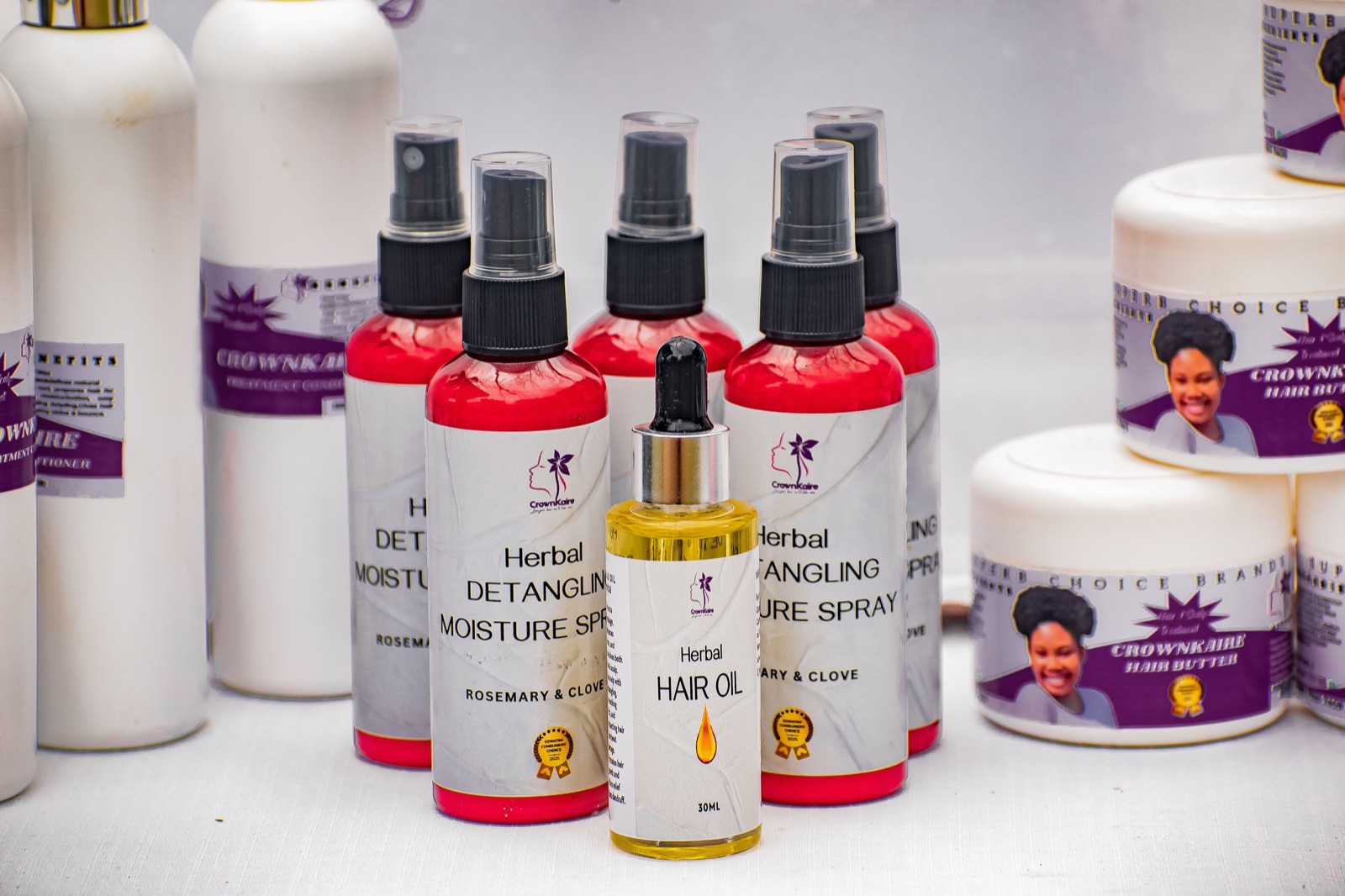
Natural hair care products are the cleansers, conditioners, leave-ins, oils, butters and stylers made for natural hair, which a 2025 dermatology review in Cutis defines as hair that has not been chemically changed by perms, heat or other straightening treatments. The shelf is crowded and the labels shout, but the products fall into a handful of types, and each has one job. This guide explains what each type does, how they compare, how to read a label past the marketing, and which ones a basic routine needs.
What natural hair needs from products
Curly and coily hair, and Afro-textured hair especially, has a curved, elliptical shaft. The Cutis review explains that every bend is a weak point: the hair breaks more easily, holds less moisture and grows more slowly than straighter hair. The AAD puts it simply: curly hair is drier than other hair types. So the review's advice for natural hair is that keeping moisture in the hair shaft should be the main focus, and that handling should be gentle.
That gives every product two tests: does it add or hold moisture, and does it make the hair easier to handle without breaking it? A product that leaves your hair stiff, coated or tangled fails both, whatever its label says.
The product types
Cleansers
Moisturizing shampoo
Your regular wash. The AAD recommends a moisturizing shampoo made for curly hair, applied to the scalp rather than the full length. The Cutis review advises against shampoos that are drying, naming sulfate and silicone products as examples. The AAD suggests washing Black hair once a week or every other week.
Clarifying shampoo
A stronger cleanser for buildup. If you use gels, oils, creams or pomades, the AAD suggests a clarifying shampoo first, followed by your moisturizing shampoo. Most people need it occasionally, not every wash.
Co-wash
A conditioning cleanser that replaces shampoo and conditioner in one step. The Cutis review says co-washing is not meant to replace shampoo completely and recommends a clarifying shampoo after every 3 or 4 co-washes.
Conditioners
Rinse-out conditioner
Used after every shampoo, according to the AAD. For curly hair it recommends a thick conditioner over all of the hair, and it lists argan oil, glycerin and cetyl or stearyl alcohol as ingredients to look for.
Deep conditioner and protein treatment
A deep conditioner is a richer conditioner left on longer; the Cutis review recommends deep conditioning weekly or every other week. A protein treatment is a different product: the review says it can be considered about monthly, depending on the health of the hair.
Leave-in conditioner
Applied after washing and not rinsed out. The British Association of Dermatologists recommends a leave-in after washing, and the AAD suggests applying one to wet hair before you detangle.
Oils and butters
Oils and butters are the sealing layers. In the LOC (liquid, oil, cream) or LCO (liquid, cream, oil) routines the Cutis review describes, water or a leave-in goes on first and an oil plus a cream such as shea butter hold it in. The AAD and the review also suggest a hot oil treatment twice a month.
Oils are not all alike. In a 2003 laboratory study on hair fibers, coconut oil reduced protein loss from hair, while mineral oil and sunflower oil did not; the authors linked the difference to coconut oil's ability to penetrate the hair shaft. It was a lab study on hair samples, run by researchers at a hair oil maker, and Medical News Today notes that a more recent study found no improvement in hair health from coconut oil, so take it as a pointer, not proof.
Stylers
Creams, curl creams and custards give softness and definition; gels give hold; edge control holds the hairline (see our edge control guide); and a heat protectant goes on before any blow-dryer or flat iron, as the AAD advises. For sleek styles, the Cutis review suggests an alcohol-free gel and a satin scarf around the hairline while it sets, rather than pulling the hair tight.
Natural hair products compared
| Type | Job | When | Rinse out? | Watch for |
|---|---|---|---|---|
| Moisturizing shampoo | Cleans scalp | Every 1–2 weeks | Yes | Drying formulas |
| Clarifying shampoo | Removes buildup | Now and then, before regular shampoo | Yes | Not needed every wash |
| Co-wash | Gentle cleanse | Between shampoos | Yes | Clarify every 3–4 co-washes |
| Rinse-out conditioner | Slip, softness | Every wash | Yes | Too light for coily hair |
| Deep conditioner | Moisture | Every 1–2 weeks | Yes | Follow the label's time |
| Protein treatment | Helps preserve the cuticle | About monthly, if needed | Yes | Using it too often |
| Leave-in conditioner | First moisture layer, detangling | After washing, between washes | No | Buildup |
| Oil | Seals moisture | With leave-in; hot oil twice a month | Usually no | Greasy if overused |
| Butter or cream | Seals, softens, defines | With leave-in and oil | No | Too heavy for low porosity |
| Gel or styler | Hold, definition | Last step of a style | No | Flaking, buildup |
| Heat protectant | Shields hair from heat | Before heat styling | No | Skipping it |

How to read a natural hair product label
"Natural" and "organic" claims
Words like "natural," "all natural" and "clean" on the front are marketing. Cosmetics do not need FDA approval before they go on sale, and the FDA keeps no list of approved or accepted claims; claims only have to be truthful and not misleading. The FDA says plainly that it does not define "organic" for cosmetics; organic claims fall under the USDA's National Organic Program, which covers agricultural ingredients. So "all natural hair products" tells you about the brand's positioning, not about how the product will work on your hair.
The ingredient list
The back label is where the facts are. Under FDA rules, ingredients are listed in descending order of predominance, but those at 1% or less can follow in any order. In practice:
- The first few ingredients are there in the largest amounts. Water first means a water-based product; an oil or butter first means a heavy one.
- Humectants such as glycerin draw in water. Medical News Today lists glycerin, honey and hyaluronic acid as humectants that help low porosity hair take in moisture.
- Fatty alcohols such as cetyl, stearyl or cetearyl alcohol appear in many conditioners; the AAD lists cetyl and stearyl alcohol among ingredients to look for in curly hair products.
- Fragrance can be listed simply as "fragrance," without naming its components, sometimes followed by "(parfum)," which the FDA allows in parentheses. The FDA notes that even some products labeled "unscented" contain fragrance ingredients, so if fragrance irritates your skin, look for "fragrance-free" and check the list.
- The name on the front (shea, coconut, argan) may sit low on the list. Check where it actually appears.
Porosity and weight
Low porosity hair takes in water slowly and lets heavy products sit on top. Medical News Today suggests lighter oils used sparingly, humectants, warmth or steam with deep conditioners, and going easy on heavy butters such as shea and cocoa butter, silicones and protein. Hair that dries quickly and feels dry or frizzy may lean high porosity instead, as Medical News Today describes it; there the cream and oil layers of the LOC or LCO routine, which the Cutis review says lock in moisture, matter more.
Black-owned hair products
Black-owned brands are one of the most common things people look for in natural hair products. Ownership is a fact about the company, not the formula, so the ingredient label will not tell you. Check the brand's own About page, and keep in mind that brands are bought and sold: a line that started Black-owned may now belong to a larger company. Whatever the owner, judge the product by the same tests: what type it is, what is high on the ingredient list, and how your hair feels after a few washes.
Which products suit whom
- Starting out: a moisturizing shampoo, a clarifying shampoo, a thick conditioner, a leave-in, one oil and one cream. Add the rest only when you find a gap.
- Tightly coiled, dry hair: add a deep conditioner every week or two and layer leave-in, oil and cream. Our 4C hair care guide walks through that routine step by step.
- Low porosity hair: lighter leave-ins with glycerin, a little oil, steam or a heat cap with deep conditioner, and a clarifying wash before buildup sets in.
- Defined curls and twist-outs: a curl cream or styling cream over the leave-in, and a gel if you want hold.
- Braids and protective styles: the Cutis review recommends washing braids biweekly with diluted shampoo and conditioner and drying them well by wringing with a microfiber towel, to avoid frizz and mold. Our braiding gel guide covers the parting and finishing products.
- Under wigs and sew-ins: the British Association of Dermatologists advises keeping your own hair cleansed and moisturized while it is under a wig or weave, and the Cutis review notes that sewn-in weaves can make it hard to reach the scalp, which leads to dryness and buildup.
How to use and store them
Use products in the order they were made for: cleanse, condition, then leave-in, oil and cream, then styler. Apply a little at a time, section by section, because thin layers absorb and thick ones build up. Detangle only with conditioner or leave-in in the hair, using fingers or a wide-tooth comb; the AAD warns that brushing dry curly hair causes breakage. Keep lids closed and follow the storage and shelf-life notes on each label.
At night, protect what the products did with a satin or silk bonnet or scarf; our silk vs satin bonnet comparison helps you choose. If a product leaves your scalp itchy, red or flaking, stop using it; for hair loss or a scalp problem that does not settle, see a board-certified dermatologist.
More guides for your own hair are in natural hair.
Questions
What are natural hair care products?
Products made for natural hair, meaning hair that has not been chemically straightened or permed: cleansers, conditioners, leave-ins, oils, butters and stylers formulated for curly and coily textures. The phrase describes who the product is for, not that every ingredient is natural.
What products do you need for natural hair?
A basic set is a moisturizing shampoo, a clarifying shampoo, a rinse-out conditioner, a deep conditioner, a leave-in conditioner, an oil and a cream or butter. Add a styler such as a gel or curl cream only if your styles need hold or definition.
Does "all natural" on a hair product mean anything?
Not much. The FDA keeps no list of approved cosmetic claims and does not define "organic" for cosmetics; claims only have to be truthful and not misleading. The ingredient list tells you more: by law it starts with the largest amounts, though ingredients at 1% or less can be listed in any order.
What are the best hair products for Black hair?
There is no single best product, because textures, porosity and styles differ. American Academy of Dermatology guidance for Black and curly hair points to the same product types: a moisturizing shampoo used every week or two, conditioner every wash, a clarifying shampoo for buildup, hot oil treatments twice a month and a heat protectant before heat styling.
Are sulfate-free shampoos better for natural hair?
A 2025 dermatology review in Cutis advises avoiding drying shampoos and names sulfate and silicone products as examples, and the AAD recommends moisturizing shampoos for curly hair. A clarifying shampoo is still useful now and then to remove product buildup.
How do you find Black-owned hair products?
Ownership is about the company, not the formula, so it is not on the ingredient label. Check the brand's own About page, and note that brands can change hands, so a line that started Black-owned may not still be.
Sources
- Wong N, Williams K, Tolliver S, Potts G — Historical perspectives on hair care and common styling practices in Black women (Cutis, 2025)
- American Academy of Dermatology — Black hair: Tips for everyday care
- American Academy of Dermatology — 6 curly hair tips from dermatologists
- American Academy of Dermatology — Tips for healthy hair
- British Association of Dermatologists — Caring for Afro-textured hair
- US Food and Drug Administration — "Organic" cosmetics
- US Food and Drug Administration — Cosmetics labeling claims
- US Food and Drug Administration — Summary of cosmetics labeling requirements
- US Food and Drug Administration — Cosmetic ingredient names
- US Food and Drug Administration — Fragrances in cosmetics
- Medical News Today — Low porosity hair: What it is and how to care for it
- Rele AS, Mohile RB — Effect of mineral oil, sunflower oil, and coconut oil on prevention of hair damage (J Cosmet Sci, 2003)
Read next
Hair products for 4C hair: a wash-day and moisture routine
Shampoo, conditioner, leave-in, oil and cream: what each does for tightly coiled hair, the order to use them in, and how often.
Edge control: hold types, ingredients and how to lay your edges
Gel, pomade or wax stick: how edge control holds, what is in the jar, how to apply it with a brush, and how to keep it from building up on your hairline.
Knotless braids: how to do them, sizes and how long they last
How the feed-in start works, how it differs from a box braid, the sizes and hair counts, and how long to keep them in.