Buying guide
Weaving yarn: how to choose warp and weft yarn, from 8/2 cotton to wool
Warp and weft ask different things of a yarn. Here is how to read weaving yarn counts and pick yarn that suits your loom and project.
Published
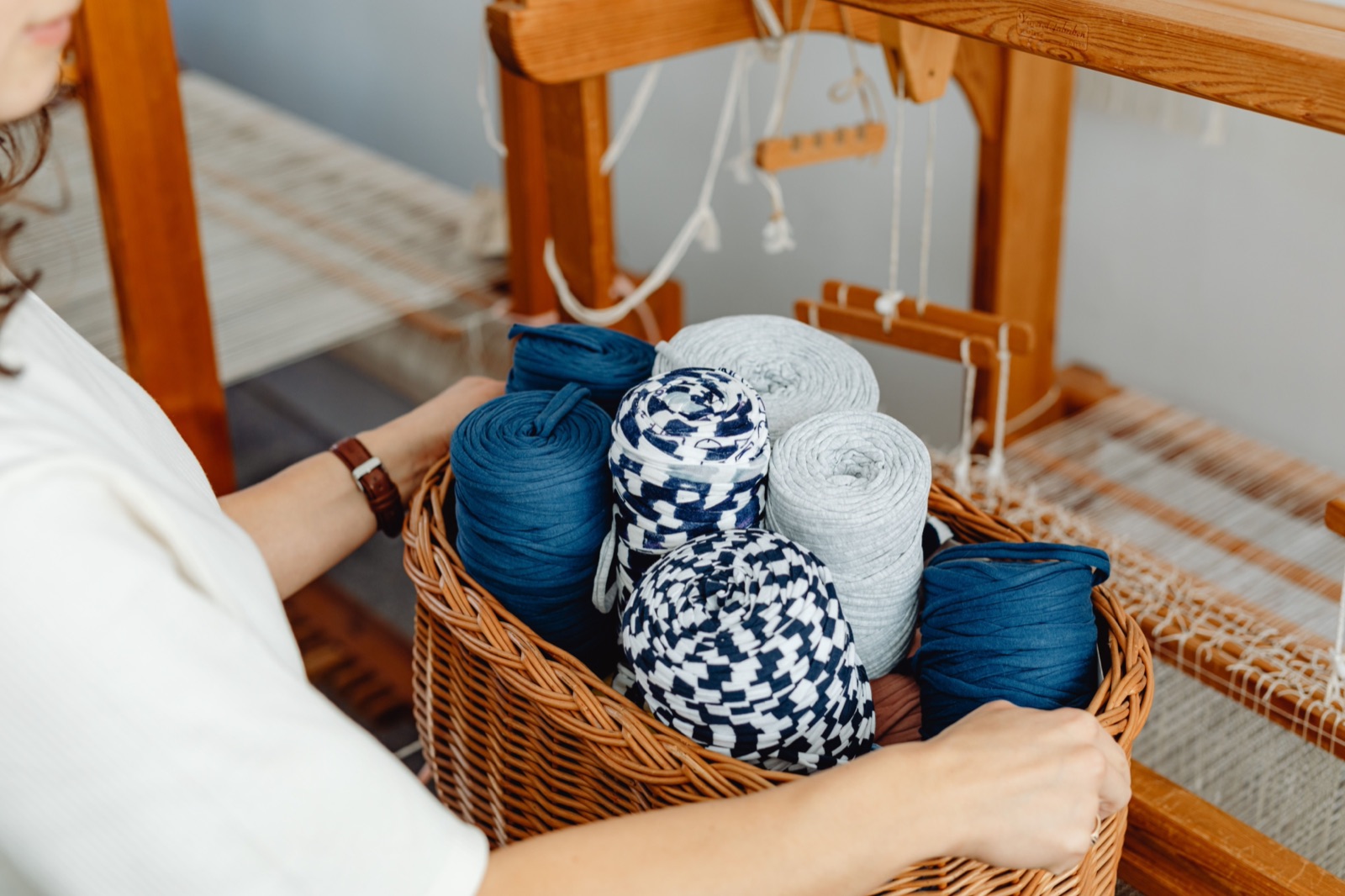
Weaving yarn is any yarn you put on a loom, but the warp and the weft do very different jobs, and weaving yarns are labeled differently from knitting yarns. This guide explains what to look for in warp yarn, how to read counts like 8/2 cotton, which fibers suit which projects, and how to work out the sett (the number of warp ends per inch) for any yarn you buy.
Warp yarn and weft yarn: what each one does
The warp goes on the loom first and stays stretched under tension from the first row to the last. It takes the most stress of any yarn in the cloth. The weft is woven across the warp, row by row, and carries almost no tension.
That is why the rule of thumb is a strong, smooth yarn for the warp and nearly anything for the weft. Liz Gipson, writing for Knitty, puts it simply: you can weave with virtually anything as weft.

What makes a good warp yarn
- Strength. The yarn should not drift apart or snap under a firm pull (see the test below).
- Tight, smooth plying. Tightly plied, smooth yarns are the traditional warp. Loosely plied or softly spun yarns tend to fray or stick together.
- Not too fuzzy. Fuzzy yarns such as mohair can stick to their neighbors. If you want one in the warp, mix it with smoother yarns or leave more space between the ends.
- Predictable after washing. Some novelty yarns fray, and yarns with more than two plies can puff out in the wash. Wash a small sample to see how the yarn and its fringe behave.
The pinch-and-pull test
On a rigid heddle loom the warp is relatively short and needs less tension, so a yarn only has to pass a simple check. Gipson's version: take a generous length of the yarn, about 40 to 50 inches, pinch it and pull with steady pressure. If it drifts apart or breaks easily, keep it for the weft.
How weaving yarn counts work
Weaving yarns, especially cotton and linen, are labeled with a two-number count such as 8/2, 10/2 or 20/2.
- The second number is the plies. A 2 means two-ply; a 1 means a singles yarn.
- The first number is the size of each single strand. Size 1 is the thickest; the higher the number, the thinner the yarn.
Each fiber has a base length for size 1, according to Spin Off: 840 yards per pound for cotton and spun silk, 300 for linen, hemp, jute and ramie, 560 for worsted-spun wool and 256 for woolen-spun wool. To find the yards per pound, multiply the size by the base, then divide by the plies.
For 8/2 cotton: 8 x 840 ÷ 2 = 3,360 yards per pound.
Because the base differs, the same count does not mean the same thickness across fibers: 8/2 linen (1,040 yards per pound on Schacht's chart) is far heavier than 8/2 cotton. And for a given fiber, more plies make a thicker yarn. Wool counts are sometimes written plies first, so check the yardage on the label rather than relying on the numbers alone.
Common cotton weaving yarns compared
Figures from Schacht's sett chart. Tabby is plain weave; epi is ends per inch.
| Count | Yards per pound | Plain weave sett | Twill sett |
|---|---|---|---|
| 3/2 cotton | 1,260 | 10–12 epi | 15 epi |
| 8/4 cotton | 1,680 | 12–15 epi | 20 epi |
| 5/2 cotton | 2,100 | 15–18 epi | 20 epi |
| 8/2 cotton | 3,360 | 20–24 epi | 24 epi |
| 10/2 cotton | 4,200 | 24–28 epi | 30 epi |
The lower the yardage, the thicker the yarn and the wider the sett. For dish towels, Handwoven's Madelyn van der Hoogt names 10/2 pearl cotton, 8/2 unmercerized cotton and cottolin.
Cotton weaving yarn: mercerized or unmercerized
Cotton weaving yarn comes in two finishes, and the difference matters for towels.
Mercerized (pearl) cotton
Pearl cotton is treated so it takes dye well, with richer, more saturated color and a sheen. Weaving suppliers carry it widely in 3/2, 5/2, 10/2 and 20/2. It absorbs less water than unmercerized cotton, but towels woven from 10/2 pearl cotton become more absorbent with repeated washing.
Unmercerized cotton
Unmercerized cotton is duller and more matte, and it absorbs water better, which is why so many towel patterns call for 8/2 unmercerized. 8/2 is its most common size, and it comes in a wide range of colors.
Cottolin
Cottolin is a blend of cotton and linen; the 22/2 cottolin Handwoven describes is half and half, about the same size as 8/2 cotton, very absorbent and matte. It is a common alternative to cotton for dish towels.
Wool, linen and knitting yarns
- Wool blooms (fluffs up) after washing, so do not pack the weft too tightly: the yarn needs room to bloom, or the cloth loses its drape. Superwash wool and acrylic bloom very little; Gipson suggests pairing them with a bloomier wool or wool blend, one as warp and the other as weft.
- Linen is counted on its own base of 300 yards per pound. Schacht's chart sets 20/2 linen at 20–24 epi for plain weave.
- Knitting yarns work well on rigid heddle looms, whose reeds are sized for them. Gipson's rule of thumb matches reed to yarn weight: a 5-dent reed for bulky, 8-dent for worsted, 10-dent for sport and 12-dent for fine yarn.
Which weaving yarn suits which loom and project
| Loom or project | Warp | Weft |
|---|---|---|
| Frame or tapestry loom | a strong, smooth cotton | wool or any yarn you like |
| Rigid heddle scarf | a smooth, firmly plied knitting yarn matched to the reed | the same yarn or a softer one |
| Kitchen towels | 8/2 unmercerized cotton, 22/2 cottolin or 10/2 pearl cotton | the same |
Sett basics: how close to space the warp
Sett is the number of warp ends per inch, written as epi. It depends on the yarn, the weave structure and how the cloth will be used. Twill needs a closer sett than plain weave: the longer the floats in the draft, the closer the threads.
Find the sett by wrapping
For any yarn without a chart entry, wrap it around a ruler:
- Wrap the yarn side by side around a ruler with very light tension, the way it lies when relaxed, with no gaps and no overlap.
- Count the wraps in one inch (wraps per inch, or WPI).
- Divide by two for a balanced plain-weave sett. In Gipson's example, 14 WPI gives a sett of 7 ends per inch, so an 8-dent reed is a good start.
Handwoven's version is the same idea: wrap half an inch and count, because the weft spreads the warp to fill the other half. Its examples: 3/2 cotton wraps 12 times in half an inch, 5/2 cotton 16 times and 10/2 cotton 24 times. For twill, set the warp closer than that number.
Sample before the real project
A sett chart or a wrap count is a starting point. Weave a small sample, wash it the way you will wash the finished piece, and check that the cloth has the hand and density you want before you warp a full project.
Caring for weaving yarn
Before a new project, wash a sample, as above; it shows shrinkage, bloom and colorfastness before they can spoil a finished piece. Handwoven notes that some intense pearl cotton colors can run because of excess dye, usually only before the first wash, and suggests machine washing such towels hot, taking them out promptly and ironing them dry on a cotton setting.
For small first projects, the potholder loom uses knit loops instead of yarn and the bead loom uses beading thread; both teach warp and weft before you buy cones. More guides are in the loom weaving section.
Questions
What does 8/2 cotton mean?
In the cotton count system the first number is the size of each single strand and the second is the number of plies. 8/2 cotton is two plies of size 8 cotton, which works out to 3,360 yards per pound.
What is the best warp yarn for a beginner?
A smooth, tightly plied yarn, such as a plied cotton, is the traditional choice. It holds up to tension and wear and does not stick to its neighbors the way fuzzy or loosely plied yarns can.
Can I use knitting yarn for weaving?
Yes, especially on a rigid heddle or frame loom. Use a smooth, firmly plied knitting yarn for the warp and almost anything for the weft. Check a warp candidate with a pinch-and-pull test first.
What sett should I use for 8/2 cotton?
Schacht's sett chart gives 20 to 24 ends per inch for plain weave and 24 for twill. Weave and wash a sample to confirm the fabric is the density you want.
Is unmercerized cotton better for towels?
For absorbency, usually yes. Unmercerized cotton absorbs water better than mercerized pearl cotton, which is why many towel patterns call for 8/2 unmercerized. Pearl cotton towels become more absorbent with repeated washing.
What is the difference between warp and weft yarn?
Warp yarn is stretched on the loom first and stays under tension the whole time, so it has to be strong and smooth. Weft yarn is woven across it and carries no tension, so it can be softer, fuzzier or more textured.
Sources
Read next
Warp and weft in weaving: what they are and how to tell them apart
The two sets of threads every woven piece is made of, the words weavers use for them, and why the warp needs a stronger yarn.
Rigid heddle loom: how it works, widths and how to choose one
One heddle that spaces the warp, opens both sheds and beats the weft: what that means for scarves, cloth and the loom you buy.
Wooden loom for weaving: how to warp and weave on a frame loom
From an empty frame to a finished wall hanging: warping, spacing, the first rows, keeping the edges straight and finishing.