Guide
Potholder loom: how to weave a loop potholder and bind off the edge
Loom sizes, cotton loops, the over-under rows and the chained edge that holds a woven potholder together.
Published
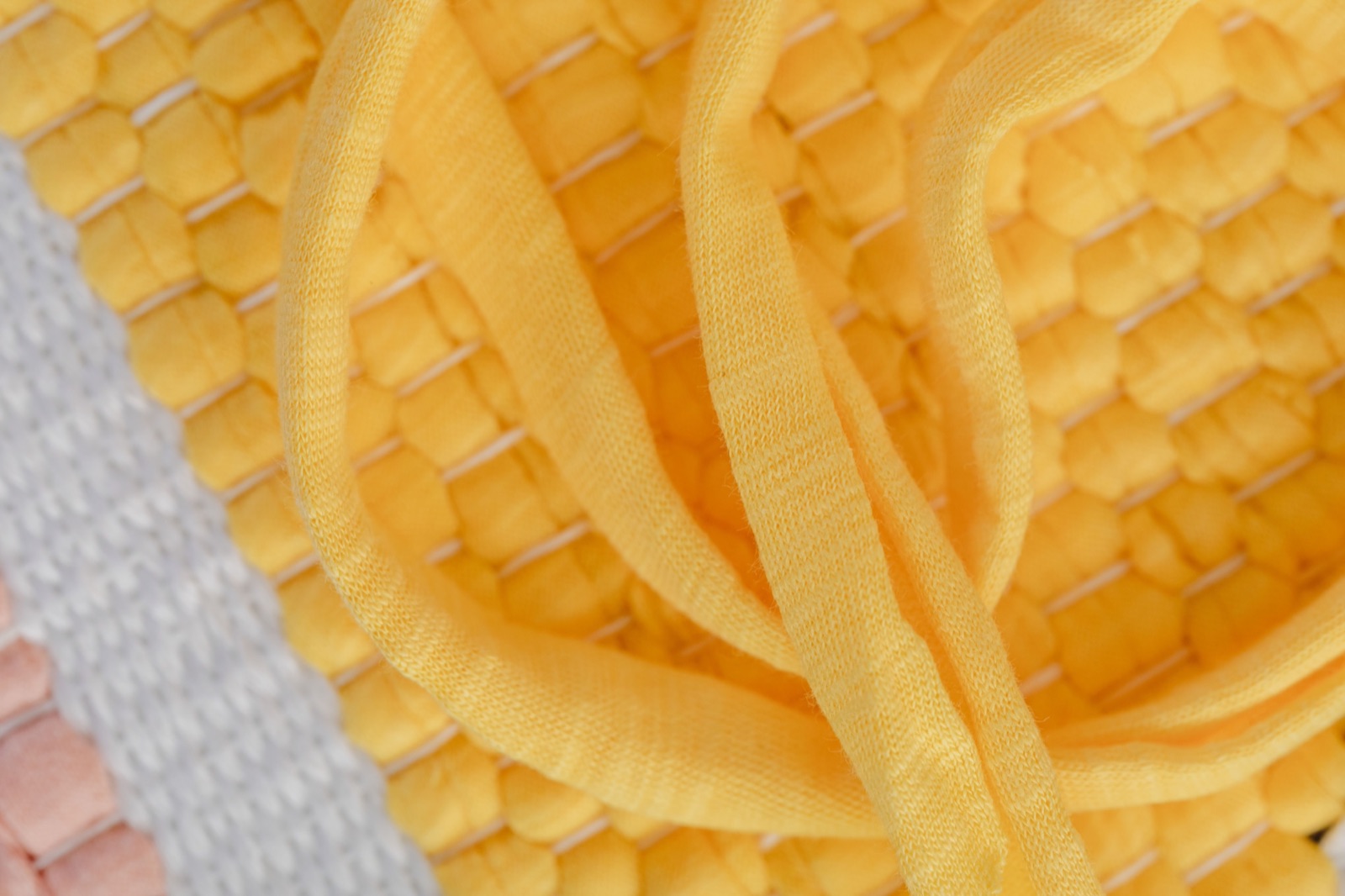
A potholder loom is the smallest loom most weavers ever own: a square frame with pegs on all four sides, a bag of stretchy fabric loops and a hook. By the end of this guide you will know which loom size and loops to buy, how to lay the warp, how to weave the rows over and under, and how to chain the edge off the pegs so the potholder holds together.
What you'll need
Essentials
-
Potholder loom
: a square metal or plastic frame with pegs on all four sides that holds the loops under tension. -
Potholder loops sized for your loom
: traditional loops fit a 7 inch loom and PRO loops fit a 10 inch loom; the sizes do not swap. -
Weaving hook
: a long flat hook that you pass over and under the warp loops and use to pull each new loop across. -
Crochet or bind-off hook
: chains the loops off the pegs so the edge locks and the potholder does not unravel.
Optional
-
Binder clips
: hold a finished edge taut so loops on the other sides do not slip off while you bind off. -
Small wooden ring
: pass a corner loop through it to make the potholder easy to hang. -
Extra loop packs in solid colors
: let you plan stripes, checks and other patterns instead of working from a mixed bag.
What a potholder loom is
The loom is a flat square with a row of pegs along each edge. You stretch loops from one side to the opposite side to make the warp, then weave more loops across them in the other direction as the weft. The finished square is held together only by a chained edge, made with a crochet hook as the loops come off the pegs.
Potholder looms did not start out as toys. According to Little Looms, they were made so sock factories could sell their leftover "loopers", the rings of knit fabric cut off socks and hosiery, to Depression-era homemakers who wove them into hot pads. By the 1950s the loom was seen mainly as a children's craft, and in recent years adult weavers have taken it up again for color and pattern work.
Traditional and PRO loom sizes
There are two common sizes, and the loops are made for one or the other:
| Size | Loom | Pegs per side | Finished potholder | Maker's suggested age |
|---|---|---|---|---|
| Traditional | 7 x 7 inches | 19 | usually about 6 x 6 inches | 6 and up |
| PRO | 10 x 10 inches | 27 | about 8 x 8 inches | 8 and up |
The figures are for Friendly Loom, the potholder line from Harrisville Designs. Its kits include a metal loom, cotton loops, a metal weaving hook and a hook for binding off. Other brands may differ, so check that the loom and the loop bag name the same size.
Looms come in metal and plastic. Friendly Loom's looms are metal, with curved pegs that help the loops stay on as you weave.
Potholder loops: cotton and the rest
Potholder loops are short rings of knit fabric. Friendly Loom makes its loops in cotton, in Mini Packs (enough for 2 potholders) and larger Lotta Loops packs (up to 6 traditional-size potholders).
For a potholder you will actually use at the stove, buy cotton loops and read the fiber on the bag. Bags with no fiber listed are fine for practice squares and coasters.
Plan the colors before you start
The warp loops show as one set of stripes and the weft loops as the other, so the order you lay them in is the pattern. A few simple plans:
- Solid: one color both ways.
- Stripes: change color in the warp only, and keep the weft one color.
- Checks and plaids: repeat the same color order in the warp and the weft.
Harrisville's free online Potholder Wizard lets you try color orders on screen before you lay a single loop. Lay your loops out in order on the table so you can pick them up without counting.

How to weave a potholder on a loom
These steps follow the instructions that come with metal potholder loom kits. Work on a table with the loom flat in front of you.
1. Lay the warp
- Slip one loop over the first peg on the bottom edge.
- Stretch it straight up and slip the other end over the matching peg on the top edge.
- Repeat across the loom, one loop for every pair of opposite pegs, until every peg on the top and bottom is used.
Keep the loops parallel and untwisted. The two strands of each loop should lie flat side by side.
2. Weave the first weft row
- Hold the weaving hook by its wide end.
- Starting from one side, push the hook's tip over the first warp loop, under the next, over the next, and so on to the far side. Right-handed weavers usually work from right to left.
- Go over and under both strands of each warp loop together. Never pass the hook through the middle of a loop.
- Weave in the middle of the loom, where the warp is loosest, not down at the bottom pegs.
3. Pull the weft loop across
- Slip a new loop onto the hook's tip.
- Pull the hook back through the warp, bringing the loop with it.
- Slip one end over the first peg on that side, keep pulling, and slip the other end over the matching peg on the opposite side.
- Take the hook out and push the loop down with your fingers so it lies straight against the pegs.
4. Alternate every row
Each new row starts the opposite way from the one before. If the last row went over the first warp loop, the next goes under it. Weave, pull the loop across, hook it on the next pair of side pegs and push it down onto the row below. Keep going until every side peg is full.
How to bind off a potholder loom
Binding off, or finishing the edge, is a crochet chain worked around all four sides. It is the step that turns a frame full of loops into a potholder.
- Start at a corner. Push the crochet hook into the first loop on the pegs and lift it off.
- Put the hook into the next loop along the edge and lift that off too, so you have two loops on the hook.
- Pull the second loop through the first. One loop is left on the hook. Stretch the first loop a little with your fingers if it is tight.
- Put the hook into the next loop on the pegs and pull it through the loop on the hook. Repeat along the side.
- Turn each corner and keep chaining around the next side. When you finish a side, you can hook one chain back over a peg to keep the remaining loops from popping off.
- When the last loop is off the pegs, keep it on the hook. Lift the potholder off the loom, tug the sides gently so the edges even out and the square lies flat.
- Take the hook out, pull that last loop snug and trim any loose threads.
If loops on the unfinished sides keep popping off, a binder clip on a finished edge helps keep the square taut while you work.
Add a hanging loop
Pass the last corner loop through a small wooden ring before you pull it snug, and the potholder hangs from a hook.
Common mistakes
- Twisted loops. Keep both strands of each loop flat and side by side, and straighten each loop as you place it.
- Hooking through the middle of a loop. Go over or under both strands of a warp loop together, never between them.
- Weaving close to the pegs. Push the hook through the center of the loom, where the warp has slack, then slide the row into place.
- Mismatched loop sizes. Traditional and PRO loops are made for their own loom size. Check the label before you open a bag.
- Stopping the chain halfway. The edge has to go all the way round. A gap anywhere lets the loops slip out.
- Uneven edges. Gently stretching the finished square straightens most wobbly rows.
Care and next steps
Cotton loops can be dyed the same way as larger cotton items, in a much smaller pot of water, if you want a shade the bags do not come in.
Once the over-under rhythm is familiar, the same warp and weft logic carries over to any other small loom. A bead loom uses it with thread and seed beads, and choosing weaving yarn is the next step if you move on to a frame or rigid heddle loom. The loom weaving section collects the rest.
Questions
How many potholders does a bag of loops make?
It depends on the pack. Friendly Loom, for example, sells Mini Packs that make 2 potholders and Lotta Loops packs that make up to 6 traditional-size potholders. Check the label for your loom size.
Do traditional potholder loops fit a PRO loom?
No. Traditional loops are made for a 7 inch loom and PRO loops for a 10 inch loom. Buy loops labeled for the size of loom you own.
How big is a finished loop potholder?
On a 10 inch PRO loom, Friendly Loom says the finished potholder is about 8 by 8 inches. A 7 inch traditional loom usually makes a square of about 6 by 6 inches. Either way the potholder is smaller than the loom, because the edge is chained in from the pegs.
Are cotton potholder loops safe to use with hot pans?
Buy loops labeled cotton if you want a potholder for the stove; Friendly Loom's loops, for example, are cotton. If a bag of loops does not say what fiber it is, treat the result as decoration rather than as a potholder for hot cookware.
Why does my potholder come apart when I take it off the loom?
Usually the edge was not fully chained. Every loop around all four sides has to pass through the one before it, and the last loop stays on the hook until you pull it snug and secure it.
How long does it take to weave a potholder?
Paper and Stitch puts a finished potholder at less than an hour once you know the steps.
Sources
- Friendly Loom — Potholder Loom Kit (Traditional 7 inch)
- Friendly Loom — Potholder PRO Loom Kit
- Friendly Loom — Mini Pack (Traditional) loops
- Friendly Loom — Lotta Loops (Traditional)
- Friendly Loom — About us
- Little Looms — The history of the potholder loom
- Stitched Modern — How to use a potholder loom
- Paper and Stitch — How to weave a potholder
Read next
Weaving loom for beginners: how to choose your first loom
Frame, peg, rigid heddle, inkle or table loom: what each one weaves, what comes in the box and how to pick the one you will actually use.
Wooden loom for weaving: how to warp and weave on a frame loom
From an empty frame to a finished wall hanging: warping, spacing, the first rows, keeping the edges straight and finishing.
Bead loom for beginners: warping, seed bead sizes, patterns and finishing
Which loom and beads to start with, how to set the warp, how to weave each row from a pattern, and how to finish the ends so nothing unravels.