Buying guide
Weaving loom for beginners: how to choose your first loom
Frame, peg, rigid heddle, inkle or table loom: what each one weaves, what comes in the box and how to pick the one you will actually use.
Published
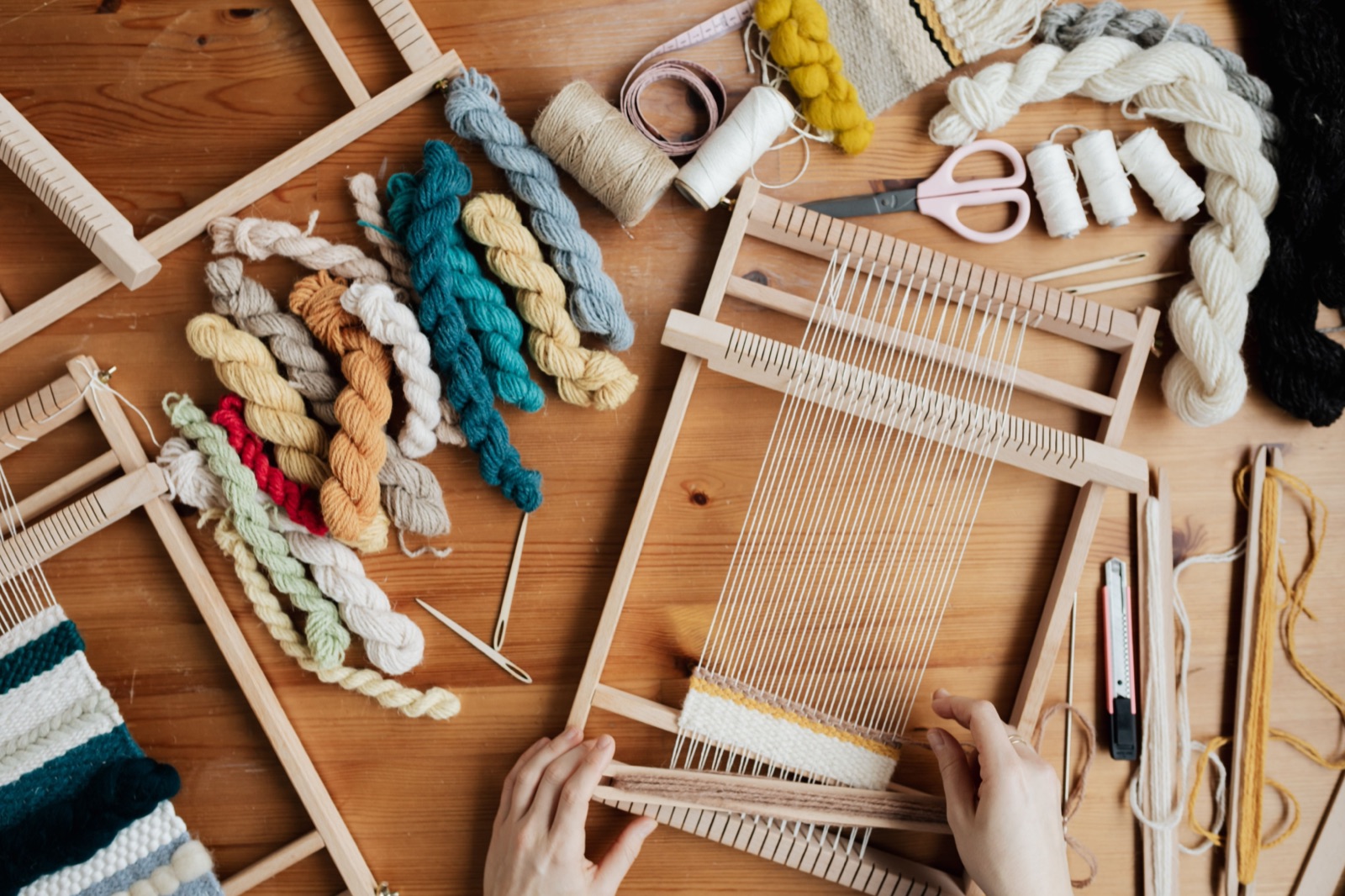
A weaving loom for beginners does one job: it holds a set of threads tight so you can pass other threads over and under them. Every loom does that, so the real question is what you want to make. This guide compares the looms people usually start on (frame, peg, rigid heddle and inkle looms, plus the table loom as a next step), explains what a looming kit includes, and shows which type suits which kind of weaver.
What you'll need
Essentials
-
A first loom
: a frame loom for small weavings and wall hangings, or a rigid heddle loom if you want scarves and lengths of cloth. -
Warp yarn
: strong, smooth cotton such as cotton seine twine or carpet warp; it holds the tension on the loom. -
Weft yarn
: almost any yarn you like the look of; worsted weight is easy to start with. -
Weaving needle or stick shuttle
: carries the weft across the warp. Most frame loom kits include one. -
Beater or wide-tooth comb
: presses each row of weft down against the last.
Optional
-
Pick-up stick and shed stick
: open a space in the warp so you are not weaving every thread by hand. -
Table clamps
: hold a rigid heddle loom or a warping peg still on the table. -
Tape measure
: check the width of your weaving as you go.
What a loom does
The threads stretched on the loom are the warp; the threads you weave across them are the weft. If those words are new, read warp and weft first.
Looms differ in three ways that matter to a beginner:
- How they make the shed. The shed is the opening between raised and lowered warp threads that the weft passes through. On a frame loom you make it by hand or with a stick; a rigid heddle loom makes it by lifting or lowering one bar.
- How long a warp they hold. A frame loom holds a warp as long as the frame. Looms with a warp beam and a cloth beam roll the warp on and the cloth off, so a scarf can be longer than the loom.
- How wide they weave. The weaving width is the widest piece you can make.
Types of looms for beginners
Frame loom
A frame loom is a wooden rectangle with teeth, notches or pegs along the top and bottom. Handwoven calls it the simplest of looms: it cannot make a shed on its own, and what you weave on it is limited to the size of the frame. That is also why it is the easiest way to start. Schacht's Lilli Loom, for example, measures about 10 by 15 inches, and its beam teeth are set at 6 ends per inch; you can double that to 12 by winding two warp threads together. It comes with a shed stick, a pick-up stick, a 6 inch weaving needle, a stick shuttle and a beater.
Frame looms suit wall hangings, small tapestries, mug rugs and samples. Our frame loom guide covers warping and weaving one step by step.
Peg loom
A peg loom is a board, usually wooden, with a row of holes and a set of wooden or nylon pegs; plastic ones are made for schools. A double-length warp thread goes through a hole near the top of each peg, and the weft is woven around the pegs. As the weaving grows, you lift the pegs one at a time and slide the work down onto the warp, so the piece can be much longer than the loom. Peg looms suit thick yarns: Gathered's peg loom project is a chunky cushion cover, and a larger peg loom has been used to make sleeping mats. See our peg loom guide.
Rigid heddle loom for beginners
A rigid heddle loom has a single bar, the heddle, with slots and holes that hold the warp threads. Lift it and half the threads rise; lower it and they drop, so each row takes one movement instead of picking up threads by hand. Handwoven calls it a good beginner's loom that still offers patterning to experienced weavers. With one heddle it weaves two-shaft structures such as plain weave, usually with thicker yarns; a second heddle allows thinner yarns and more intricate patterns.
Rigid heddle looms come in set widths. These are the makers' own specs:
- Ashford SampleIt: 10 or 16 inch weaving width, with a 7.5 dent per inch reed, two shuttles, a threading hook, a warping peg and clamp, and a built-in option for a second heddle. It is assembled at home.
- Ashford Knitters Loom: 12, 20 or 28 inches, with the same reed and tools. It comes assembled and lacquered, folds with the weaving in place and includes a padded carry bag.
- Ashford Rigid Heddle Loom: 16, 24, 32 or 48 inches. Ashford calls it the more robust model, with extra accessories such as a table stand and the Freedom Roller for weaving longer lengths.
- Schacht Cricket: 10 or 15 inches, with an 8-dent reed, two stick shuttles, a heddle hook, a warping peg and clamp, two loom clamps and two 50-gram balls of worsted-weight wool. It is assembled at home with a Phillips screwdriver.
Ashford notes that its three rigid heddle looms are warped and woven in exactly the same way; the differences are width, folding and finish.
Inkle loom
An inkle loom weaves narrow bands such as straps and belts, which can become purse straps, dog collars or leashes. The heddles are moved up or down by hand to make the shed. Handwoven calls it a great beginner's loom, and it is portable. Choose one if bands, not wide cloth, are what you want.
Table loom, the next step
A table loom has shafts, most often 4 or 8, each lifting its own group of warp threads. Handwoven describes the four-shaft table loom as one step up from the beginner looms. It weaves twills and other patterns, but it also needs more equipment, such as a warping board and a bobbin winder. Most people come to it after a first loom.
Comparison of beginner looms
| Loom | What it weaves | How the shed is made | Length of piece | Good first project |
|---|---|---|---|---|
| Frame loom | Wall hangings, small tapestries, samples | By hand or with a shed stick | Up to the size of the frame | Small wall hanging |
| Peg loom | Thick, chunky fabric | Weave around pegs by hand | Longer than the loom | Mat or cushion cover |
| Rigid heddle loom | Scarves, towels, lengths of cloth | One heddle, lifted or lowered | Set by the warp | Plain weave scarf |
| Inkle loom | Narrow bands | Heddles moved by hand | Long bands | Strap or belt |
| Table loom (4 or 8 shafts) | Patterned cloth, twills | Shafts lift groups of threads | Long warps | After a first loom |

What comes in a weaving loom kit
"Looming kit" and "weaving loom kit" usually mean the loom plus the tools to start and often some yarn. What is in the box varies, so read the parts list:
- Frame loom kits usually add a shuttle or weaving needle and a beater. Schacht's Mini Loom includes the loom, two shuttles, a weaving needle, a beater, yarn and step-by-step instructions.
- Rigid heddle loom kits add the reed, a threading or heddle hook, a warping peg and clamps. The Cricket includes two balls of wool; Ashford's looms include an instruction booklet but no yarn, and its Complete Weaving Kit bundles the 16 inch SampleIt with tools, a carry bag, a book and yarn for a first project.
A kit "for adults" and one "for beginners" are often the same thing: a small loom with what you need to finish one piece. What matters is the weaving width, the setts the loom can take and whether the tools in the box are ones you will keep using.
What to look at before you buy
- Width. Buy for the things you want to make. Ashford's widths run from 10 inches (SampleIt) to 48 inches (Rigid Heddle Loom). A wider loom takes more room to store and carry.
- Sett options. The sett is how many warp threads sit in each inch. On a frame loom the teeth set it (the Lilli Loom takes 6 or 12 ends per inch); on a rigid heddle loom the reed sets it, and extra reeds change it. Ashford sells reeds from 2.5 to 15 dents per inch.
- Second heddle. If you think you will want finer yarns and more patterns later, check whether the loom can take a second heddle. Ashford's three rigid heddle looms have a built-in option for one.
- Folding and portability. A loom that folds with the weaving in place, such as the Knitters Loom, is easier to store and to take to a class.
- Assembly. The Knitters Loom arrives assembled; the SampleIt, the Ashford Rigid Heddle Loom and the Cricket are put together at home.
- Tools included. A loom without a shuttle, beater or warping peg is not the better deal if you then buy those separately.
Which loom suits whom
- You want to try weaving with little setup: a small frame loom kit.
- You want scarves, towels or fabric to sew: a rigid heddle loom, 10 to 16 inches wide to start.
- You want thick, chunky pieces such as mats: a peg loom.
- You want straps, belts and bands: an inkle loom.
- You already know you love it and have space: a four-shaft table loom, ideally after trying one.
Try a loom before you buy
Susan E. Horton, a former editor of Handwoven, advises trying one or more looms of each type before you choose. She notes that most guilds offer looms to borrow or rent for a very low fee, and some run beginner classes on rigid heddle and multi-shaft looms. Think about whether you need a loom you can carry, how much time you want to spend warping, and whether you want to weave several projects from one warp.
Your first warp
Whatever the loom, start with a strong, smooth cotton warp. Schacht's wall hanging project on the Lilli Loom uses 12/6 cotton seine twine for the warp and notes that any cotton carpet warp will do. Keep the first project small, such as a sampler.
Care and storage

- Ashford recommends its finishing wax polish for the natural-timber SampleIt and Rigid Heddle looms; the Knitters Loom has a factory lacquer finish.
- Store small tools (needles, shuttles, pick-up sticks) with the loom so a kit stays a kit.
- Measure your weaving as you go; a piece that slowly narrows is a sign the weft is pulled too tight, which the frame loom guide explains how to fix.
For every loom type and project in this section, start at loom weaving.
Questions
What is the best weaving loom for beginners?
There is no single best loom; it depends on what you want to make. A frame loom is the simplest start for small weavings and wall hangings, while a rigid heddle loom, which Handwoven calls a good beginner's loom, weaves scarves and lengths of cloth.
What comes in a weaving loom kit?
Usually the loom plus the small tools and some yarn. Schacht's Mini Loom, for example, comes with two shuttles, a weaving needle, a beater, yarn and step-by-step instructions; the Schacht Cricket rigid heddle loom adds a reed, a heddle hook, a warping peg, clamps and two balls of wool.
Is a rigid heddle loom good for beginners?
Yes. Handwoven calls it a good beginner's loom: it is portable, warps directly from the loom to a warping peg, and weaves plain weave with a single heddle. A second heddle, where the loom takes one, lets you use thinner yarns and weave more intricate patterns later.
What size loom should a beginner buy?
Pick the width of the things you want to make, not the biggest loom you can afford. A rigid heddle loom 10 to 16 inches wide usually covers scarves and samples; wider looms are bigger to store and carry.
Can I try weaving before buying a loom?
Often, yes. A former Handwoven editor notes that most weaving guilds lend or rent looms for a very low fee, and some run beginner classes on rigid heddle and multi-shaft looms, so you can try one before you buy.
Sources
- Handwoven — Types of weaving looms
- Handwoven — Susan E. Horton, Choosing a loom to love
- Ashford — Rigid heddle looms brochure (SampleIt, Knitters Loom, Rigid Heddle Loom)
- Schacht Spindle Company — Cricket Loom assembly and weaving manual
- Schacht Spindle Company — Lilli Loom assembly instructions
- Schacht Spindle Company — Mini Loom booklet
- Schacht Spindle Company — How do you hygge? Wall hanging on the Lilli Loom
- Gathered — Stephanie Fradette, How to do peg loom weaving
- Wikipedia — Peg loom
Read next
Wooden loom for weaving: how to warp and weave on a frame loom
From an empty frame to a finished wall hanging: warping, spacing, the first rows, keeping the edges straight and finishing.
Rigid heddle loom: how it works, widths and how to choose one
One heddle that spaces the warp, opens both sheds and beats the weft: what that means for scarves, cloth and the loom you buy.
Warp and weft in weaving: what they are and how to tell them apart
The two sets of threads every woven piece is made of, the words weavers use for them, and why the warp needs a stronger yarn.