Buying guide
Rigid heddle loom: how it works, widths and how to choose one
One heddle that spaces the warp, opens both sheds and beats the weft: what that means for scarves, cloth and the loom you buy.
Published
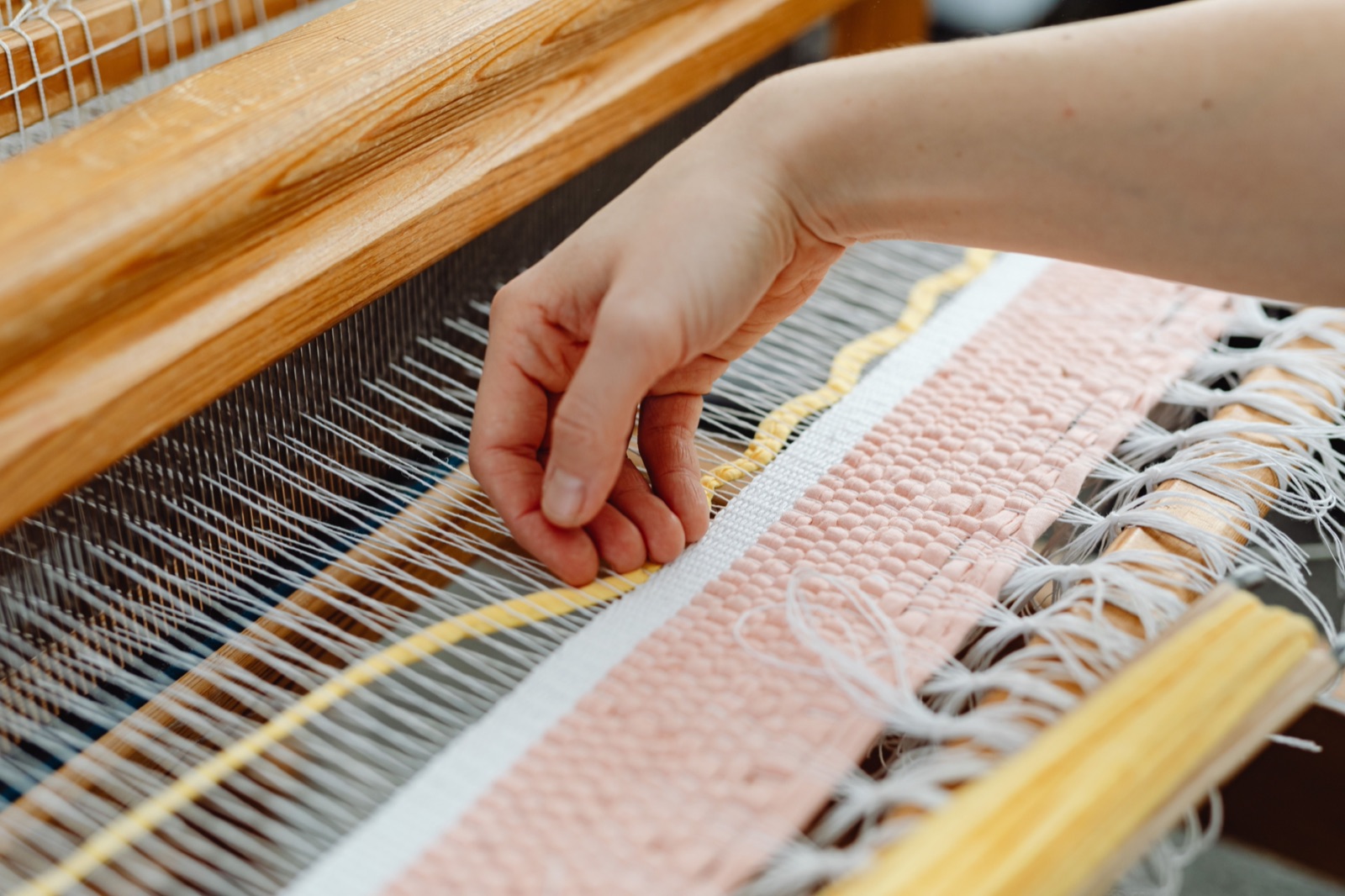
A rigid heddle loom is one of the simplest looms for weaving lengths of cloth. It holds the warp on two beams, so you can weave a scarf or a table runner much longer than the loom itself, and one part, the rigid heddle, does three jobs: it spaces the warp, opens the sheds and beats the weft. This guide explains how it works, which widths makers offer, what comes in the box and how to choose between folding and fixed frames.
What you'll need
Essentials
-
Rigid heddle loom
: the frame, warp and cloth beams and one rigid heddle, in the width you will weave most. -
Rigid heddle in the right dent
: sets how many warp ends per inch you weave; most looms ship with an 8 dent or 7.5 dpi heddle. -
Warping peg and clamps
: for direct warping, the loom and peg are clamped to a table at warp length apart. -
Heddle hook
: pulls loops of warp through the slots and moves single ends into the holes. -
Stick shuttles
: carry the weft through the shed; two usually come with the loom.
Optional
-
Loom stand
: holds the loom at a set angle so you can weave without a table edge. -
Second heddle or heddles in other dents
: finer or thicker yarns, or weaving with two heddles at once on looms that take a second one. -
Pick-up stick
: lifts chosen warp threads for simple patterns beyond plain weave.
How a rigid heddle loom works
The heddle is a panel of alternating slots and holes. Schacht's Cricket manual describes it as "the loom part made up of alternating slots and holes. It creates sheds and is used to beat the weft." One warp end goes through each hole, the next through each slot.
The heddle sits in notches on the loom sides with three positions:
- Up: the heddle lifts the threads in the holes; the threads in the slots stay low. That opening is the first shed.
- Down: the heddle pushes the hole threads below the slot threads. That is the second shed.
- Neutral: no shed, used while warping.
Weaving is a rhythm the Cricket manual sums up as "up shed, pass the weft, beat; down shed, pass the weft, beat." You beat by pulling the heddle toward you. After a couple of inches you release the tension, wind the cloth forward onto the cloth beam and carry on. Schacht suggests advancing the warp about every 2 inches for more even cloth.
This is the main difference from a floor or table loom with shafts. On those, each warp end goes through a separate heddle on a shaft, and a reed in a beater spaces the threads. In a rigid heddle loom the heddles are fixed in a single shaft, so lifting it raises only half the threads: perfect for plain weave, with patterns added by hand.

Heddle dents and what they mean
The heddle's dent is the number of slots plus holes per inch, which sets the ends per inch (EPI) of your warp. Most looms ship with a middle size: Schacht's Cricket and Kromski's looms include an 8 dent heddle; Ashford includes a 7.5 dpi reed. Ashford sells reeds from 2.5 to 15 dpi, plus a vari dent reed made of 2 and 4 inch sections so you can mix thick and thin yarns across one warp.
To match yarn to heddle, Schacht's Flip manual gives a rule of thumb: wrap the yarn around a ruler for 1 inch with no gaps, count the wraps and divide by 2. Choose the heddle closest to that number.
Rigid heddle loom widths and models
Weaving width is the widest piece you can put on the loom. Buy for the widest project you expect, not the average one.
| Loom (maker) | Weaving widths | Heddle included | Folds with warp on |
|---|---|---|---|
| Cricket (Schacht) | 10", 15" | 8 dent | No |
| Flip (Schacht) | 15", 20", 25", 30" | One rigid heddle | Yes |
| SampleIt (Ashford) | 10", 16" | 7.5 dpi | No |
| Rigid Heddle Loom (Ashford) | 16", 24", 32", 48" | 7.5 dpi | No |
| Knitters Loom (Ashford) | 12", 20", 28" | 7.5 dpi | Yes |
| Harp Forte (Kromski) | 8", 16", 24", 32" | 8 dpi | Folds in half, even mid-project |
| Presto (Kromski) | 10", 16" | 8 dent | Folds flat once beams are removed |
Small looms: Cricket and SampleIt
The Schacht Cricket comes in 10 and 15 inch weaving widths. In the box are the loom parts, an 8 dent heddle, two loom clamps, a heddle hook, a warping peg and clamp, two stick shuttles and two 50 gram balls of worsted-weight wool for a first project.
The Ashford SampleIt comes in 10 and 16 inch widths. Ashford pitches it at sampling yarns and learning, and includes a 7.5 dpi reed, two shuttles, a threading hook, a warping peg and clamp, and a built-in second heddle option. It needs assembly, has a natural timber finish you can wax, and does not fold.
Wider looms: Ashford, Flip and Kromski
Ashford's standard Rigid Heddle Loom covers 16, 24, 32 and 48 inches. Ashford calls it more robust than the SampleIt and offers extras for it: a table stand for weaving upright and a Freedom Roller that lets you weave longer lengths or thicker yarns. The Ashford Knitters Loom (12, 20 and 28 inches) arrives assembled and lacquered, folds with the weaving in place and includes a padded carry bag. Ashford says all three of its rigid heddle looms warp and weave in exactly the same way.
The Schacht Flip comes in 15, 20, 25 and 30 inch widths and folds even with a warp on it. Its heddle block has separate slots for a first and a second heddle.
The Kromski Harp Forte comes in 8, 16, 24 and 32 inch widths. It folds in half for transport and storage, with side-lock latches so you can carry it even mid-project, has a built-in warping board on the back as well as a direct-warping peg and clamp, and comes with an 8 dpi heddle, two stick shuttles, a pick-up stick and a threading hook. A second heddle block for double-heddle weaving is an extra. Kromski's smaller Presto comes in 10 and 16 inches with an 8 dent heddle; 5, 10 and 12 dent heddles are optional.
What to look at before you buy
- Width. A 10 to 16 inch loom handles scarves, samplers and runners. Shawls, wraps and fabric for sewing need 20 inches or more.
- Folding. A loom that folds with the warp on (Flip, Knitters Loom, Harp Forte) can go to a class or into a cupboard mid-project.
- Second heddle. If you may want to weave with two heddles later, check for a second heddle slot or block. The SampleIt, Ashford Rigid Heddle Loom and Knitters Loom have it built in, the Flip has a second heddle slot, and Kromski offers a second heddle block for the Harp Forte as an extra.
- Heddles you can buy. Heddles are made for each loom width, so check which dents the maker sells for the width you choose.
- Stand. Without one, a small loom such as the Cricket rests against a table edge in your lap or clamps to a table. A stand sets the angle and frees the table, and is sold separately.
- What is in the box. Shuttles, a hook, clamps and a warping peg are usually included; yarn sometimes is.
Warping a rigid heddle loom
The usual method on small rigid heddle looms is direct warping: the loom is clamped at one end of a table and a warping peg at the other, as far away as your warp length. Schacht's Cricket manual credits this method to Rowena Hart.
- Clamp the loom and peg, set the heddle in neutral and bring the back apron bar over the back beam.
- Tie the yarn to the back apron bar. With the heddle hook, pull a loop through a slot and drop it over the peg. Each loop is two warp ends.
- Repeat across the width, alternating over and under the apron bar.
- Cut the loops off the peg and wind the warp onto the warp beam with heavy paper between layers.
- Move one end from each slot into the neighboring hole.
- Tie the warp onto the front apron bar in 1 inch groups and even out the tension.
Warp length
Plan for loom waste. Schacht's Flip manual works an example: a 40 inch piece plus about 24 inches of loom waste, 4 inches of take-up and 4 inches of shrinkage needs a 72 inch warp, or 2 yards.
Which rigid heddle loom suits whom
- First loom, small space: a 10 to 16 inch Cricket, SampleIt or Presto. Enough for scarves and for learning to warp.
- You travel or go to classes: a folding loom such as the Flip, Knitters Loom or Harp Forte.
- You want cloth for sewing, shawls or blankets in panels: 24 inches or wider, with a stand.
- You already know you want pattern work: a loom with a second heddle slot and a couple of pick-up sticks.
Weaving tips and care
- Tension should be taut but not so tight that the heddle is hard to lift; one or two clicks of the ratchet usually does it.
- Lay the weft at an angle of about 30 degrees in the shed before you beat, so the edges do not draw in.
- Weave a header of scrap yarn first to spread the warp evenly: three picks without beating, then beat.
- Pass stick shuttles from hand to hand; Handwoven notes they are made for the narrow sheds of table and rigid heddle looms.
- Unfinished looms such as the SampleIt and Ashford Rigid Heddle Loom can be waxed; Ashford sells a finishing wax for this.
Shuttles, pick-up sticks and the rest of the kit are covered in our guide to weaving tools. For narrow bands, see the inkle loom, and for weft-faced pictures, the tapestry loom. Everything else on hand weaving is in the loom weaving section.
Questions
What is a rigid heddle loom?
A rigid heddle loom is a small loom with a warp beam, a cloth beam and one rigid heddle: a panel of alternating slots and holes. Lifting and lowering the heddle opens the two sheds for plain weave, and pulling it forward beats the weft into place.
What width rigid heddle loom should I buy?
Pick the width of the widest piece you plan to weave, with a little to spare. A 10 to 16 inch loom covers scarves, samples and table runners; 20 to 32 inches suits shawls and wider cloth; Ashford's widest standard rigid heddle loom is 48 inches.
Is a Schacht Cricket or an Ashford SampleIt better for beginners?
Both are small, entry-level rigid heddle looms that warp the same way. The Cricket comes in 10 and 15 inch weaving widths with an 8 dent heddle; the SampleIt comes in 10 and 16 inch widths with a 7.5 dpi reed and a built-in option for a second heddle. Choose by the width you need and the accessories you want later.
Can a rigid heddle loom weave patterns?
Yes. Plain weave is the default, but pick-up sticks lift chosen threads for patterns, and looms with a second heddle slot let you weave with two heddles. Ashford's own book for its looms covers Brooks bouquet, Bronson lace and second heddle techniques.
How long a warp can I put on a rigid heddle loom?
The warp is wound onto a warp beam, so length is set by your project rather than the frame. Schacht's Flip manual allows about 24 inches of loom waste plus take-up and shrinkage, so a 40 inch piece needs a warp of about 72 inches.
Sources
- Ashford — Rigid heddle looms brochure (SampleIt, Rigid Heddle and Knitters looms)
- Schacht Spindle Company — Cricket Loom assembly and weaving instructions
- Schacht Spindle Company — Flip Loom warping and weaving instructions
- Kromski — The Harp Forte rigid heddle loom
- Kromski — The Presto rigid heddle loom
- Handwoven — Choosing and using shuttles: stick shuttles, flat shuttles and rag shuttles
- Wikipedia — Heddle
Read next
Weaving loom for beginners: how to choose your first loom
Frame, peg, rigid heddle, inkle or table loom: what each one weaves, what comes in the box and how to pick the one you will actually use.
Weaving tools: shuttles, heddles, needles and the loom tools you need
What each tool does, which loom it belongs to and what to buy first, from the shuttle in the box to the bobbin winder you add later.
Weaving yarn: how to choose warp and weft yarn, from 8/2 cotton to wool
Warp and weft ask different things of a yarn. Here is how to read weaving yarn counts and pick yarn that suits your loom and project.