Buying guide
Inkle loom: how inkle weaving works and how to choose a loom
A peg frame, a tension peg and a row of string heddles: everything you need to weave belts, straps and trims.
Published
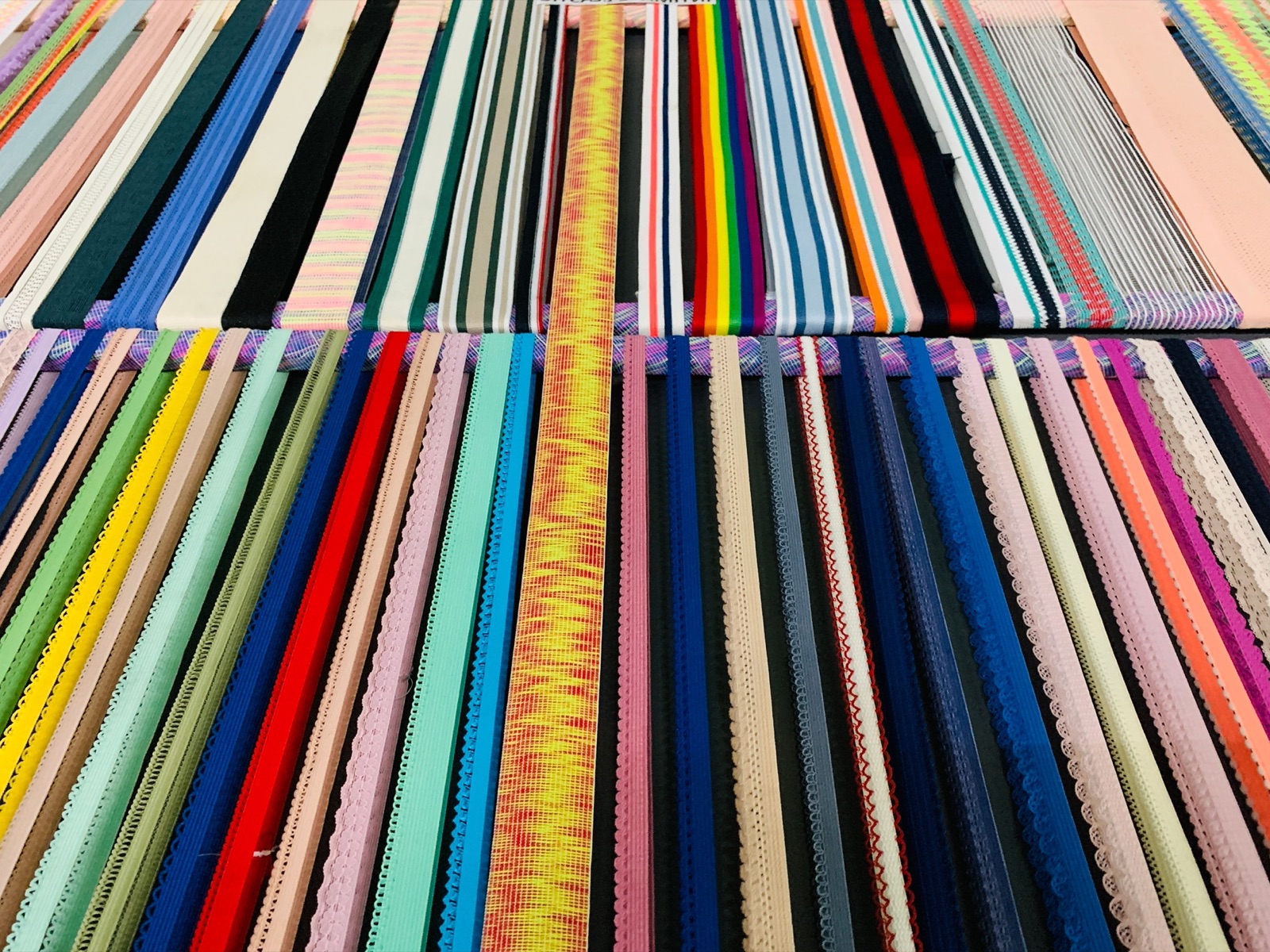
An inkle loom weaves narrow, strong bands: belts, straps, trims and ties. It is a wooden frame with pegs, a sliding tension peg and a set of string heddles, with no beams, reed or ratchets. Inkle weaving is warp-faced, so the warp colors make the pattern and the weft shows only at the edges. This guide explains how the loom works, what sets band width and length, how the makers' looms compare, and what else you need.
What you'll need
Essentials
-
Inkle loom
: a frame of pegs with a sliding tension peg; the pegs you wind around set the warp length. -
String heddles
: one loop for every heddled warp thread; smooth cotton string or ready-made Texsolv heddles. -
Belt shuttle
: a flat shuttle with a tapered edge that carries the weft and beats it into place. -
Smooth, strong warp yarn
: perle (mercerized) cotton or cotton rug warp give a clean shed.
Optional
-
Pick-up stick
: lifts single warp threads for pick-up patterns and lettering. -
Clamp
: holds the loom to the table while you weave. -
Weaving cards
: for tablet (card) weaving on the same loom instead of string heddles.
How an inkle loom works
The warp runs in one continuous loop around the pegs, which is what sets the inkle loom apart from other band looms. Every other warp thread passes through a heddle, a short loop of string tied to a fixed heddle peg. The threads in between are "open" and free to move.
- First shed: push the open threads down, just behind the heddles. They drop below the heddled threads.
- Second shed: push the open threads up. They rise above the heddled threads.
You pass the weft through one shed, change to the other, beat the last pick with the edge of the shuttle, and pull the weft tight. Ashford's booklet explains why that pull matters: the warp packs together so you cannot see the weft at all, and the band ends up about half the original width of the warp.
When you run out of room, loosen the tension peg, pull the whole warp around the pegs toward you so the woven part moves on, and tighten again.
Inkle loom sizes, warp lengths and band widths
The warp path, meaning which pegs you wind around, sets the warp length. Using every peg gives the maximum.
| Loom | Warp length | Band or warp width |
|---|---|---|
| Ashford Inkle Loom | 51" to 110" | Warp up to 3" |
| Schacht Inkle Loom | 5 ft, 6 1/2 ft or 8 1/2 ft paths | Bands up to 4" |
| Typical table inkle loom | Bands of about 90" to 110" | Depends on yarn and ends |
| Floor inkle loom | Longer than a table model | Same design, larger frame |
Schacht's manual lists the peg sequences for each length (for example A-C-4-5 for a 5 foot warp) and notes that about 50 warp ends of its recommended cotton make a 1 inch band. The Ashford Inkle Loom has nine warping pegs and takes warps of 1.3 to 2.8 meters.
Inkle loom belt length
The finished band is always shorter than the warp. You stop weaving when there is no more room to advance the warp, when the knots in the warp come up to the heddles, and take-up shortens the band as the warp bends over and under the weft. Annie MacHale's inkle FAQ suggests allowing 8 to 15 inches for loom waste, and in a reply to a reader she guesses take-up at around 20 percent. For a belt, add the length of the fringe or the part sewn to the buckle, and weave a sample if the width matters.
Floor inkle looms
Floor-standing inkle looms follow the same design as table models but are larger, so the warp path is longer. Tracy DeGarmo's inkle notes put table-model bands at about 90 to 110 inches and point to a floor loom for anything longer.
What to look at in an inkle loom
- Hardwood and heavy-duty hardware. DeGarmo's notes point to hardwood and to solid hardware on the tensioner, because its bolt carries a lot of pressure.
- A peg in a slot. MacHale's FAQ says a tension peg that slides in a slot tends to be more durable than the paddle type.
- Full size over mini. A full-size loom is generally easier to use and makes a wider range of things.
- Open frame. A loom with a second side is only useful if that side comes off for warping.
- A known maker. MacHale warns that not every inkle loom on the market is well built.
Warping and making heddles

Inkle patterns are written as a draft with two rows: the top row shows the threads that go through heddles, the bottom row the open threads. You wind them alternately.
- Set the tension peg so it can still move forward to tighten; Ashford suggests about 3/8 inch from the front of the slot, Schacht the middle.
- Wind a heddled thread on the path over the top pegs and add a heddle, then wind an open thread on the path under the top front peg.
- Repeat, following the draft. Tie each new color to the last one with a square knot.
- When the warp is complete, tie the last end to the first and tighten the tension peg.
Heddles should be smooth, strong cotton string, never fuzzy or stretchy; wool is a poor choice. Schacht measures each string heddle around three set pegs so every loop is the same length, and also accepts 8 5/8 inch Texsolv heddles. Ashford's loom has leash pegs for making 4 3/4 inch leashes. Schacht ties each string heddle with a square knot.
Yarn for inkle weaving
Smooth, strong, fairly inelastic yarn gives a clean shed. Schacht and Ashford both point to perle (mercerized) cotton; MacHale adds crochet cotton and cotton rug warp. Ashford warns against soft or hairy wool, which clings and blocks the shed, and says all warp threads should stretch about the same amount. Use a weft in the same color as the edge warp threads and it disappears along the selvage.
Inkle shuttles
The inkle shuttle is a belt shuttle: a flat stick with a tapered edge that beats the weft as well as carrying it. Handwoven describes band shuttles as usually no more than 6 to 10 inches long, with a knife edge for packing the weft and a recessed center that holds more yarn. Wind it front to back, building up both sides evenly. Ashford includes one with its inkle loom, and Schacht's manual shows how to wind one.
Card weaving on an inkle loom
An inkle loom is also used as a card weaving loom. In tablet weaving the cards replace the string heddles: most patterns use square cards with a hole near each corner, each carrying a warp thread, and you turn the cards to lift a new set of threads for every shed. The inkle loom acts as both the loom and the warping board, and band-weaving references note it is used this way for its portability.
DIY inkle loom
An inkle loom is one of the easier looms to build. Make: magazine's plan uses hardwood such as oak, seven 3/4 inch dowel pegs glued and screwed into the frame and a slot-and-peg tensioner: a hanger bolt through a slot, held with a washer and wing nut. Whatever design you follow, sand the pegs smooth and use solid hardware for the tensioner, the same points that matter on a bought loom.
Who an inkle loom suits
- New weavers: the loom has no beams or reed, and a plain band needs only the loom, string heddles and a belt shuttle.
- Makers of belts, straps and trims: guitar straps, ties and trims for other weaving.
- Pattern lovers: pick-up patterns and even letters are possible once plain bands are easy.
- Weavers with little space: a table inkle loom stores on a shelf.
For wider cloth, a rigid heddle loom is the next step. Shuttles and pick-up sticks are covered in weaving tools, and every guide on hand weaving is in the loom weaving section.
Questions
What is an inkle loom used for?
An inkle loom weaves narrow warp-faced bands: belts, guitar straps, ties, trims, bracelets and shoelaces. Bands can also be sewn together into bags, placemats or cushion covers.
How wide can an inkle band be?
It depends on the loom and the yarn. Schacht says its inkle loom weaves bands up to 4 inches wide; Ashford gives a warp width of up to 3 inches for its Inkle Loom, and the woven band ends up about half as wide as the warp. About 50 ends of the cotton Schacht recommends make a band about 1 inch wide.
How long a belt can I weave on an inkle loom?
Table inkle looms take warps of roughly 4 to 9 feet. Ashford's Inkle Loom takes 51 to 110 inches, and Schacht lists 5, 6 1/2 and 8 1/2 foot warp paths. The finished band is shorter because of loom waste and take-up.
Can you do card weaving on an inkle loom?
Yes. Tablet weaving is often done on inkle looms: the cards take the place of the string heddles and are turned to make each shed, while the loom holds the warp. Its portability is one reason weavers use it this way.
What is the difference between a floor inkle loom and a table one?
A floor inkle loom uses the same peg design but is larger, so the warp path and the bands it weaves are longer. Table models usually weave bands of about 90 to 110 inches.
Sources
- Ashford — Learn to weave on the Inkle Loom
- Schacht Spindle Company — Inkle loom assembly, warping and weaving
- Annie MacHale, A Spinner Weaver — Inkle weaving FAQs and answers
- Tracy DeGarmo — Inkle weaving: the inkle loom
- Make: — How to build an inkle loom
- Wikipedia — Tablet weaving
- Wikipedia — Band weaving
- Handwoven — Choosing and using shuttles: stick shuttles, flat shuttles and rag shuttles
Read next
Rigid heddle loom: how it works, widths and how to choose one
One heddle that spaces the warp, opens both sheds and beats the weft: what that means for scarves, cloth and the loom you buy.
Weaving tools: shuttles, heddles, needles and the loom tools you need
What each tool does, which loom it belongs to and what to buy first, from the shuttle in the box to the bobbin winder you add later.
Weaving yarn: how to choose warp and weft yarn, from 8/2 cotton to wool
Warp and weft ask different things of a yarn. Here is how to read weaving yarn counts and pick yarn that suits your loom and project.