Buying guide
Human hair wigs: how to choose the hair, cap, texture, density and length
What to check in a human hair wig listing before you pay: the hair itself, the cap, the texture, the density and the size.
Published
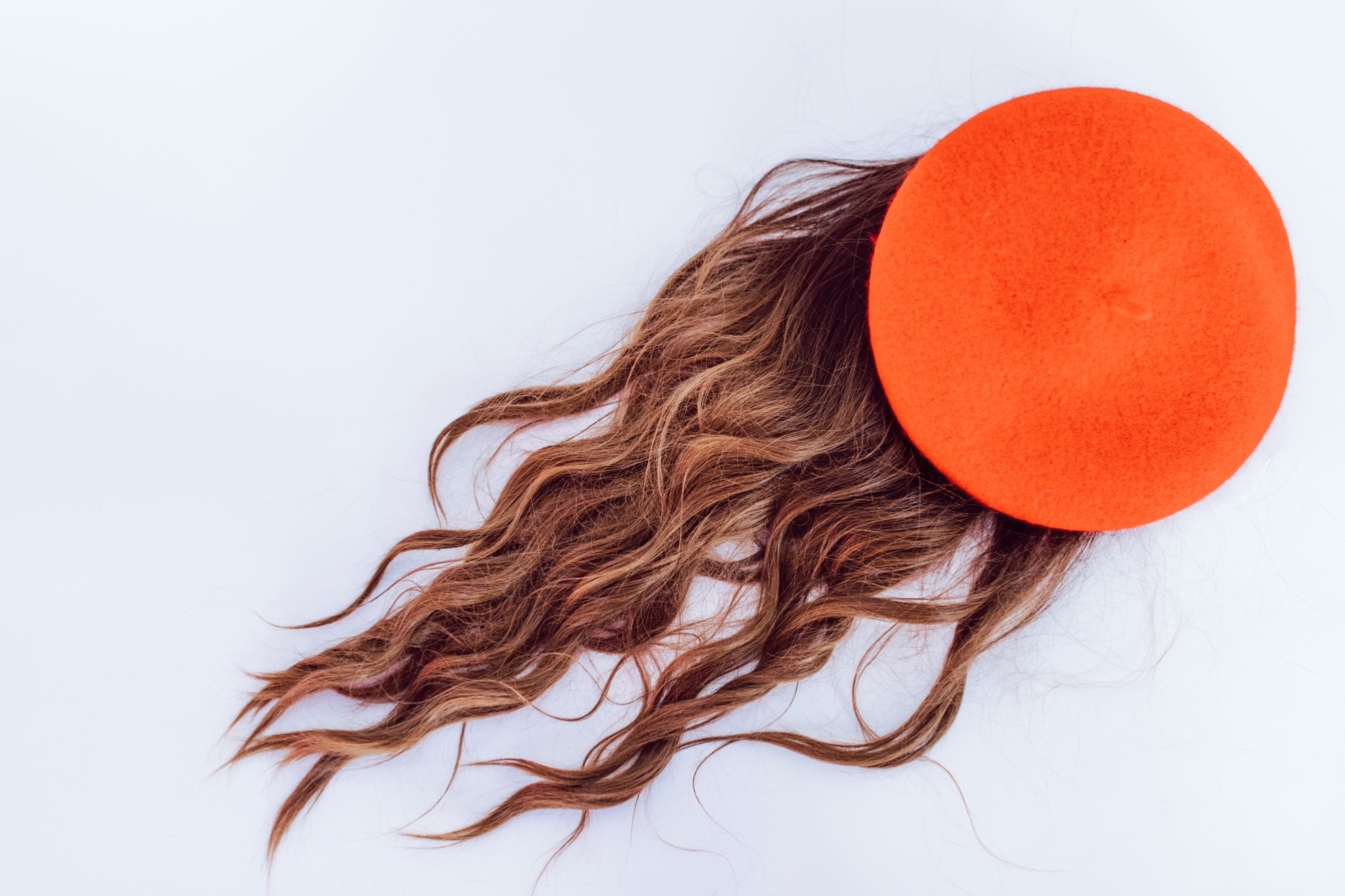
A human hair wig is made from real donor hair knotted or sewn onto a cap. It looks and moves like your own hair, takes heat, can often be colored and outlasts a synthetic wig. It also costs more, needs restyling after every wash and comes with a confusing range of labels. This guide goes through what to check in a listing: the hair, the cap, the texture, the length, the density, the size and the color.
Human hair wig vs synthetic: what you pay for
Breastcancer.org sets out the trade-offs by fiber type (the human hair column's heat and washing rows come from Mayvenn and Headcovers):
| Synthetic | Heat-friendly synthetic | Human/synthetic blend | Human hair | |
|---|---|---|---|---|
| Typical life | About 4 to 6 months | 2 to 3 months | 6 to 12 months | Often more than a year |
| Heat tools | No | Up to 275°F | Up to 275°F | Yes, about 250 to 300°F |
| After washing | Style springs back | Style springs back | Style holds | Needs restyling |
| Weight | Light | Light | In between | Heaviest |
Headcovers adds the downsides worth knowing before you buy: a human hair wig needs washing, conditioning and restyling after every wash, it can frizz or go limp in humidity, sunlight fades the color over time, and it is heavier than a synthetic wig of the same length. Breastcancer.org adds that synthetic fiber cannot be dyed at all; human hair can often be colored, with limits covered under color below.
Prices vary a lot. Breastcancer.org lists human hair wigs at $700 to $3,500 and Headcovers says most of its own fall between $570 and $1,550, while Mayvenn's lace wig guide gives $135 to $290 for its lace wigs. The cap, the amount of hand-knotting and the hair grade explain most of the gap.
Types of human hair wig by cap
The cap decides how the hairline looks, how you part the hair and how the wig goes on.
| Cap type | Lace | Parting | Typical install |
|---|---|---|---|
| Closure wig | A 4x4, 5x5 or 2x6 inch patch at the top front | Within the patch | Often glueless, combs and band |
| Lace front (frontal) wig | Ear to ear, usually 13x4 or 13x6 | Anywhere across the front | Adhesive, tape or band |
| 360 lace wig | All around the perimeter | Front and sides; ponytails | Adhesive or band |
| Full lace wig | The whole cap | Anywhere | Adhesive or band |
| U part, V part, half wig | None; your own hair blends in | Your own part | Combs and clips |
| Headband wig | None | None; a band covers the front | Band and combs |
The closure vs frontal comparison covers the two most common lace sizes in detail, and HD vs transparent lace explains the lace labels.
What to look at in a human hair wig
The hair: "100% human hair," Remy and virgin
"100% human hair" tells you there is no synthetic fiber. It does not tell you the grade. Headcovers explains the difference that matters most: Remy hair keeps its cuticles intact and running in one direction, so it stays smooth and resists tangling, while non-Remy hair is usually stripped of its cuticle and coated in silicone, a coating that washes off over time and leaves the hair tangling.
Virgin hair means hair that has not been chemically processed, and it is what you want if you plan to color the wig. The finer distinctions between Remy, virgin and raw hair, and how sellers stretch those labels, are a topic of their own; for buying a wig, the practical rule is to look for Remy or virgin hair stated in the listing, not just "human hair."
Texture: straight, body wave, deep wave and curly
Texture changes how long the wig looks once it is on. Lengths are measured with the hair pulled straight (on a wig, from the crown of the cap to the tip), so curlier textures wear shorter than the tag. Mayvenn's length chart gives these shrinkage figures:
- Straight: no shrinkage.
- Yaki straight: about 5% shorter than the tag.
- Kinky straight: about 8%.
- Body wave: about 14%.
- Loose wave: about 16%.
- Deep wave: about 26%.
- Curly: about 32%.
So an 18-inch deep wave wig wears at about 13 inches, just past the shoulder on Mayvenn's 5-foot-5 model, about where a 14-inch straight wig falls. Mayvenn suggests ordering 4 to 6 inches longer for deep wave wigs and 6 to 8 inches longer for curly ones if you want them to fall where a straight wig of the tag length would.
Length
On Mayvenn's chart, measured on a 5-foot-5 frame from the crown, straight hair falls about here:
- 10 inches: collarbone.
- 14 inches: just past the shoulder.
- 18 inches: bra strap.
- 22 inches: below the bra strap.
- 24 inches: natural waist.
- 30 inches: past the hip.
A taller or shorter frame shifts each length by about an inch or two.
Density
Density is how much hair is on the cap compared with an average head of hair. Mayvenn's chart describes 130% as reading like average natural hair and calls it the safest choice, 150% as full and styled, like a fresh blowout, and 180% as dramatic, the kind most people read as a wig.
Adjusting density for length and texture
- Length. The same hair spread over more inches looks thinner. Mayvenn says that past 20 inches, 150% looks about like 130% at bob length.
- Texture. Curl adds volume on its own, so curly wigs need less density; straight wigs show the cap more and usually benefit from a step up.
Density is not standardized, so one seller's 150% may look like another's 130%.
Cap size
Wigs are usually sold in an average cap size, and most caps have adjustable straps. Headcovers' size chart puts petite at 20 to 21.5 inches around the head, average at 21.5 to 22.5 inches and large at 22.5 inches and up. Measure from the center of your forehead, behind one ear, around the nape and back. If you fall between sizes, Headcovers says to choose the larger one: straps can take a roomy cap in by up to about half an inch, but a tight cap cannot be let out.
Color: natural black, brown and blonde human hair wigs
Many human hair wigs, including most black human hair wigs, are usually sold in the hair's own unlightened shade, which is the gentlest starting point for the hair. Blonde human hair wigs and other light shades start out as darker hair that has been lightened. Mayvenn says that color and processing shorten a wig's life and that lightening in particular opens the cuticle; on a wig, with no scalp oil to help, that damage is permanent. That makes a blonde wig the one to be most careful with when it comes to heat and harsh products.

If you want to color a wig yourself, buy virgin hair in its natural shade. Mayvenn notes that only virgin hair should be dyed and that not every wig can be dyed.
Reading a listing: cheap vs high quality human hair wigs
A human hair wig listing usually packs the specifications into the title. Read every part of it:
- Hair grade. "Remy" or "virgin" stated, not only "human hair."
- Cap and lace size. A "4x4 closure wig" and a "13x4 lace front wig" are different products at different prices.
- Lace type. HD, transparent or brown.
- Length and texture. Remember the tag length is stretched.
- Density. Compare like with like, and expect brands to differ.
- Cap size. Check that it comes in your measurement, or that the straps cover it.
When two wigs with the same cap, lace size, length and density are far apart in price, the cheaper one usually saves somewhere a photo cannot show: non-Remy or heavily processed hair, less hair on the cap, a smaller lace area or a machine-made cap. That does not make every cheap wig a bad buy: a short 130% closure wig simply needs less hair and knotting than a long 180% frontal.

Headcovers notes that making one wig takes the hair of two to three heads, and that a hand-tied wig can take up to three days to make. That is where the cost of a high quality human hair wig goes.
Which human hair wig suits whom
First wig
A closure wig in a straight or body wave texture, 14 to 18 inches, 130% to 150% density. It is quick to put on, low in upkeep and forgiving while you learn.
Most natural everyday look
A lace front wig in a texture close to your own hair, at 130% density. Match the lace to your skin tone.
Volume and definition
A deep wave or curly wig. Order a few inches longer than you want it to fall, and keep density moderate, since curl adds fullness.
Ponytails and updos
A 360 lace or full lace wig, so the edges hold up when the hair is pulled back.
Caring for a human hair wig
How long a human hair wig lasts depends mostly on how often you wear it and how you treat it. Mayvenn's estimates for virgin human hair are about a year worn daily, 1 to 2 years worn a few days a week and 2 to 3 years worn occasionally. It lists the signs that a wig is finished: it no longer holds a style after washing and setting, the hair mats at the weft and sheds when combed out, or the cap is stretched or the lace torn so the unit no longer sits flat.
- Wash gently and keep conditioner off the lace; Mayvenn warns that conditioner on the lace loosens the ties that hold each hair in. The human hair wig washing guide covers the routine.
- Heat at 250 to 300°F, the range Mayvenn gives for human hair, with a heat protectant.
- Store it on a stand between wears so it keeps its shape; the wig stands guide compares the options.
- Avoid sleeping in it, which Mayvenn lists among the things that shorten a wig's life.
For the other hair guides, including lace types and closure sizes, see the hair guides section.
Questions
How long does a human hair wig last?
Usually about a year with daily wear. Mayvenn puts a virgin human hair wig at about 1 year worn every day, 1 to 2 years worn a few days a week and 2 to 3 years worn occasionally; colored or lightened units wear out sooner.
What does 100% human hair mean on a wig?
It means the wig contains no synthetic fiber, but it says nothing about the grade of the hair. Remy hair keeps its cuticles intact and running one way; non-Remy hair is often stripped of its cuticle and coated in silicone, which washes off over time and leaves tangles.
Why are some human hair wigs so cheap?
A low price usually means savings somewhere you cannot see in a photo: non-Remy or heavily processed hair, less hair on the cap than the density label suggests, a smaller lace area or a machine-made cap. Compare wigs with the same cap, lace size, length and density before comparing prices.
What density should I get for a human hair wig?
130% reads like an average head of hair and 150% looks full and styled. Longer and straight wigs usually need a step more density than short or curly ones, because curl adds volume on its own.
Can you dye a human hair wig?
Usually, if it is virgin hair that has not already been lightened or colored. Mayvenn notes that only virgin hair should be dyed and that not all wigs can be dyed; lightening opens the cuticle, and on a wig that damage is permanent.
Can you use heat on a human hair wig?
Yes. Human hair takes curling irons and flat irons like your own hair; Mayvenn gives 250 to 300°F as the range. Use a heat protectant and the lowest setting that works, since repeated heat shortens the wig's life.
Sources
- Breastcancer.org — Synthetic vs human hair wigs: which fiber type is right for you?
- Headcovers.com — Human hair vs synthetic wigs: which is right for you?
- Mayvenn — How long do wigs last? Human hair vs synthetic, by wear frequency
- Mayvenn — Wig density chart: 130%, 150% or 180%?
- Mayvenn — Hair length chart: what 14, 18, 22 and 24 inch hair looks like
- Mayvenn — Lace front wigs guide
- Headcovers.com — Wig size guide: how to measure your head
Read next
Remy hair vs virgin hair: what each label means and what to check
Remy is about which way the strands run; virgin is about what has been done to them. One bundle can be both, either or neither.
Lace front wigs: lace front vs 360 vs full lace, and what to check before you buy
How much lace you need depends on how you wear your hair: the lace front, 360 and full lace wig compared, and what to check in each.
How long do wigs last? Synthetic, human hair and lace wigs compared
Months for synthetic, a year or more for human hair: what the ranges mean, what shortens them and how to tell a wig is done.