Buying guide
Wig steamer guide: steaming synthetic wigs to smooth frizz and restyle
What a steamer can do for synthetic fiber, which kind to buy, and how to steam a wig without burning yourself or the fiber.
Published
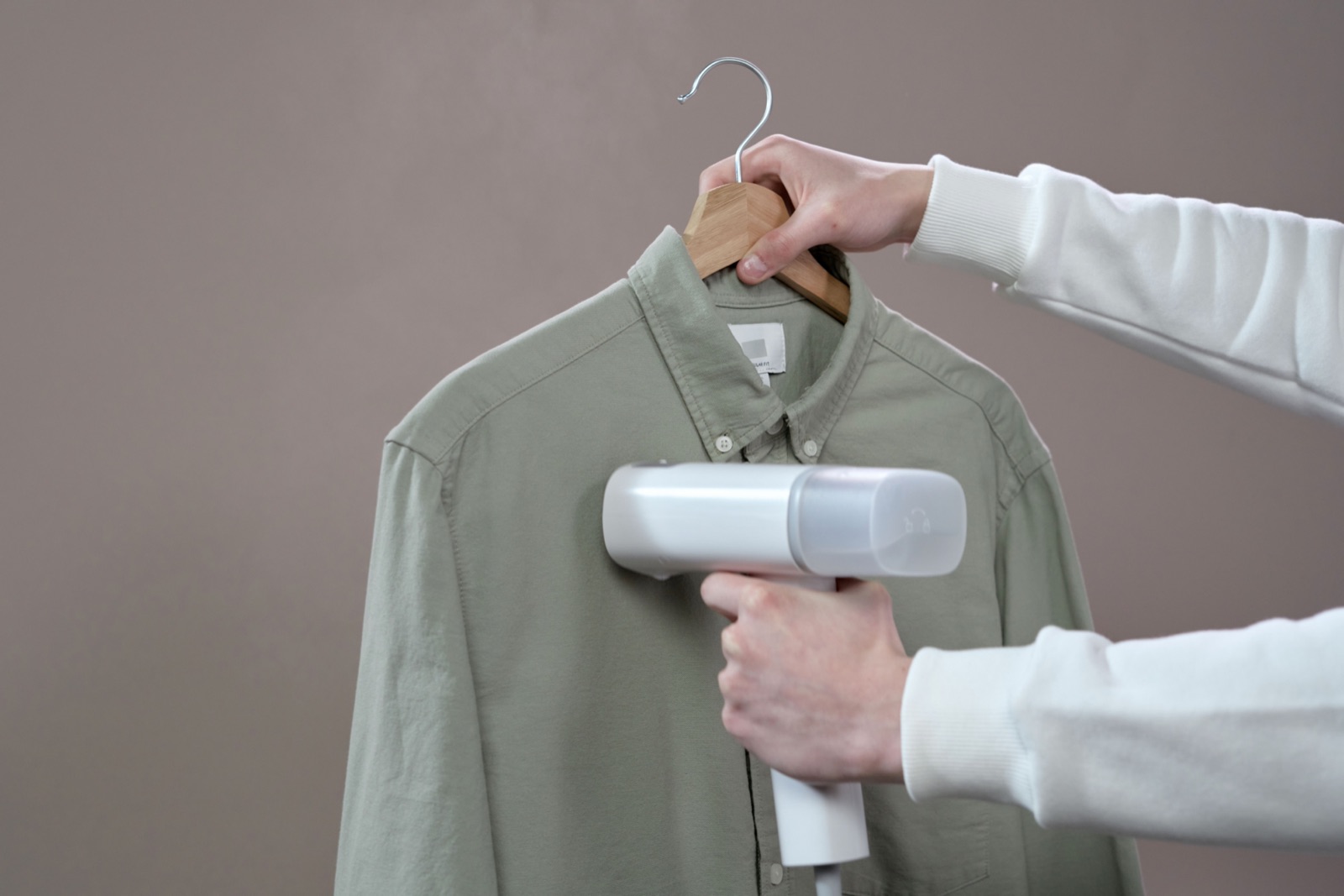
A wig steamer is the one heat tool that standard synthetic wigs can take. It blows a jet of moist heat into the fiber so you can comb out frizz, straighten a bend, move a part or set a new wave, and the fiber keeps that shape once it cools. This guide explains what a wig steamer does, how wig steamers differ from handheld and upright garment steamers (and from the hair steamers sold for natural hair), what to look at before you buy, and how to steam a synthetic wig safely.
What a wig steamer does
Jon Renau says synthetic fibers can't take the dry heat of curling or flat irons, so steam gives you styling options without damaging the fiber. According to Jon Renau, its steamer can:
- change curl pattern and hair direction;
- create or change partings;
- smooth "friction frizz", the roughness synthetic fiber develops from wear over time.
Jon Renau also says steaming reshapes the fiber until it is steamed again, and that the fiber must cool and dry completely before it holds the new shape.
Types of steamer for wigs
Wig steamers
Steamers sold for wigs are usually small handheld units with a narrow nozzle. Jon Renau says its nozzle directs steam to the exact places you need it, rather than spreading it in all directions like a clothing steamer. That precision is the main reason to buy one: you can work a single section near the part without wetting the whole wig.
Handheld garment steamers
A compact clothes steamer also works on synthetic fiber, and wig care guides from sellers such as Wigs by Patti's Pearls describe using a hand-held garment steamer to comb frizz out. The steam head is wider, so it heats more hair at once and may dampen the cap. They are easy to find and often cheaper.
Upright garment steamers
A floor-standing steamer with a hose and a large tank gives long, continuous steam. It suits stylists who steam several wigs in a session; for one wig at home, a handheld is easier to control.
Hair steamers for natural hair
Steamers sold for natural hair are a different tool: they are made to moisten hair and scalp for deep conditioning, not to restyle wig fiber. Pattern Beauty's Hair Steamer, for example, is made for deep conditioning, detangling and refreshing styles, with a 150 ml tank for about 16 minutes of steam, and Pattern says never to place its vapor outlets on the scalp or directly on skin.
| Type | Steam direction | Tank and run time | Best for |
|---|---|---|---|
| Wig steamer | Narrow nozzle, precise | Small | Parts, frizz spots, home touch-ups |
| Handheld garment steamer | Wide head | Small to medium | Whole-wig smoothing on a budget |
| Upright garment steamer | Wide head on a hose | Large, continuous | Stylists steaming several wigs |
| Natural-hair steamer | Spread over hair and scalp | Varies | Deep conditioning your own hair, not wig styling |

What to look at before you buy
Nozzle
A narrow nozzle that you can aim is what separates a wig steamer from a clothes steamer. If you mainly fix frizz at the nape or reshape a part, prioritize it. If you smooth whole wigs, a wider head saves time.
Continuous steam and heat-up
Steam that sputters or drips wets the fiber and the cap. Look for a steamer described as giving continuous steam, and check the heat-up time in the listing; you should not start until it is steaming steadily.
Water type
Read the manual before you buy if your water is hard. Tefal says its handheld garment steamer is designed for untreated tap water, to mix 50 percent tap with 50 percent distilled water where water is very hard, and never to add chemicals, scents or descaling products to the tank. Pattern Beauty recommends distilled water, with no additives, in its hair steamer. Jon Renau says to discard unused water after each use.
Tank size and cord
A small tank is lighter in the hand but needs refilling during a full-wig session. A long cord lets you work around a wig on a stand without moving it.
Safety features
An automatic shut-off is useful if you get interrupted; Pattern's hair steamer, for example, switches off after 30 minutes. A stable base or a heat-resistant rest keeps the nozzle pointed away from you between passes.
Which steamer suits whom
- One or two synthetic wigs, frizz at the ends: a small wig steamer with a narrow nozzle.
- Smoothing whole synthetic wigs at home: a handheld garment steamer works, used in small sections.
- Stylists and wig makers: an upright steamer for long sessions, plus a handheld for detail.
- Heat-friendly fiber: check the care card first. Wig Studio 1 suggests a steamer for heavy frizz before flat-ironing, while Belle Tress does not recommend steaming its heat-friendly fiber.
- Human hair wigs: a steamer is optional; HairUWear says steam rollers or wet setting are the safest way to curl human hair.
How to steam a synthetic wig
Step by step
- Mount the wig. Pin it to a canvas block head so it cannot slide. Wigs by Patti's Pearls turns the wig inside out first to reach frizz at the back and underneath.
- Detangle. Work through tangles with a wide-tooth comb before any steam touches the fiber. Jon Renau suggests a detangling spray to soften the fiber and reduce tangling while you steam.
- Let the steamer heat fully and test it by pointing the steam away from your body, as Pattern advises for its steamer.
- Steam and comb together. Hold a section, comb it downward and let the steam follow the comb, moving side to side. Wig Studio 1 says not to hold the steamer on one spot for more than 3 seconds and to keep the nozzle above your working hand.
- Keep your distance. Headcovers says not to hold the steamer too close or in one place too long; for heat-resistant fiber it says to keep it at least a foot away. Go over each section a few times rather than once up close.
- Let it cool and dry completely on the stand before you comb it into place or wear it.
Steamer safety
Jon Renau warns never to put your hand or arm directly in front of the nozzle, because it can cause serious burns. Never steam a wig while you are wearing it; HairUWear says not to heat-style its fiber while worn because the fiber gets very hot. Turn the steamer off when you finish, empty it and keep it out of reach of children.
Care of the steamer
Empty the tank after each use, as Jon Renau advises, and wrap the cord for storage so it is not damaged, as Jon Renau also suggests. If steam starts to sputter or drip, check the manual: Tefal points to its descaling section, and warns against adding descaling chemicals to the tank.
For washing the wig before you restyle it, see our synthetic wig care guide; for keeping it in shape afterward, wig stands. More gear is in tools.
Questions
What does a wig steamer do?
A wig steamer directs a jet of steam into wig fiber so it can be reshaped while it is warm. Jon Renau says its steamer can change curl pattern and hair direction, create or change partings and smooth the friction frizz synthetic wigs pick up with wear.
Can you steam a synthetic wig?
Yes. Steam is the usual way to restyle or de-frizz standard synthetic fiber, which cannot take a flat iron. Jon Renau says steaming reshapes the fiber until it is steamed again, once it has cooled and dried completely.
Can I use a clothes steamer on a wig?
Yes, on synthetic fiber: some wig sellers' care guides describe using a low-cost handheld clothes steamer to comb out frizz. A wig steamer's narrow nozzle puts steam where you aim it; a clothes steamer spreads it wider, so work in small sections and keep it moving.
Can you steam a heat-friendly wig?
It depends on the maker. Wig Studio 1 describes steaming heavily frizzed heat-friendly fiber before flat-ironing, but notes that Belle Tress does not recommend steaming its heat-friendly fiber; check your wig's care card.
What water should I put in a wig steamer?
Use what the steamer's manual says. Some garment steamers, like Tefal's, are designed for untreated tap water with a 50/50 mix of tap and distilled water where water is very hard, while some hair steamers recommend distilled water; Jon Renau says to empty unused water after each use.
Sources
- Jon Renau — The steamer by Jon Renau
- Jon Renau — Heat-friendly HD fiber care
- Wig Studio 1 — Steaming your heat-friendly wig or hair piece
- Headcovers.com — How to straighten a synthetic wig
- Headcovers.com — Styling guide for heat-resistant wigs
- Wigs by Patti's Pearls — How to use a steamer
- HairUWear — Hair fibers care
- Tefal — Access Steam Force DT8250 handheld garment steamer: instructions
- Pattern Beauty — The Hair Steamer FAQ
Read next
Can you straighten synthetic hair? How to straighten a synthetic wig safely
Check the fiber first: heat-friendly wigs take a flat iron at low settings, standard synthetic wigs only steam or hot water, and both need time to cool.
How to wash a synthetic wig: cool water, the right products and no heat
Cool water, a short gentle wash, conditioner sprayed on and a night on a wig stand: the routine that keeps synthetic fiber smooth.
Wig stand tripod, table clamp or storage stand: how to choose
A tripod for working standing up, a clamp for a desk, a collapsible stand for drying and storage: what each one does and what to check.